













|
||||
 |
 |
|||

|
FIRST PART Pages 1 – 86.. THE RADIANT SHOCK OF DEATH, by Richard Hughes
OBS.: Page numbers to the left (1) – (43) correspond to the book pages. Page numbers to the right to the computer files
TABLE OF CONTENTS. PREFACE , INTRODUCTION : A PSYCHOLOGY OF DEATH I. SCOPE OF THIS BOOK II. THE SUBLIMINAL SELF ........................................................... 3 III. DEATH AND THE SUBLIMINAL SELF ……………………. 12 IV. CRITIQUE OF THE SUBLIMINAL SELF ……………………. 15 CHAPTER ONE: EPILEPSY AND THE OTHER WORLD I. DR. Z. AND HIS BROTHER ……………………………………. 19 II. THE DOSTOEVSKY AURA …………………………………… 27 III. PAROXYSMAL‑EPILEPTIFORM PATTERN ……………… 33 IV. EPILEPSY AND PARANOIA …………………………………. 37 V. EPILEPSY, DREAMS, AND DEATH …………………………. 39 CHAPTER TWO: A DYNAMIC ANCESTRY I. THE FAMILIAL UNCONSCIOUS …………………………….. 45 II. THREE LANGUAGES OF DISEASE ………………………… 55 III. CONCEPT OF GENOTROPISM…………………………….. 59 IV. PAROXYSMAL DEATH SYMBOLISM …………………….. 62 CHAPTER THREE: SYMBOL OF THE TRANSPERSONAL SELF I. THE PONTIFICAL EGO ………………………………………. 67 II. THE BRIDGE AS SYMBOL ………………………………….. 71 III. THE BRIDGE IN DEPTH PSYCHOLOGY …………………..73 IV. ORIGIN OF THE CROSS‑OVER ARCHETYPE ……………. 76 V. ANCESTRAL CROSS‑OVER PATTERN …………………….. 79 VI. THE BRIDGE IN FOUNDATION MYTH …………………… 81 VII. THE ESCHATOLOGICAL BRIDGE ………………………... 83 VIII. CONSCIENCE, BRIDGE, AND SELFHOOD……………… 86 CHAPTER FOUR: DREAMS AND VISIONS OF DEATH I. PARTICIPATORY DREAMWORK …………………………... 89 II. DREAMS AND TERMINAL CANCER ………..……………. 93 III. ARCHETYPAL DEATH VISIONS ……………………………. 95 IV. FAMILIAL DEATH VISIONS …………………………………. 100 V. "TAKE‑AWAY" VISIONS ………………………………………. 103 VI. ASSESSMENT OF VISIONS ..………………………………… 104 CHAPTER FIVE: DREAMS AND VISIONS OF GRIEF . I. IMAGERY AND GRIEF WORK …………………………………... 109 Il. BEREAVEMENT DREAMS ………………………………………. 113 III. BEREAVEMENT VISIONS ……………………………………… 119 IV. TERRORS OF THE NIGHT ……………………………………… 122 V. HAUNTINGS AND RADIANT APPARITIONS ………………….. 126 VI. PROJECTIVE SHOCK VISIONS …………………………………. 127 CHAPTER SIX: ECSTASY OF MORTAL DANGER I. ACCELERATION OF THOUGHT …………………………………. 131 II. THE DEATH‑FEIGNING REFLEX ………………………………... 136 III. DESTINY AND THE PRIMAL FORM …………………………... 139 IV. ANALYSIS OF THE CORE N.D.E ……..………….……………… 141 V. NEGATIVE >NDES< ……………………………………………….. 145 VI. PEDIATRIC >NDES< ……………………………………………… 148 VII EXPLANATIONS OF SEIZURES ………………………………… 151 VIII. MIND AS ACT ……………………………………………………. 155 IX. ARCHETYPAL PARTICIPATION …………………………………. 157 CHAPTER SEVEN: DEATH, MOURNING, AND REJOICING I. LAND OF NO RETURN ……………………………………………… 161 II. DESCENT TO SHEOL AND MOURNING ………………………….. 165 III. CROSS‑OVER SYMBOLS AND THE TEMPLE …………………. 171 IV. DREAMS AND VISIONS OF THE NIGHT ………………………... 174 V. JESUS'"CROSS‑OVER" MINISTRY …………………..……………. 177 VI. EMPTYING OF TEMPLE AND TOMB …………..……………… 180 VIL CRUCIFIXION AFTERIMAGE ....................................................... 183 VIII. APOCALYPTIC TRANSFIGURATION ......................................... 186 CHAPTER EIGHT: FORMATION OF PONTIFICAL SELFHOOD I. REVERSAL OF THE WORLD ORDER ………………..……………. 189 II. CRITIQUE OF DREAM AND VISION ……………………………… 191 III. VISION AND THE BRIDGE ………………………………………… 195 IV. RESTITUTION AND THE BRIDGE ………………………………... 202 V. DISINTEGRATION OF THE BRIDGE ……………………………… 204 VI. LUTHER'S RECOVERY OF JOY …………………………………… 208 CONCLUSION : A THEOLOGY OF DEATH I. THE ABSENT GOD ………………………………………………… 215 Il. PRIMORDIAL FREEDOM AND THE FIRE ………………………… 218 Ill. DEATH AS CONTINGENCY ………………………………………... 221 IV. DEATH AS INJUSTICE …………………………………………….. 224 V. DEATH AS RADIANT SUFFERING ………………….……………. . 228 VI. JOY AND RADIANT BEING ………………………………………... 233 REFERENCES …………………………………………………………….. 237 Finish Index PREFACE Three experiences have compelled me to write this book. First, I teach Death and dying every semester, every academic year, and sometimes in special sessions. Except for sabbatical leaves, I have taught this course continuously since 1973. The students enrolled in the course represent all fields in the liberal arts curriculum. Many have had dramatic death experiences, which they bring to the course either openly, privately, or described through written assignments. These experiences usually involve symbolic forms, such as dreams and religious questions, which tend to be neglected in society and the health care professions. For example, as I write this preface, an experienced nurse‑student has raised a typical question. Her dying patient dreams of fires breaking out and burning all over her. What do these fires mean, she asks? In light of the theory advanced in this book fire symbolizes pent‑up emotion and the need for restitution. My concern as a pastorally‑oriented teacher is to interpret death symbols and to integrate these into a clinically‑grounded body of knowledge. Generally, textbooks are not sufficiently interdisciplinary . They are written primarily by psychiatrists or psychologists who, though well trained in clinical methods, lack broad knowledge, particularly in the history of religions. Religious traditions are frequently decisive in shaping the symbolic forms of death experiences. As an example, I offer an anecdotal illustration. On March 8, 1992 I received a telephone call from a former school‑mate of mine who was an AIDS patient. I asked if he had any dreams, and he said yes. In the dream he is standing in a ditch along side a country road, and a halo encompasses his head. A friend, standing on the road above is calling for him to return, but he remains in the ditch. Immediately, 1 recognized this to be a death dream, and I knew he would die soon. Descent to the ditch is a death image, reflecting the old Hebrew conception of Sheol. The halo signifies radiant being and acceptance of death. The country road reenacts the pre‑Christian practice of burying the dead outside the city. The refusal to go back to the road indicates that the AIDS patient has become a stranger, alienated from society. Sadly but not surprisingly, 1 learned some time later that he died on September 18, 1992. Pioneers in death studies have broken through traditional organic approaches in psychiatry and established psychosocial models of dying and bereavement. They have shown that death experiences are unique and not reducible to general psychiatry or psychology. Avery Weisman has contributed analyses of denial and its variants, types of coping, the role of relationships in illness, and the concept of an appropriate death (1974). Elisabeth Kübler‑Ross has conceptualized five consecutive stages of dying: (1) denial and isolation, (2) anger, (3) bargaining, (4) depression, and (5) acceptance (1969). These have caught on in the public mind and have helped shape a popular death culture. They have also informed local hospice and bereavement support groups. However, the Kübler‑Ross theory of stages presents a teaching problem in the sense that it has never been revised or verified by other clinicians. In her book on AIDS she indicates that the notion of stages is an older concept and now to be regarded as a theory of emotional reactions, expressed by patients, families, and professional care‑givers (Kübler‑Ross 1987, 1). She insists that these reactions recur, over and over again, but not in any "chronological order." Yet she continues to discuss them, as though they were in a prescribed order. A definitive assessment has been made by Robert Kastenbaum (1991, 102). He argues convincingly that the Kübler‑Ross theory is prescriptive not descriptive, subjective and not objective. Her stages represent ideals rather than universal patterns. In fact, when care‑givers concentrate on stages, they tend to ignore other aspects of dying, such as the patient's biography or family background. Dying is personal, and its uniqueness may not be expressed in stages but in symbolic language, dreams, and leave‑taking rituals. Kastenbaum's critique illustrates the fact that a theory of terminal illness, narrowly construed, does not provide a framework to integrate familial and symbolic forms. · One reason for my writing this book is to integrate clinical symbolism with patient decision making and familial relatedness. So‑called stages are herein regarded as defenses, which occur but not in any order. Kübler‑Ross defines her mission as helping professional care‑givers and the clergy to appreciate the needs of the dying. As a member of the clergy, I express my profound gratitude to her life and work, her caring and courage, but 1 am troubled by her "theological“ judgments. She states that negativity is the enemy of life, and since negativity depletes energy, it should be removed in order to provide acceptance in death. Negativity comprises fear, guilt, and shame, emotions that are excluded from her stage theory. Elimination of these affects is justified by her notion of "divine manipulation" and represented in the following rule: "You always get what you need at the right time" (Kübler‑Ross 1987,194). She defends her point of view in the context of Christianity and the life of Jesus. Certainly, her idea of "divine manipulation" invites a theological criticism, specifically that her idea of acceptance is a regression to a primary narcissism (Miller‑McLemore 1988, 96). Acceptance of death as narcissistic fulfillment of wishing can neither dissolve opposites nor remove negativity, because narcissism itself is a defense against death. Christianity approaches the problem of death from the radical negativism of the crucifixion of Jesus. The crucifixion is a terrible shock‑event, bringing total darkness and threatening complete abandonment. Consequently, the concluding three chapters of this book develop a theology of death that accounts for extreme dread, unmanageable pain, and despair.
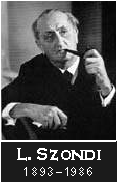
For example, in families transmitting the "attack syndrome" of illness, descendants are at risk for sudden or shock deaths. In families with schizoform traits, members are inclined to express projective‑participatory thought. While dying, this mode of thought emerges in the attempt to strip away the body and strive for an exalted spiritual participation. Szondi was also one of the pre‑eminent pioneers in the study of epilepsy. On the basis of classical psychiatry he conceptualized the paroxysmal pattern, which functions as the biological structure of, the “attack syndrome." Although absent in American thought, this concept offers a coherent explanation of the varieties of shock death, including death‑bed visions, near‑death experiences, and the epileptic seizures of AIDS. Closely related to the paroxysmal theory is his ego psychology, which is informed by the symbolism of the bridge. The bridge motif symbolizes the unification of opposites through basic decision‑making and is frequently found in visions of death among the religions of the world. When the bridge symbol appears in shock events, it means that negativity is raised to a transpersonal spiritual state. The bridge symbol properly illustrates the fact that negativity does not go away but becomes transformed.
When my father died, I realized the meaning of my wedding dreams. In the shock of love and death, father and son chose the same symbolism ‑ crossing the waters to the distant shore. Whether crossing by bridge or by boat, the symbolism portrayed a transfigured state of awareness, in which the antitheses of life and death were united. In marriage I achieved an essential relatedness, and in death my father attained his primal form. My mother's 1973 dreams also foreshadowed my father's death. They were precognitive familial dreams, expressing anticipatory grief. With my father's death her grieving proceeded without complication. She accepted his death, moved to Pennsylvania, and built an addition onto our house for her new residence. Shortly after burying my father in Pennsylvania, psychic activity began to happen around my two children. My son Jimmy, then four years old, was suddenly frightened by a luminous presence in the early evening of December 14, 1989. My wife Diane confirmed the existence of "footstep " haunting in the hallway between Jimmy's bedroom and my daughter Heather's, who was then eight years old. These began during the week of February 5, 1990 and usually occurred about 10:30 p.m. On March 7, which was my mother's birthday, 1 heard a loud "falling" sound at four o'clock in the morning, awakening my wife and son. Thereafter, the "footstep" hauntings continued to be heard for about one year. The last haunting was witnessed on February 7, when my mother was in a local hospital. In the perspective of this book, these hauntings I derived from the afterimage of my father's radiant death. Their intention was to bid farewell to his grandchildren. (end of page Xvii) A PSYCHOLOGY OF DEATH. INTRODUCTION:SCOPE OF THIS BOOK:
While this study is concerned with death and dying, it draws upon depth psychology, philosophy and theology. These disciplines converge because of the interdisciplinary nature of death experience. Depth psychology helps to reveal unconscious processes, conflicts, and symbolic language in the face of death. Inevitably, Philosophy intervenes, because participants in the dying process, particularly professional care‑givers, tend to make judgments as to whether symptoms, pain, or symbols and so forth are real. Theology appears to the extent that ultimate issues invariably arise in dying and mourning. Questions of ultimate meaning deal primarily with the task of resolving suffering. However, the theological framework of this study is limited to that of Christianity with special attention to Protestant theology. Further, the notion of shock death is limited to three clinical Phenomena: a) The first is that of dreams and visions occurring within the dying process. In ordinary clinical practice these tend to be neglected or dismissed, even though they might facilitate a resolution of suffering. Neglect or rejection takes place for two common reasons. One is the inclination to dismiss dreams and visions as hallucinations in defence against pain. This tendency grows out of an assumption, prevailing in medicine, that reality is strictly physical, objective, linear, and quantifiable. This worldview reflects the success of medical treatment, and it also narrowly prescribes the boundary of the human being. Whatever falls out of the medical paradigm is not real and can be neither treated nor interpreted. Nevertheless, dismissals of symbolic language by professional care‑givers surpass the boundaries of medicine and enter into philosophical discourse. b) The other reason is the preoccupation with the stages of dying. The idea of stages in the dying process belongs to popular culture, where it satisfies a need to achieve control in the face of death. Yet, searching for the stages does not necessarily resolve suffering either but even discourages attention to the whole person, to subtle messages, and to symbolism. For example, one of my students working in a hospice program in 1989, informed me of the following situation. A man was dying, and he exclaimed: "It's light in here! " Immediately, the hospice volunteers pulled the shades over the windows, closed the curtains, and shut the door. When he said the light had gone away, they reopened the windows and the door. When the light reappeared, the volunteers' actions were the same. Apparently, the man had had a vision of light, and the volunteers mistook it as a physical sensation. By acting in terms of physicalist assumptions, they may have deprived him of a significant experience. b) The second topic of this book is that of bereavement dreams and visions. In my experience, the neglect of these is more common than those of terminal illness. One reason for such neglect is the relative absence of post‑funeral rituals and care‑giving. Frequently, the bereaved find themselves totally alone some time after a funeral, and they begin to see the deceased in images, dreams, or visions. Such occurrences shape a private drama, often bringing consolation to the bereaved, but sometimes confusion, anxiety, or fear. Providing an interpretation of these experiences helps to resolve the grieving process. Consequently, a theory is needed to integrate bereavement dreams and visions with the shock of death. c) The third clinical focus of this study is the near‑death experience. This is certainly well‑known and extensively documented, and so there is little need to add more data. The intent of this book is to interpret the near‑death experience in relationship with the dreams and visions of death and grief. The reason is that investigations of the near‑death experience, at present, are concerned with whether or not it offers proof of life after death. The near‑death experience is treated as an unique and unprecedented phenomenon within the province of medicine. Consequently, medical researchers employ philosophical assumptions, stated above, and overlook the interpretations of the near‑death experience within the history of culture and religion. The ahistorical context of medicine uncritically obeys religious needs for ultimate truth which are latent in popular culture. Thus, this book takes seriously historical and theological studies, which are useful in analyzing the symbolic aspects of the near‑death experience. When viewed together, the three clinical areas cited above invite an interdisciplinary inquiry. Accordingly, chapters one through three will develop a psychological theory integrating shock death and historically transmitted symbolism. Chapters four through six will analyze dreams and visions of death and grief as well as near‑death experience in terms of their common shock capacities. Finally, chapters seven through to the conclusion will formulate a theological framework, based upon biblical, historical, and constructive Christian theologies. Theological attention is limited to the death experience primarily and not to the issue of life after death. II. THE SUBLIMINAL SELFSince this study views shock death at the intersection of several disciplines, it is appropriate to select as a starting point one of the most original and comprehensive theories of modern times. Between 1880 and 1900 in England, the classics scholar Frederic W. H. Myers (1843‑1901) studied a wide range of death experiences, including claims of so‑called psychic events. He was assisted by other scholars at Cambridge University, such as the philosopher Henry Sidgwick, who founded the Society for Psychical Research in 1882. While Sidgwick, along with Edmund Gurney, pursued convincing evidence for survival of biological death, Myers produced a vast synthesis of knowledge in his great work entitled „Human Personality and Its Survival of Bodily Death” (1903/1954). Anyone who reads Myers' two volume work will readily appreciate his great visionary power, lyrical style, and rich case materials, closely analyzed and integrated in a comprehensive theory. The pivotal concept of his system is that of the subliminal self. While his scientific data and concepts need to be up‑dated, his basic theory remains tenable and applicable to the notion of shock death. The remainder of this section presents a condensed summary of Myers' position, as background for his psychology of death. Beginning with volume one, Myers acknowledges that traditionally 'Christianity has governed knowledge of death and access to life after death. However, in modern times some new, alternative approaches had appeared. One was trance mediumship, a movement claiming to contact spirits of the dead and becoming quite popular in the late nineteenth century. Myers also notes that one of the intellectual predecessors, in the eighteenth century, was the Swedish engineer and mystic Emanuel Swedenborg. At age 55, Swedenborg began to suffer a series of seizures which, he alleged, opened up contact with the spirits of deceased persons. He purported to be in Communication with the spirit world for 30 years. Myers states that Swedenborg conceived of the invisible other world as a realm of law (1, 6). If his experiences were authentic, as Myers suspects they were, then the other world ought to be accessible to scholarly exploration. The law of the other world, which Myers seeks to prove, is that of telepathy, which he defines as communication from mind to mind outside ordinary sensory channels (1, 8). As the fundamental law of motion in the other world, telepathy corresponds to that of gravity in the physical universe. Myers finds that in times of danger or death telepathy intensifies and behaves in the manner of gravity, that is, as a wave‑like field of attraction. He and his colleagues collected extensive data to document the working of telepathy. However, Myers could not easily move from data to proof, particularly, as it relates to life after death; so he developed the theory of the subliminal self to account for a psychology of death. With the notion of the subliminal self Myers became the first scholar in the English speaking world to conceive of the unconscious. The subliminal self contains levels of awareness, beginning with ordinary waking consciousness in the bodily ego. Waking consciousness is transitory, unstable, and susceptible to breaks of attention. The ego relies on sense organs to acquire information from the external world of the objects. The senses function like filters that screen out excessive stimuli; but occasionally, they rupture and allow unfiltered stimuli to overload neural channels. The workings of waking consciousness may be compared metaphorically to ripples on the surface of a sea. A considerable range of mental activity occurs below the level of waking consciousness. A helpful analogy for the regions of the subliminal self would be the solar spectrum. Light may be visible at the center of the spectrum, but, at the ends, it turns into an invisible radiance. This spectrum analogy illumines the fact that an extensive continuum of consciousness co‑exists with the physical universe. This latter aspect is the subliminal self, and its relationship with waking consciousness involves a threshold. Consciousness " above" the threshold is called supraliminal (hos Ken Wilber: post-rational” stage/level. L. B.) and that "below" subliminal. ‑Both supraliminal and subliminal selves act together and comprise a complementary whole. However, the subliminal self can generate impulses that take over the threshold and release upheavals within the consciousness. Myers took over the idea of threshold from the nineteenth century studies of hysteria. During the 1880s, Pierre Janet, Joseph Breuer, and Sigmund Freud observed that, the mental threshold underlying waking consciousness can be raised and lowered. It is unstable and, under certain conditions, the mental threshold might be lowered to the degree of unconsciousness or dissociation. Janet conceived of the threshold in the context of hypnotism, which the new French psychiatry advocated along with Jean Charcot. Breuer and Freud, working in Vienna, discovered the instability of the mental threshold in terms of hysteria. Whereas Janet attributed a lowered threshold to a congenital failure of the capacity for mental synthesis, Freud argued that it was due to unconscious conflict caused by repression of a dynamic impulse. To a certain extent, Myers' explanation of a lowered threshold was similar to Freud's. Myers held that unconscious impulses would erupt, take over the personality and create a loss of consciousness or splitting. Portions of the subliminal self can break out, split apart, and penetrate waking consciousness as fixed idea‑forces. These conditions of dissociation are convulsive, and not reducible to repression, and they involve a wide range of seizure activities, including hysteria but, especially, epilepsy. As indicated by Myers' chapter titles, the range comprises the following list: (1) disintegration (e.g., hysteria, epilepsy); (2) genius; (3) sleep, (4) hypnotism; (5) sensory automatism; (6) phantasms of the dead; (7) motor automatism; and (8) trance, possession and ecstasy. Appended to each of these topics is an extensive collection of cases. However, implied in this list is Myers' contention that dissociation states are not abnormal but are means of creativity and transcendent ecstasy, as well as telepathy. Dissociative states are creative because of the fundamental continuity of mind in itself. Despite mental upheavals, the supraliminal and subliminal selves retain a relationship. This continuity of mind parallels the hierarchical structure of the brain (1, 72). A contemporary of Myers, J. Hughlings Jackson discovered the tripartite structure of the brain in his studies of epilepsy. He conceived of higher cortical levels, controlling thought and will, and a middle level as the source of muscular movements; and lower levels, governing automatic processes like circulation and respiration. When the epileptic seizure effects the higher brain centers, then the middle range acts compulsively in a fit. Similarly, when the convulsion effects the middle level, one falls under involuntary, unconscious brain controls. This three‑fold structure remains generally accurate, but, for Myers, it compares with but does not fully explain the co‑active layers of the mind. Both middle and lower neural regions would belong to the subliminal self, and the higher to the supraliminal. In current theory the subliminal self conforms to the animal brain. While epilepsy is the basic model of mental activity, Myers goes on to describe genius as a seizure function. Genius is an on‑rush of thought from the subliminal self. Works of genius are regarded as brilliant, because they expand the ordinary range of the mental spectrum into extraordinary radiance. Although genius may split waking consciousness, the intensity of its mental dissociation actually creates a higher integration of the personality. Thus, great works of genius draw closer to the spiritual world and yet, because of their subliminal origins, they reflect the primitive layers of life. Myers takes Plato's idea of eros (Symposium, 192‑212) as the prototype of genius. The creative upsurge of genius is an elemental striving of emotion for an everlasting possession of the good. Love as eros embodies the basic energy of personal integration that flows more deeply than intellectual thought. Eros animates all human faculties in the struggle for the infinite. By stirring up lofty thoughts, eros flows "like the swin and liberation of the tide‑wave across the ocean, which takes note of billow or of storm" (1, 120). This phrase is quoted in order to show a striking aspect of Myers' writing style, namely, a preference for images of the primal elements, of the sea, fire, and the earth. In other passages, for example, he portrays subliminal activity as "an uprush of the hidden fire" (1, 101); "reverberating tremors [that] rise and fall" and "flood the flats of common consciousness as with the earthquake‑wave of an unfathomed sea" (1, 102). Myers proceeds to describe sleep as the next level of the subliminal self. Sleep is more primitive yet more adaptable than waking consciousness. At the intersection between sleep and waking, nightmares, hypnagogic and hypnopompic images are experienced. Hypnagogic images are those of sight and sound, "faces in the dark," that appear with the coming of sleep; and hypnopompic are those dreamfigures that persist into waking consciousness after sleep has ended (1,125). Hypnopompic figures are shock‑forms that evoke pleasure or even ecstasy, as they linger in the mind as mages. Amid the sleep cycle, the dreaming self is independent, having its own faculties and wide‑ranging powers, including telepathy, clairvoyance, and transcendent ecstasy. These powers do not evolve through natural selection but emerge from the spiritual capacity inherent in the subliminal self. The dreaming self may be invaded by the spirits of living or dead persons, often accompanied by knowledge of the exact time of death, particularly that of relatives or friends. The next level of the subliminal self is that of hypnotism or self suggestion. Cases of spiritual healing are examples of hypnotism, in which the subliminal self generates a rejuvenating energy through suggestion. The subliminal self has a knowledge of the organism, which is deeper than that of waking consciousness and may be activated in times of healing. Rejuvenation occurs in trance states, because the conscious functions of will and attention are inhibited. Healing manifests the profound adaptive power of life itself. A variation of hypnotic trance is that of a secondary personality, as manifest in possession . Under trance the psyche can change or leave and return to the body, particularly in times of danger or death. The psyche is the same as the spirit or personality, and Myers believes it can withdraw permanently from the body, as exemplified, in biological death, but nevertheless retain a relationship with the subliminal self (1, 218).Returning to primal metaphors, Myers explains that personal life is a force, erupting as a "fresh draft" from the cosmic sea of energy.Myers moves to a conclusion of his first volume with a discussion of sensory automatisms, (phenomena lb.) which are colorful and forceful, visual images that erupt from the subliminal self and penetrate waking consciousness. Some examples are visions, memory‑images, creative forms, afterimages, and "the scarlet fire of the epileptic" seizure (1, 228). Despite the analogy with epilepsy, sensory automatisms are not abnormal but are commonly found in persons of sound mental health. These imaginal forms may be externalized into visions outside the body. Projections of sensory automatisms take place particularly in times of grief, death, or basic change. This ability to transfer imagery outside includes action at a distance, which Myers names "travelling clairvoyance. " He illustrates this with the case (666C) of a man sailing on board a ship in the Atlantic Ocean for nine days (1, 682). One night he falls asleep and dreams vividly of his wife, who is actually back home in Connecticut. In the morning his roommate says he also saw the image of the man's wife, during the night. The wife had heard of the storm at sea through the news and, becoming afraid, projected herself across the sea into the ship's room. To account for the projection Myers posits an intermediate concept of psychic space, that is dream‑like, independent of matter and having its own extensive continuum (1, 231). This psychic space lies between individual minds and the ultimate cosmic unity of mind. (bio-morphological field?lb) In contemporary thought this is the same as quantum inseparability. With this notion Myers raises the possibility of communicating after death. Myers and his colleagues, had documented many cases of the living having visions of the dead, but he theorized that the spirit of the deceased externalizes itself into a visual form and modifies a portion of space. The spiritual being is psychic, volitional, but without movement. There is no sender‑receiver relationship. Rather, the spirit of the deceased breaks through, usually in a dream or vision, to whom ever is receptive. Readiness for the psychic breakthrough requires some form of dissociation, as in sleep, for example. Myers develops a technical concept for this phenomenon, taking over the Greek term psychorrago, which means "to let the soul break loose" (1, 264). From this word he constructs the notion of psychorrhagy. Thus, visions of the dead are psychorrhagic in the sense that the spirit of the deceased wills to penetrate the intermediate realm of dream‑like space. Such visions may be seen by one person or by several. Whether (9) individual or collective, however, the context of the vision is the subliminal self. Going on to volume two, Myers continues the same theme but adds more detail. Visions of the dead are called phantasms and are defined as a "manifestation of persistent personal energy," that is, a residue of one's personality when alive (11, 4). The residue is an afterimage, to which Myers attaches the adjective veridical. By >veridical afterimage > Myers means a real but nonmaterial form, left over after one's death. It is carried by telepathy from the deceased being to the living person, who encounters it unconsciously through a non-pathological dissociation of consciousness. Veridical afterimages seem to erupt like waves from the depth of the subliminal self. Meyers generalizes on how the images act with respect to death. At the onset of the dying process, the subliminal self sends out signals of the impending death. One's awareness of the death becomes clearer and more acute, sometimes involving clairvoyance of the future, for example, seeing deaths of other persons. At the same time, telepathy radiates with friends and relatives, who get premonitions, dreams of the forthcoming death, and feel compelled to visit the dying person, or have crises of their own. These phenomena obey two distinct processes described in the following two paragraphs.
The energy may take shape as a field, a spiritual presence, image, or recollection. Whatever form it takes, the energy may linger in one place for many years or be picked up telepathically by the subliminal self of the survivors in visual or aural forms. The radiant fields may even split into specific vibratory forms called hauntings. Suicides and homicides are some examples of shock deaths that release hauntings. These two conceptual patterns are expressed again in metaphors from the sea. When suggesting that intense concentration may enable hauntings to become manifest to us, he says that in "the boundless ocean (10) of mind innumerable currents and tides shift with the shifting emotion of each several soul" (11, 69). The imagery means that death‑induced telepathic exchanges reflect fundamental reality. From this subject Myers moves to that of motor automatisms, defined as behavioral patterns performed automatically, without will or full self‑consciousness, and instigated unconsciously by a secondary self. These too are compared to epilepsy in which a seizure may initiate totally automatic action without any awareness or recollection. However, Myers describes motor automatisms as normal and constructive but not pathological. Automatic writing, possession, and trance mediumship are examples. To differentiate normal from abnormal motor automatisms Myers advances a thesis, which is crucial to his position: "It may be expected that super-normal vital phenomena will manifest themselves as far as possible through the same channels as abnormal or morbid vital phenomena, when the same centres or the same synergies are involved" (11, 84). He argues, further, that if a secondary self were to become manifest physiologically, "it seems possible that its readiest path of externalization ‑ its readiest outlet of visible action, ‑ may often lie along some track which has already shown to be a line of low resistance by the disintegrating processes of disease"- The disease which concerns Myers most is epilepsy; and, therefore, the splitting induced by seizures opens up pathways to the highest level of creative or religious experience. The role played by epilepsy in Myers' life and thought will be explored in chapters one and two. Automatic writing exemplifies a motor automatism, which combines telepathy with a psychorrhagic invasion of a living person by the spirit of a deceased being. Automatic writing reflects the subliminal self metaphorically, as "profound ocean currents bear to waves and winds on the surface of the sea" (11, 119). However, manifestation of secondary personalities, in automatic writing, must work through the limitations of the sensory‑muscular systems of the living person. Consequently, subliminal messages tend to be simple and repetitive or even projections of one's own unconscious fantasies. Possession is another example of a motor automatism, and it is related to automatic writing. With possession a conscious person is taken over by a controlling spirit and its own identity or memory. Normally, possession blocks telepathy, although it might break through (11) occasionally. To illustrate possession Myers examines the case of Lenore Piper, a well‑known trance medium of Boston. In 1887 she began to fall into trance states, having "a good deal of respiratory disturbance and muscular twitching " (11, 25 1). A contemporary classics scholar reports that Mrs. Piper suffered epileptic convulsions and symptoms, including the grinding of teeth (Dodds 1971, 228). She could lapse into total unconsciousness, fall forward, and had to be 'supported. These brief biographical facts illustrate Myers' thesis that epileptic seizures open up channels through which supernormal phenomena flow. After examining Mrs. Piper's mediumship critically, Myers concluded that the spirit of deceased beings retained earthly memories and loves and that they communicated these to the living through trance mediumship (11, 256‑257). Finally, the most profound expression of the subliminal self is Ecstasy and as a correlate of trance, it is essentially a religious experience. Ecstasy culminates the spectrum of subliminal activities, beginning with the mental dissociation. Viewed as a whole, the psychic continuum of the subliminal self leads to the knowledge of God through symbolization. (enligt Ken Wilber: to the highest stages of “post- rational consciousness” LB) Since ecstasy grows out of the extended subliminal self, it is essentially an experience of participation in an exalted transcendent Domain. This participation discloses an incandescent unity of life and love, joy and wisdom, and it is most clearly expressed in the symbolism of the distant shore. From this fundamental insight, Myers draws three specific theological principles:
Love represents the infinite striving of the self for the realm of spirit, a striving that survives biological death. Love is the exaltation of the law of telepathy (11, 282). (law of the spiritual realm. LB) Among the religions of the world, Christianity provides a revelation that culminates the telepathic law of the universe. Christianity acknowledges the existence of discarnate beings who love and care for the living. Human life is capable of surviving biological death because of its dual origins: descent from maternal and paternal ancestors and descent from planetary and cosmic heredities.
Messages from the dead, as disclosed through dreams, vision, or trance mediumship speak of neither hell nor torment. Consequently, evil is understood as a purely finite experience traceable to the tragic defects of the human will. Page 12
In some of his case studies, people who acquire subliminal knowledge were able to act so as to avoid danger or death (11, 272). This ability indicates that telepathic law operates according to probabilities and tendencies rather than by fixed action patterns. Dreams and visions of the dead that convey knowledge of earthly affairs reveal a sense of will among the deceased. Such post‑mortem communication presupposes the intensity of understanding gained before death. Ecstatic glimpses of telepathic law disclose the universe to be a vast plenitude of energy, whose mysteries are also the origins of the subliminal self. Though enveloped in mystery, the living are illumined by messages from the dead. For dying is like sailing into an uncharted sea, whose terrors are a revelation of a homecoming. The dying behold a procession of ancestors, or fore‑bearers of many generations, moving toward that distant shore, "up through the light of the seas by the moon's long silvering ray" (11, 277). II. DEATH AND THE SUBLIMINAL SELFFrederic Myers' theory of the subliminal self contains two original and far‑reaching contributions to a psychology of death. One is the concept of telepathy, and the other is that of the veridical afterimage. Telepathy is activated in a wave‑like process, either one week before a natural death or suddenly with a shock death, and radiated as a veridical afterimage at the moment of death. The veridical afterimage gradually depletes in its intensity throughout the first year after the death. Implied in this radiant cycle is the fact that every act and thought are preserved subliminally and released in afterimages. Myers compares the radiant shock of death to the death of a star. The dead are like stars that perished eons ago, leaving radiant traces in the night sky. To illustrate how the subliminal self informs various death experiences, selected case studies from Myers' two volumes are presented below. The subliminal self is activated in dissociative states that relate to epileptic seizures. In some dangerous situations healing energies also radiate subliminally. For example, in case 409B a woman suffers an attack of acute bronchitis, which she fears to be life threatening. She falls asleep and her sister, who had been dead for more than twenty years, Page 13 J, came to my bedside, and said. "Do not worry about your health, we have come to cure you, there is much yet for you to do in the world." Then she vanished, and my brain seemed to be electrified as if by a shock from a battery, only it was not painful, but delicious. The shock spread downwards, and over the chest and lungs it was very strong, From here it extended to the extremities, where it appeared like a delightful glow. 1 awoke almost immediately and found myself well (1, 370).Two salient points may be drawn from this case. One is that the telepathic exchange is between two siblings, and the other is that the radiant shock conforms to the epileptic aura, a glow spreading through the limbs, which will be discussed in chapter one. Myers presents several cases in which dreams coincide with the death of family members at distant places. In section 428D a man has a dream in which an old lady appears, stands, and gazes at him for 20 minutes, neither speaking nor moving. The man does not recognize her, with her white hair, dark eyebrows, and penetrating eyes~ His aunt comes into the room and says: "John don't you know who this is?" The woman in the dream is actually the dreamer's grandmother, whose death on a distant island coincides with the actual dreaming (1, 419). This case suggests that the knowledge of the death occurs in the subliminal self, the dream work brings this knowledge into the consciousness of the dreamer. Similarly in another case a woman sees "her headless brother standing at the foot of the bed with his head lying on a coffin by his side" (1, 425). She awakens, then falls asleep and has the same dream again. For several days the woman grieves for the headless condition of her brother portrayed in the dream. Some time later, she learns that her brother, a soldier in Asia, had been decapîtated about the time of her dream. With terminal illness, telepathy builds up about one week before the ' death. Hence, in case 714A a dying man appears in a vision to his daughter, shortly before his death. She awoke “seeing a bright light in my bedroom‑ the whole room was flooded with a radiance quite indescribable ‑ and my father was standing by my bedside, an etherealized semi‑transparent figure, but yet his voice and his aspect were normal. His voice seemed Page 14 a far‑off sound, and yet it was his same voice as in life. All he said was, "Take care of mother." He then disappeared, floating in the air, as it were, and the light also vanished (11, 323). With an unexpected shock death, the radiant telepathy may vibrate in one location, often for many years.Such focused telepathic fields seem to have split‑off from the death. In volume two, section 733B, Myers portrays a man and two sisters who are vacationing in a country house owned by friends. One day the elder sister discovers an old wornan in bed "with her clothes on and lying with her head towards the window. " She calls her sister and brother to enter the room, but when she points to the bed, they see nothing. Hence, the elder sister sees an image of the old woman. She speaks with a neighbor and learns that the previous owner had falsely accused his wife of drinking all of his whiskey. He had become enraged and beaten her to death. Terrified by what he had done, he concealed the murder by telling the neighbor that his wife had suffered a terminal illness. Even though the wife's body had been buried, a visual image of her preterminal state lingered on the bed (11, 360‑361). In a related case (745B) a woman narrates a sighting she had one night about 11 o'clock. She hears someone moaning outside her bed roorn window. She raised the window shade and, looking out, "There on the grass was a beautiful young girl in a kneeling posture before a soldier, in a general's uniform, sobbing, and clasping her hands together, entreating for pardon; but alas! he only waved her away from him" (11, 383). The woman runs down the stairs and goes through the outside door to the lawn. Arriving outside, she sees nothing. After investigating the situation, she learns that the daughter of the previous owner of the house had borne an illegitimate child. Failing to be accepted by her family, she died in grief. The woman also states that the girl and soldier were near relatives and that the soldier had some connection with her husband. Commenting on this case, Myers admits that he is uncertain as to what extent the deceased is still participating in the post‑mortem phantasm (11, 384). Myers' uncertainty presupposes his argument that visions derive from the veridical afterimage. That is, they are instigated by the deceased. However, this case and the one cited above raise the possibility that moral values might be implicated in the veridical afterimage, namely, Page 15 that the failure to gain forgiveness in a family relationship might be implicated. This possibility needs to be explored by more recent psychologies in subsequent chapters. (Obs. the results of Bert Hellinger’s Family constellations. LB) A final illustration deals with the near‑death experience, something, known in the nineteenth century but not extensively examined. In section x (713A) of the second volume Myers suggests "that we might learn much were we to question dying persons, on their awakening from some comatose condition, as to their memory of any dream or vision during that state" (11, 315). To encourage this practice he cites an 1889 case of a physician who, suffering typhoid fever, sinks into unconsciousness, and loses all pulse and circulation for about four hours. The following paragraph summarizes this case. Witnesses perceive the doctor to be dead, so they begin funeral preparations. Meanwhile, the "clinically dead" man realizes the essential nature of his personality, and he sees his lifeless body. His ego is by rocked back and forth, as it breaks away from the body and floats up and away from it. His mind is alive and intact. He sees people, but they are in an undifferentiated form. He also discovers a cord, through which he still using his eyes to see. He sees the sky, a mountain, a forest, and a river. Before him stretches a road and, in the distance, large rocks are standing on it as a barrier. Suddenly, fire strikes from the clouds that form a large tent, which revolves on its axis in the sky. Out of the fire, clouds, and tent a spiritual presence appears, saying that this is "the road to the eternal world, " and that the rocks are the boundary line between two worlds. He moves toward the rocks but is stopped by a black cloud, when he awakens. Myers also quotes a report (663A) in which the same physician had a clairvoyant episode in 1878, eleven years before his near‑death experience. He had a vision of a log house, in which a man killed himself by shooting a rifle into his mouth. IV. CRITIQUE OF THE SUBLIMINAL SELFIn order to develop constructively Myers' original insights, it is appropriate to consult a critical reaction by one of his contemporaries. He was a close personal friend as well as professional colleague of William James, the distinguished American psychologist. James evaluated Myers' theory of the subliminal self in a memorial address and in a book review. These along with James' papers on psychic studies have been published by Gardner Murphy and Robert Ballou (1960). This Page 16 collection contains a sensitive profile of Myers as a student of death and who suffered Bright's Disease of the kidney which would end his life at age 58.
James explains that Myers pioneered in developing a systematic method for psychology, whereby he could coordinate a vast amount of data within a general scheme (217). Myers assembled dissimilar data in series and connected the extremes with intermediary concepts. The theory of the subliminal self is so breath‑taking and epochal, because it integrates previously marginal experiences such as seizures, dreams, visions, and ecstatic possession. The latter are normally not unified in theoretical knowledge and likely to be dismissed as superstitious or absurd. However, by coordinating a large array of seemingly strange phenomena, Myers has developed an original conception of mental evolution, using biological analogies. For James the key to Myers' theory is his contention that consciousness has no essential unity, but is derivative from a wider mental field and useful only as a means of environmental adjustment. Consciousness emerges from biological evolution, but it can dissolve in epilepsy, dreams, and trance. Ironically, the dissolution of consciousness yields a higher mental integration. More critically, James concedes that the subliminal region exists but does not know whether it pervades all persons or pertains only to a gifted few (228). He believes that the relationships between the subliminal self and the ultimate cosmic unity of mind are vague and ill‑defined. James even questions whether Myers' cosmic dimension is truly ultimate or simply a series of subliminal selves (231). Although Myers' work is a masterpiece, a vision of the highest intellectual order it invites the Page 17 following criticisms:(1) some of Myers' facts
need more verification; Behind these criticisms lurks a fundamental issue which troubles James. He cannot come to terms with Myers' claim cited above, "that supernormal vital phenomena will manifest themselves as far as possible through the same channels as abnormal or morbid vital phenomena" (237). Essentially, James cannot understand how epilepsy reveals a transcendent spiritual realm. Nevertheless, toward the end of his life, James arrived at conclusions basically the same as Myers. Mystical experience, the ground of all religion, is a "possession of an extended subliminal self" (265). Messages erupt from it, in times of mental dissociation, and produce dreams, trance, and so forth. The threshold of the mind is lowered, so transcendent knowledge may filter through the dissociated self. This assumes that the brain has a transmissive function and that it is open and closed. James even speaks with the same imagery as does Myers. The unconscious personality is like an island in a cosmic sea. The subliminal self is like the ocean, whose waves beat upon the shores of the conscious as volcanic eruptions. Memories of our earthly existence are stored unconsciously in the subliminal self, and, after death, they erupt in dreams, visions, and trance mediumship. Thus, the dialogue between James and Myers bequeathed to the twentieth century the problems of epilepsy, death, and selfhood. EPILEPSY AND THE OTHER WORLDI DR. Z. AND HIS BROTHERFrederic Myers' theory of the subliminal self rests upon the paradoxical interaction of the abnormal and the supernormal. His model of the abnormal is epilepsy, and he contends that epileptic seizures open up the psyche to transcendent states. When viewed historically, Myers' conception of epilepsy reflects a pivotal, transitional phase in modern medicine. Known in Greek antiquity as the "sacred disease," in the Christian era epilepsy became "the falling sickness" and was frequently ‑ diagnosed as the effect of possession. However, beginning with
the nineteenth century psychiatry made systematic observations of epileptics
and formulated basic personality traits of the disease. This development, was
facilitated by the founding of asylums and epileptic wards in general hospitals
in France, Germany, and England. These asylum doctors discovered a unique character
behind the symptoms, created a new terminology, and developed statistical
studies (Temkin 1971, 257). The asylum doctors clarified types of seizures that
remain well known: Two French physicians, Benedict Morel and Jules Falret, found anger and irritability to be basic characteristics of the epileptic. Any trivial incident could trigger epileptoid anger, lasting one or two hours Page 20 and even repeating during the day. Anger could appear just before or after a seizure; or it could exist independently and be discharged spontaneously in violent actions. The epileptic seizure would be expressed in an attack, fall, or a dizzy spell, i.e. vertigo. On the other hand the condition could be hidden in specific behavior without convulsions, in a state known as masked epilepsy (épilepsie larvée). In the same time, German psychiatrists produced the concept of psychic equivalents, stating that an epileptic could have symptoms that were independent of but equal to seizures. As in Myers' theory, one of the psychic equivalents of epilepsy was the experience of a transcendent world in a deep state of trance. Within the seizure one has a vision, which could be remembered after the convulsion. The following letter, written by an epileptic patient to his wife, illustrates this psychic equivalent:„ I then thought that 1 was caught up by the hair of my head, and brought through the air to a beautiful country, which was surrounded by beautiful green grass parks, and those parks were full of young lambs, ... I then asked the person supposed to be in my company, where was God. His reply was in Heaven. 1 then said this was Heaven. He then said that this was only a kitchen to Heaven, and none can enter into Heaven but those that are pure and perfect. He, the visionary man, said that this was the place that saints were made perfect in. He then told me the number that had entered since our Savior went there (cited in Temkin 1971, 372). Such epileptic patients sincerely believed that they were in heaven, had left their bodies, visited the divine region, and returned to their bodies. They ascribed heavenly status to themselves and to their doctors. Having recalled their visions proves that not all awareness was lost, while they were unconscious. The trance consisted of a twilight state, in which the threshold of consciousness was lowered but not entirely extinguished, Although epileptic attacks might have been followed by phases of confusion or depression, patients remained pleasant, amiable, and gentle. When Myers was formulating his position, during the latter third of nineteenth century, neurology emerged to compete with psychiatry and to establish medical dominance. The neurological study of epilepsy was Page 21 founded by the British physician John Hughlings Jackson. In the 1860s Jackson observed epileptic fits occurring on one side of the body, having no loss of consciousness, but yet exhibiting impaired sight, speech defects, and an aura of a foul smell at the onset of the attack. Jackson interpreted this unilateral seizure as a sudden local discharge of grey matter in the brain. Avoiding broad generalizations, he argued that the différent kinds of attacks conform to the evolutionary hierarchy of the brain.Epilepsy proper, involving loss of consciousness, originates in the highest brain centers, but localized seizures, called epileptiform attacks, derive from the middle brain region. Jackson recognized a third, miscellaneous class of fits, as found in breathing disturbances or injuries, that pertain to the lower level of the brain. He theorized that epilepsy reversed the order of evolution through a descending process of mental dissolution, i.e. from the higher level to the lowest. So‑called Jacksonian epilepsy means that specific types of seizures correlate directly with organic disease in the brain. Brain disease is purely physiological. Psychological symptoms are useftil only as signs that point to particular disturbances in the brain. For Jackson the brain embraces a configuration of movements, which is essentially separate from but parallel to moral or emotional symptoms. While fear may precede an attack, the fundamental cause is a discharging lesion in the movements of the brain. The actual birth of neurology took place in London on January 10, 1894, when one of Jackson's epileptic patients died. Jackson asked to be present at the autopsy of this patient, known in medical history as Dr. Z. Jackson persuaded his colleague Walter Colman, who conducted the autopsy, to search "the taste region of Ferrier on each half of the brain, very carefully; " and they found "a very small focus of softening in that region (in the uncinate gyrus) of the left half of the brain" (Jackson S. 1931, 461). The name Ferrier was that of David Ferrier, who studied experimentally the conductive fibers to the brain, which supported Jackson's observation of local convulsions induced by the discharge of grey matter. The autopsy discovered the lesion in the left temporal lobe of the brain. Jackson's account of this autopsy in his published papers became the neurological paradigm of temporal lobe epilepsy in the twentieth century- Jackson founded neurology as a mechanistic and physiological science. He maintained a strict psycho‑physical dualism, sharply separating the fields of psychology and medicine, and restricting the latter to physiology. Page 22 Whereas the asylum doctors had studied types of convulsions and states of consciousness, Jackson focused on the morbid condition of brain cells. For Jackson the greater the discharge of grey matter in the brain, then the more severe would be the seizure. Study of the biography of the patient, which the asylum doctors had conducted, was neglected. After Jackson's pioneering work, neurology expanded and, by the mid‑twentieth century, dominated the understanding of epilepsy. The triumph of neurology was aided by the introduction of the EEG in 1929, making possible more precise readings of brain activities. For example, the concept of psychomotor epilepsy replaced Jackson's "uncinate“ group of epileptic fits, " and its origins in the temporolimbic region in the brain was documented (Blumer 1984, 37). Meanwhile, the identity of Dr. Z. remained unknown, and he passed into historical oblivion. Because Jackson ignored the person behind the symptoms, his successors failed to ask a simple question: Who was Dr. Z.? Nearly 100 years after the famous autopsy, David Taylor and Susan Marsh identified Dr. Z. as Arthur T. Myers (1980). Born in 1851 Arthur Myers was the youngest son of Rev. Frederic Myers, a priest in the Church of England. The father also died in 1851, at the age of 40, only a few months after Arthur was born. Arthur was the youngest brother of Ernest Myers and of Frederic W. H. Myers ‑ theorist of the subliminal self . Is this family relationship the reason why Frederic Myers made epilepsy the paradigm of the subliminal self.? Arthur Myers' obituary was published in the British Medical Journal on January 27, 1894 and reprinted by Taylor and Marsh (1980, 760‑761). A few biographical facts reveal the decedent's epileptic personality. Myers was educated at Cheltenham and Trinity College, Cambridge. He received his medical degree in 1881 and in 1893 became a Fellow in the College of Physicians. He practiced at St. George's Hospital and Belgrave Hospital for Children, where his work was characterized by "patience, minuteness, and fidelity. " Myers published papers in leading journals and displayed an interest in psychological problems and psychic research. He was an outstanding athlete, winning several prizes in racketball and tennis. Despite his great athletic prowess, destiny thought fit to inflict upon him that terrible and inscrutable nervous malady which occasionally harassed him Page 23 in early youth, and of late years advanced with relentless tread, baffling the most devoted medical skill and ultimately involving a fine intellect in ruin and confusion. He was of a singularly kind and amiable disposition, given much to acts of hospïtality and goodness to others. The slight brusqueness of his address, sometimes remarked by his juniors, was largely due to his infirmity His history is tinged with a touch of melancholy.....for he has shown us the example of a brave man struggling against an unhappy fate (760). Arthur Myers was a life‑long bachelor who died at 42. Taylor and Marsh contend convincingly that Myers' death was a suicide committed by an overdose of chloral hydrate (758, 763‑764). The death was not judged legally to be a suicide, but they argue from the cumulative and lethal effects of asphyxia, coma, epilepsy, Bright's Disease of the kidneys, and narcotic medications. The biography is significant, further, because it yields the sources of some of Jackson's basic concepts. Jackson's publications contain verbatim accounts by Arthur Myers of his own seizure experiences. One example reported by Jackson in July 1888, is as follows: „I first noticed symptoms which 1 subsequently learnt to describe as petit‑mal when living at one of our universities, 1871. 1 was in very good general health, and knew of no temporary disturbing causes. 1 was waiting at the foot of a College staircase, in the open air, for a friend who was coming down to join me. 1 was carelessly looking round me, watching people passing, etc., when my attention was suddenly absorbed in my own mental state, of which I know no more than that it seemed to me to be a vivid and unexpected "recollection"‑of what, 1 do not know. My friend found me a minute or two later, leaning my back against the wall, looking rather pale, and feeling puzzled and stupid for the moment (Jackson 1931, 400).“ More attacks came in the next two years. Often at night he would awaken "with an impression that I had succeeded in recollecting something that I wanted to recollect" but then had forgotten it by morning. On awakening he would have soreness at the edge of the tongue, a feeling of having been bitten, and saliva on the pillow. Page 24 Generalizing on his seizures, Myers states that the sense of recollection was central, naimely, "realizing that what is occupying the attention is what had occupied it before, and indeed has been for a time forgotten, and now is recovered (Jackson 1931, 401) This statement actually anticipates Sigmund Freud's definition of the unconscious, which will be discussed in chapter two. Myers admits that his normal memory is poor but "in the abnormal states the recollection is much more instantaneous, much more absorbing, more vivid, and for the moment more satisfactory, as filling up a void which I imagine at the time 1 had previously in vain sought to fill. " The recollections always begin "by another person's voice, or by my own verbalised thought." Then the return to normal consciousness is not a rush but a gradual process. Return to consciousness is marked by a flush in the skin and face, quickened heart beat, and increased urinary output. During seizure, Myers becomes pale and has an empty look in the eyes, assenting to anyone's remarks. Saying yes includes a smacking of the tongue or a tasting movement of the lower jaw. After a petit‑mal attack, he neither hallucinates nor loses balance. Myers recalls running across a Swiss glacier in 1878, when an aura befell him: „I had insufficient control to stop myself and felt no fear, but only a slight interest in what would happen. 1 went through the familiar sensations of petit‑mal with such attention as 1 had to give concentrated on them, and not on the ice, and after a few minutes regained my normal condition without any injury. 1 looked back with surprise at the long slope of broken ice 1 had run over unhurt, picking my way, 1 know not how, over ground that would normally have been difficult to me (Jackson 1931, 403).“ Myers began to suffer grand mal seizures after 1874, and normally they recurred at intervals of 18 months. When recovering from pneumonia in 1876, he had seven or eight attacks within a two month span. An aura of recollection followed his grand mal convulsions, but it lacked the clarity of those after the petit mal. With the grand mal neither an epileptic cry was heard nor muscular spasms observed. Nevertheless, he felt tired and sore with bodily bruises. Myers recalls several episodes, when a seizure would come and yet, despite the absence of memory and consciousness, he could still function Page 25 of physically and purposefully. In one situation, he saw a young male patient, who complained of lung problems. Myers told the young man to undress and lie down on the couch, so as to be examined.„I thought he looked ill, but have no recollection of any intention to recommend him to take to his bed at once, or of any diagnosis. Whilst he was undressing 1 felt the onset of a petit mal. 1 rememer taking out my stethoscope and turning away a little to avoid conversation. The next thing 1 recollect is that I was sitting at a writing‑table in the same room, speaking to another person, and as my consciousness became more complete, recollected my patient, but saw he was not in the room (Jackson 1931, 404‑405). One hour later, Myers observed the patient in bed and read, in the patient's chart, his diagnosis of pneumonia. He concluded that both his conscious and his unremembered diagnoses were, in fact, the same. Jackson also reports that occasionally there were post‑paroxysmal, purposive "actions by Z during unconsciousness, of a kind which in a man fully himself would be criminal, and must have led to very serious consequences had not fortunately, his condition been known. What he did was overlooked by those concerned" (1931, 460). Myers' criminal" actions remain unknown, but in light of the findings by the asylum doctors, violent or indiscreet sexual deeds are possibilities. In the same context, Jackson asserts that Dr. Z. suffrered anxiety. "It was not a fear of the fit; the dread came first, and then the fit, or rather the rest of the fit. Myers' own introspective statements gave rise directly to the distinctive concepts of Jacksonian epilepsy: " dreamy state", " intellectual aura," „déja vu“, and familiar yet strange premonitions. When produced under seizure, Myers' writings exhibit normal grammatical structure, but the words are written in a round‑about, confusing manner. Otherwise, his writings are clear, coherent, and compact. When combining these biographical facts with additional traits known to the asylum doctors, the classical psychiatric profile of epilepsy emerges. Myers was charitable and pleasant, his work habits precise and dutiful; and yet he was sad, melancholy, and irritable (Blumer 1984, 25). He chose not to marry, a fact implying a lack of sexual arousal or interest. Myers was also concerned with the supernatural world and psychic ability, by virtue Page 26 of his relationship with his brother Frederic (Taylor and Marsh (1980, 761).Though open to psychic experiences of the other world, he (Dr. Z) retained a scientific scepticism. His critical bent and medical knowledge aided his brother in the conceptualization of the subliminal self. In the preface of his first volume, Frederic acknowledges his brother's help. "My thanks are due also to another colleague who has passed away, my brother, Dr. A. T. Myers, F.R.C.P., who helped me for many years in all medical points arising in the work" (1903/1954, 1 ix). Finally, my intent in this chapter is - to correlate the epilepsy of Arthur Myers with the vision of the other world in the intellectual work of his brother Frederic. Since Frederic Myers regarded epilepsy as the paradigm of abnormal, dissociated consciousness, surely this belief comes from his family relationship. Further, it is my intent to argue, more fully in the next chapter, that - the theory of the subliminal self is a sublimation of threshold epilepsy and that Frederic Myers' selection of eruptive images (e.g. fire, ocean waves, and earthquakes) is driven unconsciously by an inherited familial tendency. It is not my intent to account for all the functions of the subliminal self but to integrate its epileptoid character with specific death experiences in order to achieve a symbolic framework, useful to clinical work and theological reflection. Correlating Arthur Myers' disease with his brother's theoretical vision presupposes the validity of psychiatric findings, established before the introduction of the EEG and anticonvulsant medications. As stated above, neurology has dominated the study of epilepsy in the twentieth century. Neurology has converged with pharmacology and provided successful treatment for epileptic patients. They can live normal lives without the crippling effects or social stigma of the seizures. Medical success has led to the common assumption that epilepsy is only a brain disorder, having no psychiatric complications. Epilepsy is no longer perceived as the falling sickness. However, a closer look at epilepsy will reveal that although they be denied and medically treated, the psychiatric aspects of the falling sickness do not disappear (Blumer and Benson 1982). The major convulsions may be controlled, but the personality traits discovered by the asylum doctors remain in place. The only change is that the epileptoid character has become more subtle, muted, and likely to be overlooked (Blumer, et. al. 1988, 118‑121). An example of this situation will be presented in the last section of this chapter. Page 27 When viewed historically, the separation of neurology and psychiatry rests upon two philosophical assumptions, flowing from Jackson's analysis of the Dr. Z. autopsy. Neurology concentrated on the physical brain cells as the object of scientific investigation, while splitting off the subjective personality and family relationships. By focusing on the brain as object, neurologists presume reality to be physical and, therefore, prefer monistic, epiphenomenal, and dualistic interpretations. Consequently, behavioral traits in the personality, family, or genealogy lack intrinsic significance. As Jackson said, psychological tendencies are only signs of a neural lesion. In contrast, my intent is to integrate subject and object, person and family, assuming that reality consists of relatedness. With respect to epilepsy a comprehensive understanding needs the unification of neurology and psychiatry (cf. Szondi 1980, 192‑193; Blumer 1984, 52-57). The union of these two disciplines moves the subject of epilepsy beyond the monistic and dualistic assumptions of the age of Jackson. In a unified, medical perspective, personality characteristics are not merely signs but are unconscious channels of transcendent reality. (By transforming the word “personality” into “family!” this formulation might also be used to explain Bert Hellingers “Family Constellations” LB) Il. THE DOSTOEVSKY AURAThe fundamental psychiatric profile of epilepsy bears a polarity of pent‑up emotion and ethical, religious, and/or psychic experiences of an other world. To understand how this polarity helps shape a psychology of death it is appropriate to consider the experience of Fyodor Dostoevsky. This eminent Russian writer suffered epilepsy nearly his entire life, and his personal life‑world, as revealed in his literary characters, was the same as that of Arthur Myers. Furthermore, Dostoevsky's life and work exhibit almost all the phases of the subliminal self: disintegration, genius, sensory automatisms, phantasms visions of the dead, motor automatisms, and ecstatic trance. By carefully recording his own seizures and reading medical literature, Dostoevsky worked out a precise and detailed understanding of the classical psychomotor or temporal lobe epilepsy. During the last twenty years of his life, 1861‑1881, when he wrote his great works with epileptic characters, the French asylum doctors shaped the medical paradigm of epilepsy. Dostoevsky's characters essentially replicated that model. Dostoevsky's epilepsy appeared between 1846‑1848, although epileptiform symptoms in the sense of nervous disorders were present Page 28 in his childhood. His letters give evidence of epileptic symptoms before they were actually diagnosed. In a letter to his older brother Mikhail, dated February 1, 1846, Dostoevsky admits his fear of a "nervous fever," and in a subsequent letter on July 18, 1849, he complains of a "disorder of the nerves that goes in a crescendo. Now and then 1 have throat spasms like the ones 1 used to have before" and "I have bad nightmares" (Frank and Goldstein 1987, 37, 45). He also suffered poor appetite, hemorrhoids and diarrhea, heightened sensitivity, long dreams and occasionally loss of a sense of time.Other early symptoms included auditory hallucinations, dizziness, and fainting spells, the latter occurring with an aura. At the time, the aura was conceived as a "breeze," since this was the translation of the classical Latin term, which had been introduced by the Roman physician Galen. He identified the aura as a sensation moving through bodily limbs before erupting in a seizure. In Dostoevsky's experience the aura appeared a few seconds or minutes at the onset of the attack. Along with the aura he had premonitory signs, called prodromatas, a few hours or days before the convulsion, including ill‑temper, absences, drowsiness, and depression (Rice 1985, 10‑11). Having endured all these symptoms for several years, Dostoevsky consulted a physician, Stephen Yanovsky, for a diagnosis. He would diagnose Dostoevsky correctly in 1847, observe his seizures, and report his psychic interests. Both doctor and novelist developed a close bond, so that their relationship itself took on a psychic quality. Yanovsky lived in Pavlovsk and travelled to St. Petersburg three times a week for his medical practice. He recalls that one day a strange urge convinced him of the necessity of returning to the city for an unscheduled visit. In a remote area he accidentally ran into Dostoevsky who had no money to pay a petty debt demanded of him by some military clerk. When the writer saw the doctor, he shouted, "See! See who will save me! " Later Dostoevsky called the incident remarkable and every time he would remernber it, he would say, "Well, after that, how could one not believe in premonitions! " (Berry 1981, 44). In this situation Yanovsky discovered Dostoevsky suffering convulsions, agitation, blood rushing to the head, and arms bleeding. Viewing the episode in terms of Frederic Myers' theory of the subliminal self, we Page 29 might infer that Yanovsky and Dostoevsky shared a telepathic exchange, triggered by the writer's life‑threatening convulsion, A second situation, witnessed by Yanovsky, came about one year later in the early morning hours of May 29, 1848:“After two I heard extremely raucous heavy gasps, and when I went into F. M.'s room with a lighted candle 1 saw him lying on his back with eyes open, in convulsions, with foam at his mouth: and his tongue sticking out. Here for the first time 1 saw the illness in an extreme degree (cited in Rice 1985, 11). Yanovsky's observation illustrates Dostoevsky's life‑long pattern of undergoing convulsions during sleep which may have persisted undetected throughout his childhood. After nocturnal attacks, he would awaken in pain, bleeding, bruised, and aching. In the nineteenth century it was known that epilepsy could simulate death, and Dostoevsky feared to be mistaken for dead and buried alive. The relationship between death and epilepsy was clarified, further, by Dostoevsky's mock execution. On April 23, 1849, he was arrested for participating in revolutionary circles and condemned to death by a firing squad. Standing on the scaffold, waiting to be shot, he felt a mystic terror," just like that in his epileptic seizures (Frank 1983, 55). As narrated in The Idiot he recalled having only five minutes to live, and in that brief moment his thinking accelerated with a heightened clarity: Not far off there was a church, and the gilt roof was glittering in the bright sunshine. He remembered that he stared very persistently at that roof and the light flashing from it; he could not tear himself away from the light. It seemed to him that those rays were his new nature and that in three minutes he would somehow melt into them (Garnett, trans. 1958, 57). With the roll of the drum. unexpectedly, Dostoevsky’s death sentence was commuted and followed by a four-year prison term in Siberia. Nevertheless, in those few minutes facing the firing squad, he came to know the purification of the end of time and the “eternity of life.” Subsequently, in 1868. when Dostoevsky published The Idiot, he included a sketch of the phases of his epilepsy: Page 30 He would have prodromatas, feeling sick, absent-minded, dreamy, and agitated. These signs would make him sad, oppressed, and mentally dark. Then, one minute before the convulsion, light flashed like lightning in his brain and, suddenly, his vital forces intensified: The sense of life, the consciousness of self, were multiplied ten times at these moments which passed like a flash of lightning. His mind and heart were flooded with extraordinary light; all his uneasiness, all his doubts, all his anxieties were relieved at once; they were all merged in a lofty calm, full of serene, harmonious joy and hope (218). Speaking through his epileptic character Prince Myshkin, Dostoevsky asks: What if the light were a disease? He answers his own questioning by claiming that even if it were abnormal, it would not matter, so long as it is “the acme of harmony and beauty, and gives a feeling, unknown and undivided till then, of completeness, of proportion, of reconciliation, and of ecstatic devotional merging in the highest synthesis of life” (218). Then in the same context he declares that he would gladly sacrifice his entire life for the ecstasy of this aura, when: “There shall be no more time.” (219) The latter statement is a quotation of Revelation 10:6, and it means that in the apocalypse clock time (chronos) comes to an end. 2) The light would go out and total darkness would descend with violent convulsions: At the moment the face is horribly distorted, especially the eyes. The whole body and the features of the face work with convulsive jerks and contortions. A terrible, indescribable scream that is unlike any thing else breaks from the sufferer. In that scream everything human becomes obliterated (227). To a by-stander it seems that someone else inside is screaming, and the sight evokes horror and the uncanny. (3) After the seizure, which takes several days to get over, one feels sadness and depression. Memory and the logical connections of ideas are ruptured. Everything seems strange and uncanny; meanwhile, the body feels heavy. A profound sense of guilt pervades the depression, a feeling that one had committed a crime long ago. Page 31 The epileptic is vulnerable to peculiar personality states between the seizures. One wanders aimlessly, unaware of other people, feeling restless, strained, and the need to be alone. During this intermediate phase, one may have a déja vu, paranoia, and extreme fear, as well as religious feelings. From 1861 to 1881, the last twenty years of his life, Dostoevsky recorded 102 seizures. The attacks varied from twice a day to those at intervals of four or five months. Some were preceded by premonitions, others by auras. The fury of the attacks was heightened by throat spasms, which aroused his earlier dread of death, including fears of dying in sleep or of being wrongly pronounced dead and buried alive. The throat spasms also awakened fears of suffocating and choking to death. Notes written by Dostoevsky between June 16-28, 1870, illustrate Frederic Myers’ notion of “phantasms of the dead:” “At night I saw my brother in a dream, he’d seemingly been resurrected but was living separately from the family. I seemed to be at his place, and somehow I seemed to be not right: loss of consciousness, just like fainting spells. I don’t think.. .I went into some large room nearby to consult a doctor. Brother was seemingly more gentle toward me. I awoke, again fell asleep, and the dream seemed to continue (Cited in Rice 1985, 292). The brother is Mikhail, who died of liver disease on July 6, 1864. Dostoevsky goes on to describe the second part of the dream: “I see my father (for a long time I’ve not dreamt of him). He directs my attention toward my chest, below the right nipple, and said: “All’s well with you, but here it is very bad.” I looked and it actually seemed that there was some kind of growth below the nipple. Father said: “Your nerves are in disorder.” Then at father’s there’s some kind of family holiday, and his old mother entered, my granny, and all my ancestors. He was as happy. From his words I concluded that I was in a very bad way. I showed the other doctor my chest, he said: “Yes, it’s a right there. You haven’t long to live; you are in your final days.” Page 32 Dostoevsky explains that, after awakening in the morning, he felt a painful, bruised spot on his chest, exactly where his father, a physician, pointed in the dream. He also states that his lungs fill up with liquid, and he has trouble breathing. Dostoevsky discussed a repetition of this dream in a subsequent letter on April 28, 1871, to his second wife Anna: “I dreamed last night of my father and he appeared to me in a terrifying guise, such as he has only appeared to me twice before in my life, both times prophesying a dreadful disaster, and on both occasions the dream came true” (Frank and Goldstein 1987, 353-354). The message conveyed by the dream was accurate, because Dostoevsky suffered progressive pulmonary disease during the last eleven years of his life. The clinical significance of the dream is twofold. It is an authentic precognitive dream, with a familial telepathic exchange, and consistent with the case material used by Frederic Myers for his theory of the subliminal self. It incorporates aspects of the ancestral dream (Szondi 1963, 84) which will be developed further in chapter four. In the same year of the dream Dostoevsky published “The Possessed” and, speaking through the epileptic Kirillov, clarified the aura further: There are seconds - they come five or six at a time - when you suddenly feel the presence of the eternal harmony perfectly attained. It’s something not earthly -I don’t mean in the sense that it’s heavenly - but in that sense that man cannot endure it in his earthly aspect. He must be physically changed or die. This feeling is clear and unmistakable; it’s as though you apprehend all nature and suddenly say, “Yes, that’s right.” God, when He created the world, said at the end of each day of creation, “Yes, it’s right, it’s good.” It.. .it’s not being deeply moved, but simply joy. You don’t forgive anything because there is no more need of forgiveness. It’s not that you love—oh, there’s something in it higher than love—what’s most awful is that it’s terribly clear and such joy. If it lasted more than five seconds, the soul could not endure it and must perish. In those five seconds I live through a lifetime, and I’d give my whole life for them, because they are worth it (Garnett, trans. 1936, 601) Page 33 Here Dostoevsky specifies joy as the essence of the aura, and its intensity is metaphysical in the sense of disclosing the whole of Creation. He continues: “I think man ought to give up having children—what’s the use of children, what’s the use of evolution when the goal has been attained? In the gospel it is written that there will be no child bearing in the resurrection, but that men will be like the angels of the Lord”. The gospel, to which Dostoevsky refers, is Matthew, stating; “For in the resurrection they neither marry nor are given in marriage, but are like angels in heaven” (22:30). The context is eschatological; joy manifests ultimate reality as revealed in the death experience. (This correspond to conclusions of the Tibetan Book of Death). The absence of child-bearing complements, and does not contradict the joy. Dostoevsky’s lung disease, which was revealed in the dream of his father, deteriorated into pulmonary tuberculosis. His epileptic seizures ceased in 1878, three years before his death on January 28, 1881. The apparent cause of his death was a hemorrhaging of the blood vessels, which filled the lungs (Burke 1969, 687). The vessels had eroded as a result of the progressive tuberculosis. Weakened by an enormous loss of blood, Dostoevsky had a premonition of his coming death. He made a confession and took the Holy Communion (Frank and Goldstein 1987, 515). He remained conscious up to the moment of his death and then passed into the mystery of the eternal. III. PAROXYSMAL-EPILEPTIFORM PATTERNIn his masterful history of epilepsy Owsei Temkin argues that the Dostoevsky aura was a literary device to shape the story and not a direct expression of the disease (1971, 377). Temkin’s position can no longer be maintained; for nearly 100 years after Dostoevsky’s death, an Italian research team confirmed the medical existence of the ecstatic aura. The case involved an unmarried, 30 year old male, whose epileptic attacks began at age 13. His seizures came in relaxed or drowsy states, inducing a detachment from the environment, followed by indescribable joy, feeling of total bliss, and without any negative thought or sensation (Cirignotta, et. al., 1980, 709). Page 34 The medical confirmation of the aura also raises a question as to whether the basic polarity of epilepsy, i.e. a) pent-up emotion and b) ethical, religious, and/or psychic interests might be more than metaphorical. Temkin wrote his history with the expectation that Jacksonian neurology would eliminate epilepsy altogether (1971, 388). Temkin’s hope presumes that Jacksonian etiology, namely, an epileptogenic lesion in the temporolimbic system, would completely explain the falling sickness. However, the neuropsychiatrist Dietrich Blumer challenges the assumption that the complexity of epilepsy can be explained by a simple lesion in the brain. He finds that the basic polarity entails a dynamic tension of polar factors, which are found in varying degrees among healthy people as well (Blumer 1984, 53). Blumer believes a broader genetic factor is necessary to account for both the neurological and psychiatric aspects. His judgment is consistent with the trend in genetics to conceive of multifactorial causation of epilepsy (Lennox 1951), an inheritance in which major genes or polygenes interact with endocrine and exogenous factors, producing thresholds of liability for the disease (Andermann 1980). Blumer appeals to the comprehensive theory of epilepsy, as worked out by his teacher Leopold Szondi. As early as the 1920s, Szondi began pioneering investigations of neuropsychiatric problems, using extensive pedigree studies and a multi- generational family perspective. For example, by 1931 he determined that neuroses bear a multifactorial causation, specifically heredity, the psychobiological constitution of the brain, and midbrain disturbances. This view came out of his pioneering study of stuttering as a global dysfunctional phenomenon rather than as the pathology of a particular organ. In 1932 Szondi demonstrated that stuttering is genetically related to migraines and epilepsy. Between 1932-1935 he established the fact that epilepsy, migraines, and stuttering obey a dimer (= chemical expression LB) recessive pattern of inheritance with quantitative variations of multiple alleles (Szondi 1936, 33 1-333). In European medicine epilepsy, migraines, and stuttering are called the Szondi Triad.” After showing the hereditary character of neuroses, Szondi went on to demonstrate that they vary with respect to different genetic groups. Some belong to the predominantly schizoform (Sch) group, others to that of the manic-depressive (C) group. However, epilepsy, migraines, and stuttering represent the paroxysmal group, (P) which is characterized by the “attack” syndrome, namely: 1) an accumulation and release of emotions and 2) inclination to hide one’s face (Szondi 1977, 482). The two paroxysmal tendencies of this syndrome are shared by humans and animals. The human being is a hierarchically-ordered whole system that has evolved with both a high-level mental integration as well as an instinctual drive nature. Such basic wholeness precludes the argument that a single gene or simple brain lesion is the sole determinant of a specific behavior. It is necessary to recognize an intermediate level between simple factors and the whole, in order to unite distinctly human and animal functions. The intermediate level in the human organism contains instinctual drive systems, which are genetically-derived and evolutionarily stable. Instinctual drives belong to the animal brain. The instinctual drive operating in epilepsy is the paroxysmal pattern. In typical medical usage the term paroxysmal designates, on the one hand, fever or tachycardia and, on the other, convulsions. Here paroxysmal denotes an intensification of energy to a climax, followed by a rest (Szondi 1987, 263). The sequence of rising up and slowing down constitutes a rhythm which unfolds through repetitions. When viewed through a span of time, the rhythmic recurrences display a wave-like undulating process. Szondi ‘s concept of the paroxysmal pattern resembles, to a certain extent, the biological startle pattern, which is a universal, involuntary reaction to shock and a preparation for danger. In popular thought the startle readies a “fight or flight” reaction. However, the unique feature of Szondi’s concept is that the startle intensifies energy which drives against death, not only in defense against its threat but as a search for meaning and value. When the intensification of energy informs an epileptic seizure, a volcanic eruption of emotion flows against the danger and becomes transformed into a death-like state (Szondi 1977, 494). As a defense, one is put into the place of death by the release of hostile emotion (Sich-Selbst-Tot-stellen). The specific biological mechanism is called the “death-feigning reflex” (Totstellreflex). The paroxysmal pattern may be analyzed in terms of two branches. In the one, the “death-feigning reflex” discharges crude pent-up emotion in the form of epileptic seizures; in the other, the inclination to hide one’s face is a reflex involving motor disturbances, blushing and becoming pale, as well as mimicry in the form of hysterical attacks (Szondi 1960, 102). Epilepsy is a defense against the threat of death, hysteria a defense against imaginary danger. Epileptic seizures frequently occur at night and in sleep, hysterical outbursts in daytime and Page 36 waking consciousness. With EEG measurements it is possible to refine more precisely the differences between epilepsy and hysteria, but clinically they are both convulsive in nature, sharing the “attack” syndrome.One of Szondi’s fundamental insights is that epilepsy, in particular, satisfies certain needs and tendencies, which vary in terms of normality or abnormality, and which possess a polarity. The task is to explain the essential polarity of epilepsy, namely, the discharge of pent-up emotion and ethical, religious, psychic activities. This polarity is exemplified by clinically diagnosed epileptics like Arthur Myers and Dostoevsky and in less extreme modes by persons of similar or related heredity. The paroxysmal pattern of epilepsy may be conceptualized by the following model: (1) Accumulation of
gross affects (e.g. anger, rage, envy, jealousy, hatred, vengeance). This is
called the Cain tendency by Szondi, and it accounts for the irritability and
anger of the epileptic, as the asylum doctors observed. This model accounts for the clinically observed cases of classical psychiatry and the introspective statements by epileptics themselves. It pertains to the basic forms of epilepsy as well as to their psychic equivalents, such as all vascular disturbances, allergies, glaucoma, bed wetting, and severe psychotic psychopathologies (Szondi 1963, 336). Additional equivalents are infantile eclampsia, asthma, left-handedness, and tendencies toward violent death (Szondi 1972, 93, 107). From the age of the asylum doctors to the present, psychiatry has recognized secondary traits in the epileptic character, which are tendencies toward clinging, tenacious and perseverative behavior toward people and ideas (Szondi 1963, 333). Contemporary psychiatric studies add even more secondary characteristics: round-about writing style; compulsive, verbose speaking or writing; and close attention to details (Bear, et. al. 1984; Himmelhoch 1984). These traits are acknowledged in contemporary neurology, but they are derived from the temporal lobe Page 37 as transient instabilities that only evoke psychic seizures in the form of anxiety. (Persinger 1987, 16, 134). In contrast, Szondi argues that the epileptic personality clings, perseveres, and so forth, not because of anxiety, but in order to control anger, jealousy, or hatred. This presupposes the classical psychiatric insight that hostile emotions are eruptive and volcanic, thereby making anxiety a secondary aspect of seizures.One of the major discoveries of contemporary psychiatry is the fact that the epileptic lacks sexual activity, arousal, or interest, whether male or female, young or old. This fact was established in a pioneering study conducted by Henri Gastaut and Henri Collomb (1954). Hyposexuality is the rule for psychomotor or temporal lobe epilepsy. There are rare cases involving hypersexuality or perversion but these occur as exceptions in non-psychomotor epilepsy. These findings were confirmed by Earl Walker and Dietrich Blumer (1984, 304, 309). The absence of sexuality in temporal lobe epilepsy is a basic fact, which bears upon fundamental neuropsychiatric therapy. It means that sexuality and paroxysmality are neurally and biologically distinct. Whereas sexuality seeks preservation of the species and procreation, paroxysmality seeks meaning and value in the face of death. The clarification of these two drive-functions is made clearly and comprehensively by Szondi. This distinction illumines, further, why Arthur Myers was both epileptic and a bachelor, why Frederic Myers’ theory of the subliminal self excludes sexuality, and why Dostoevsky’s characters lack sustained relationships with women. Prince Myshkin has the gift of foresight and spirituality but knows nothing of women and Kirillov affirms the joy of the aura without child-bearing. IV. EPILEPSY AND PARANOIAOne of Dostoevsky’s original insights dealt with paranoia as a derivative of epilepsy, occurring either after or between seizures. Beginning in 1944, Szondi explored the relationship between epilepsy and paranoia, and he provided detailed documentation of the clinical evidence. In 1895 A. Bucholtz described chronic paranoia on an epileptic base in his Habilitation thesis. Seven years later, W. Weygand stated that the epileptic could suffer delusional persecutions and hallucinations. When documenting these early sources, Szondi points out that paranoia strikes after epileptic convulsions have been controlled. Page 38 Similarly, paranoia obtains in stuttering as well as other combinations. As an example, the following paragraph is my translation of one of Szondi’s cases (198). For many years (he) treated a 25-year old, unmarried woman, who suffered genuine epilepsy severely. She lived with her mother, who was a charming but pathologically masochistic, hysterical, and occasionally depressed person. Mother and daughter lived in a sadomasochistic bond. The daughter, who played the sadistic role against the hysterical-masochistic mother in this relationship, attempted to poison her with Luminal. She had to be hospitalized from time to time, because of other paranoid, persecution delusions toward the mother. Szondi approaches this paranoia-epilepsy link in terms of the theory of Ego splitting. For example, inflation might be present in the conscious foreground of the personality, while paroxysmal reactions rumble in the unconscious background. Persons who suffer this kind of splitting display a rapid rotation of these “split-off” phases. So at one time, they become schizoform-inflative, as though possessed, and, at another, they discharge epileptiform seizures in the form of poriomania, which is an aimless, lonely, wandering without any awareness. Dostoevsky portrays this type of splitting in the prodromata and inter- seizure behavior of Prince Myshkin. Szondi contends that rotating ego phases could be exchanged for one another, succeed one another, or work together as opposites (e.g. projective paranoia co-acting with convulsion and violent intent). The issue discussed by Szondi also raises a historical problem. In 1963 two British psychiatrists presented the same idea, claiming to have achieved a breakthrough. Conceptualized as “the schizophrenic-like psychoses of epilepsy,” the study was based upon 69 epileptics, suffering chronic psychoses with grand mal, petit mal, and focal seizures (Slater and Beard 1963). The patients acquired epilepsy in their late teens or early 20s and exhibited auras, twilight states, warm feelings, irritability, aggressiveness, stubbornness, and periodic depression. Despite delusions and hallucinations, the patients retained clear dream content and religious feelings. One of the crucial contributions of this study was the observation that psychoses of epilepsy are cyclical and without mental deterioration. In contrast, genuine schizophrenia runs a course, leading (39) toward mental deterioration Page 39 Otherwise, the study did not achieve a new breakthrough; for the authors neglected the French and German literature of the asylum doctors. The failure to maintain historical scholarship has been one of the consequences of medical specialization in the age of neurology. The relationship between epilepsy and paranoia has a fundamental bearing upon this book . As explained primarily by Szondi, paranoia is characterized by the expansion of the ego onto a cosmic level. The paranoid has the unique ability to expand ego boundaries by stripping away bodily limitations (Szondi 1987, 290). This capacity for ego expansion can be constructive or destructive. On the one hand, one can be a) healthy and of paranoid disposition and achieve metaphysical understanding or paranormal insight . On the other hand, b) in an unhealthy state the paranoid can acquire schizophrenia and regress to an elementary level of magical-occult thought, suffering delusions and hallucinations, and sometimes epileptiform symptoms like migraines and stuttering. V. EPILEPSY, DREAMS, AND DEATHOne of the possible effects of a functional paroxysmal-paranoia is an enhanced psychic sensitivity, including telepathy and clairvoyance. Although this is implied in Frederic Myers’ theory of the subliminal self, it is difficult to find the topic discussed in the clinical literature. So I conclude this chapter by presenting a personal situation. In the spring of 1991 I was contacted by a young, white woman who had dreamed of a deceased relative and who wanted an opinion from me on the dream. I agreed to talk with her and, while discussing her dream, she happened to say: “I am epileptic.” I then inquired about the nature of her epilepsy. In early November, 1981, she suffered an automobile accident, in which her head went through the front windshield. About six weeks later, she had a massive grand mal seizure. Thereafter, she continued having grand mal seizures, each one lasting two days. I understood her condition to be a form of post-traumatic epilepsy, in which the accident activates a hereditary predisposition in the form of threshold genes (Niedermeyer 1984, 112). It is also known that carriers of epileptic threshold genes are accident prone (Hedri 1963). To understand the apparent genetic etiology, I inquired about her family heredity. She told me that her mother’s uncle is a temporal lobe Page 40 epileptic; this relationship would confer a genetic factor of one eighth per cent. Her mother, maternal grandfather, and maternal great-aunt suffered tremors. Her sister had allergies and her son asthma. Her parents had divorced when she was a baby, and she lost contact with her father’s family. Nevertheless, the data from the maternal ancestry suggest hereditary factors. The woman was originally diagnosed in a medical center, given a neurological explanation, and prescribed anticonvulsant medications. I asked her if the neurologist explained the psychological aspects, as known to classical psychiatry, and she said no. Then I explained to her those aspects, which she recognized in herself. The following three paragraphs condense the information she provided me. She feels pent-up emotion, has a periodic discharge of anger, and yet has acute ethical and religious interests, as well as psychic abilities of clairvoyance and telepathy. Her writing expresses a detailed, round about style. Interpersonally, she tends toward clinging. After seizures, she feels sluggish, with a sense of heaviness and thickness in the body. She is intolerant of alcohol and, when drinking, becomes dyslectic. She is afraid of eating alone. Finally, she is left-handed and believes herself to be accident prone. These secondary characteristics emerged about two years after the initial grand mal convulsion. The epileptic attacks come, when sleeping or relaxed. Her grand mal seizures evoke violent convulsions, falling backwards into a dark tunnel, and becoming numb; she hears but cannot respond, yet has a pleasant feeling. When the seizure has ended, she feels tired, sad, and melancholy, having bodily bruises and soreness in the jaw. She then falls into a deep sleep and awakens with the sense of having been dead. Her awakening is a return to reality. Between seizures she sits with a blank stare and exhibits automatisms. She suffered grand mal seizures for five years, 1981-1986. At the time of my interview, she had not had a seizure for five years. She credited this fact to the anticonvulsant medication but when discussing her medication, I asked if she dreamed. She seemed somewhat surprised by my question but described a specific pattern. Nearly every night she dreams of grinding her teeth, breaking the teeth, spitting them into her hand, and waking up with pain in her jaws. Sometimes, she screams and fears choking, on awakening. I suggested that the dreams of grinding teeth were focal epileptiform seizures going on despite medication. Contrary to the neurological Page 41 position, her inner life exhibited the classical symptoms of genuine epilepsy. Further evidence obtains from the fact that prior to the automobile accident in 1981, she had a paranoid tendency. Two years later, when the secondary traits of epilepsy appeared, her paranoid tendency deepened and turned into a paranormal, psychic sensitivity.This development supports Szondi’s interpretation of the ego- expansiveness of paranoia. Now as a psychic and epileptic, she perceives auras in people, but they are manifest as heat intensities rather than as colors. She recalled that about 1982 or 1983, she “saw” the “ghost” of her husband’s grandfather in the form of a shadow. This presence followed her around the house, but when she said, “go away,” it vanished. I asked her about her grandfather’s mode of death, and she replied that it was unexpected but could not give details. Throughout 1987-1988, she beheld the presence of a deceased, elderly female, walking through the house which she and her husband rented. Apparently, the deceased woman was the grandmother of the owner of the house. On three occasions, the lights in the house turned off, while the television was running. The final evidence of her psychic ability came out during the dream, which prompted her initial contact of me. I suggested that she write about the dream, and I quote her statement below: (She) was awakened from sleep to find a lady standing next to my bed. This was a very pretty lady with medium length brown hair. She was maybe in her early 30s. She told me that she was very close to J. (my mother in law) and that she needed to reach her and she was having trouble. In a movie type picture in my brain she showed me pictures of my husband’s family sometime ago. The woman in the dream is K., a cousin of the dreamer, who died of cancer in her early 30s and who was a distant acquaintance of the dreamer. The dream came as a surprise. The scene in the dream shifted to a past time, when a picture appeared of a lady in a hospital type bed with my mother in law standing over the lady and J. was crying. The lady was very sick (and) dark under the eyes, hair very short different style. Page 42 This scene reenacts the time when K. was dying. Then the dream jumps back to the present. K. and the dreamer both leave the latter’s house and travel to J. ‘s house. The dreamer believes that she has left her body and gone to J. ‘s house with K.. She continues: I remember looking down at my feet (bare) and seeing 2 pair of shoes with the soles walked down and 2 pair of white sneakers stepped out of one after another. Then we started through the house and up the stairs. She made it with great ease getting ahead of me. She said that she could reach C. [ husband] but that it was J. that she wanted to talk to. Halfway up the stairs the dreamer stops and tells K. that she is worried about her children and should return home. K. becomes angry and then reveals her name to the dreamer, who replies that she has never met her. Finally, K. urges the dreamer to tell J. to think of her. On awakening at 1:00 a.m., the dreamer finds her daughter crying because she had fallen out of bed. When morning came, the woman went to J.’s house and learned that J. had also been awake at 1:00 am.. The woman discovered that the shoes in J.’s house belonged to her children and were lying on the floor, exactly as portrayed in the dream. The apparent intent of K. ‘s appearance in the dream was to contact J., whose children were seriously ill. However, J. was not receptive psychically but the epileptic woman was. Ironically, J. had the following dream a short time later in January, 1991: J. is in a room full of people. Some she knows; some she does not know. K. is on the opposite side of the room, looking toward J.. J. did not look in her direction, because she knew K. was dead. J. tried not to look at K. out of fear. From the perspective of Frederic Myers, the first dream manifests an authentic “phantasm of the dead,” whereby the deceased initiates a relation to whomever is sensitive in the family (1903/1954, I, 51). The epilepsy activates the subliminal awareness, which extends across the familial continuum, including the living and the dead. On September 4, 1991 I presented this case to one of my classes, in order to illustrate the persistence of epileptiform seizures even with anticonvulsants. After class an African student came forward and said 43 - 44 pages unfortunately got lost Page 45 CHAPTER TWO: A DYNAMIC ANCESTRYI. THE FAMILIAL UNCONSCIOUSFrederic Myers formulated the theory of the subliminal self on the eve of new developments in psychology, neurology, and biology. One of the new movements, in the early twentieth century, was depth psychology, which posited the reality of the unconscious. Sigmund Freud is commonly credited with discovering the unconscious; however, our investigation has revealed that the idea of the unconscious was already implied in Myers' theory of the subliminal self. Furthermore, introspective statements by his brother Arthur demonstrate that he uncovered the existence of the personal unconscious, by reflecting on his petit mal epileptic seizures, which he suffered prior to 1874. As quoted in charter One, Arthur Myers identified reconnection as central to the seizure and that reconnection realizes what "has been familiar, but has been for a time forgotten, and now is recovered." Arthur Myers' statement anticipates exactly Freud's description of the unconscious. In a memorandum to the British Society for Psychical Research, written in 1912, Freud defined the unconscious as follows: “A conception - or any other mental element- which is now present to my consciousness may become absent the next moment, and may become present again, after an interval, unchanged, and, as we say, from memory, not as a result of a fresh perception by our senses”. Page 46 In the same context Freud goes on to say that an "unconscious concept is one of which we are not aware, but the existence of which we are nevertheless ready to admit on account of other proofs or signs" (Freud 1958, S.E. XII, 260).The unconscious carries material either temporarily forgotten or repressed, which complements gaps in consciousness. The essence of the unconscious consists of instinctual representations that tend to be discharged as wishes (Freud 1957, S.E. XIV, 186). Instinctual drives are signified by the satisfaction of wishes in dreams and neuroses. Freud conceived of the human organism as a closed system with a finite and unchanging quantity of life energy called libido. He thought of the unconscious as an urge with neither proportionate conflict nor opposites. The urge is a force of essentially sexual material flowing into consciousness and threatening the person, so that it must be expelled from the mind, or repressed. Repression is due to censorship of conflicting feelings that arise particularly from the Oedipus Complex, defined as the son who loves the mother and hates the father. Freud' s model of the unconscious grew out of his work in neurology in 1890. At that time a complete picture of the brain was not available, and Freud failed to realize that thought emerges from electrical activity between individual brain cells or neurons. Thought comprises billions of neurons that fire and create their own energies instantaneously. For example, Freud did not connect epilepsy to neural discharges, as Jackson did, but to conflicts in hysteria traceable to an unresolved Oedipus Complex. He assumed that the nervous system is subject to invasion and intrusion by external sources and that these are defended by reflexes. Freud further assumed that nothing can ever be actually lost in the brain, because it creates nothing new and picks up what is discarded in childhood (1957, S.E. XIV, 195). Freud's fundamental assumptions have been rejected by neurology on the grounds that the brain is an independent, adaptive system, which generates its own information, and that material can be lost (Robson 1988, 44-45, 60-64). Early childhood memories before age three are often forgotten, because the brain cuts connections laid down near the time of birth in order to adapt to changing environments. The neurological critique of Freud indirectly confirms the character of the subliminal self, which Frederic Myers described as independent and adaptive. Ironically, Frederic Myers offers compelling evidence against one of neurology and in favor of Freud, namely, every act and idea Page 47 are registered in the universe (1893/1961, 37). This is rooted in the deja vu of epilepsy and, as will be discussed in chapter six, the life review of near death experiences. To a certain extent, the perspective of Frederic Myers was developed by Carl Jung who began his career in psychiatry as a follower of Freud. However; Jung went beyond Freud by recognizing that although repression occurs, it is neither fundamental nor exclusively sexual. Jung said that libido is like energy in physics and that it pervades the entire physical universe as a vast field and is not confined to the physical contours of the brain. Frederic Myers had stated the same idea, using the analogy of the spectrum of light. Against Freud, Jung contended that psychic energy can split into polar processes and unite them into a whole. –The reason is that the life energy behaves in the manner of all natural systems as a self-regulating and balancing process. Since the unconscious is a natural system, it is a self-regulating region which balances itself through flowing syntheses of opposites. The unconscious works by automatic compensation. When consciousness becomes too one-sided or rational, the unconsciousness compensates by generating irrational forces. Historically, Jung's insight that the unconscious splits into opposites proved to be crucial in the diagnosis of schizophrenia. The schizophrenic presents a polarity of normal and abnormal parts of the self, split off from each other and acting separately. He learned as a young psychiatrist that the normal part, though hidden in the background, communicates through the abnormal part in the foreground. The person behind the symptoms communicates through symbolic language, and the task of the psychiatrist is to discover the personal narrative. Jung's recognition of unconscious polarity and the fact of symbolic language was made in the so-called "Babette Case" (1961, 126127). Another discovery by Jung was that of the connective unconscious. Just as the brain has evolved and preserved earlier evolutionary eras in its structure, so has the psyche. The psyche or mind comprises a universal awareness that is partly conscious but mainly unconscious and that is an energy field connected to each person through the brain stem. While consciousness serves as the seat of sense perception and the agent of social interaction, the unconscious formulates knowledge. Sensory knowledge consists of mental imagery, because data must be processed through the brain-mind system. As sensory data are processed, they are Page 48 simultaneously interpreted as symbols. Altogether, the psyche encompasses sensory processing in the brain and symbol formation in the mind. Jung illustrates these functions with a common example. He notes that to the open vision of the eye the sun appears to rise every morning, ascend to amid-day peak, and then descend to darkness at sunset. This obvious and daily sighting of the Sun, repeated since primeval times, also registers in the mind, where it is interpreted in a symbolic form. By analogy, the psyche symbolizes the rising and the setting of the sun as the cycle of human existence. So in the morning or childhood, life arises and ascends to the peak of consciousness and then, at mid-day or noon, descends through aging and suffering to death or the unconscious. Thus, what the eye sees becomes through the mind the universal model of living and dying. However, Jung extended the symbol of the sun's arc into a model of self-development and grounded it in the hero myth. The person like the hero takes consciousness away from the mother and develops in a linear manner into adulthood and self-consciousness. At the midpoint of life, the person begins to feel the pull of death and so, in the second half, descends to death or returns to the unconscious. In the second half of life one does not grow in linear phases but by dramatic breakthroughs that deepen consciousness and prepare for death. Clearly, the hero myth goes beyond the basic cross-over pattern of the sun, and Jung's interpretation will be opposed by an appeal to archeology in chapter three and to Ancient Near Eastern mythology in chapter seven. According to Jung, the connective unconscious contains instinctual drives and archetypes. Instinctual drives are unconscious, inherited, and uniform motivations of behavior. They are automatic, necessary, but not creative. Jung lists the drives in terms of their biological primacy. (1) Hunger is the first one, followed by (2) sexuality. When these two are satisfied, then (3) a drive to activity emerges, followed by (4) a reflective and (5) a creative drive which is capable of suppressing the others (1960, 116-118). Jung's scheme is questionable logically and biologically. Citing a creative drive is contradicted by the prior definition that a drive is not creative. Further, these drives are stated without reference to animal studies, which would demonstrate a genetic homology between animal and human functions. Jung also fails to provide an assessment of the tensions of the drives, their variabilities and modes of satisfaction. Finally, Jung omits the startle network of the brain, the paroxysmal Page 49 pattern, according to which every animal and every human being are susceptible to a seizure in response to irritation or shock (Niedermeyer 1984, 112). The apparent reason for his neglect of epilepsy is that he makes schizophrenia the paradigmatic disease. The archetypes are innate, preformed dispositions which strive for manifestation in conscious life. Archetypes do not appear directly but indirectly as symbols, since they remain unconscious. Archetypes are reflexive forms that evolve from the unconscious, just as seeds grow into trees. Although archetypes tend toward the goal of manifestation, they erupt in the manner of volcanic upheavals. Similarly, instinctual drives also erupt from the unconscious. Both drives and archetypes discharge the universal psychic energy through their respective incursions. Jung imagined the connective unconscious to be like a vast ocean, on the surface of which mountain summits are visible as a result of volcanic explosions. Similarly, James and Myers compared the subliminal self to the ocean. Jung also used a geographical model, when he portrayed, in a 1925 lecture published posthumously, the following unconscious layers in the evolutionary psyche: families, clans, nations, large groups (e.g. Europeans), primore ancestors, animal ancestors, and the hidden fire as background radiation of all cosmic origins (1925/1989, 134). - The hidden fire wouId be 'interpreted- in contemporary physics as the residual radiation emanating from the explosive origin of the universe called “the "Big Bang." These layers are listed without a framework of an evolving hierarchy in the universe. Jung does not clearly distinguish between ancestral and connective content, as he admits in his autobiography (1961, 233, 237). In his view, archetypes are models deployed by the ancestors and transmitted to descendants. In a lecture delivered on April 20, 1925, Jung asserts that one may become possessed by an ancestor. Conceding that this idea is hypothetlcal, lacking scientific evidence, Jung goes on to say "that these ideas of ancestor possession would be that these autonomous complexes exist in the mind as Mendelian units, which are passed on from generation to generation intact, and are unaffected by the life of the individual" (1925/1989, 37). He explains that analysis tries to discover the ancestral traits and assimilate them with consciousness. Jung's appeal to genetics or "Mendelian units” is promising, but the idea confuses genes with psychological concepts of complex and possession. In retrospect, (if) Jung had been able to conceptualize a distinct genetics Page 50 of the unconscious, he would have made a fundamental conceptual advance beyond Myers. Meanwhile in Budapest, Szondi began his pioneering investigations of the family and made seminal contributions to psychiatric genetics, as noted in chapter one. His early research was governed by the assumption that a psychic trait equals one or more genes. Through extensive pedigree studies Szondi found that geneticaIly-induced traits are manifest, particularly in basic decision-making. By laying out a family tree, it would be possible to trace unconscious genetic influences in more and vocational selection, as weIl as other existential choices. The sources of decisions could be derived neither from repressed wishes nor from coIlective archetypal representations. After examining several hundred genealogies, he published an English language essay in 1937, demonstrating genetic influences in marriage choice. The foIlowing is one example: Case 21. A woman, cook on a ship, makes the acquaintance of a reckless gambIer on the ship, and falls in love with him. Later they get married. They have a daughter who is epileptic. The husband is killed in the gambling club. After the death of her husband she enters a concubinage with a labourer [sic] in brickworks, from whom she has three children. One of these, a girl, is also epileptic (Szondi 1937, 46). The woman has given birth to two epileptic children by two different men. Viewed relationally, all three are gene relatives. Since the men are not identified as manifest epileptics, then they must be carriers of genes for the disease. Thus, the case indicates that epilepsy is recessive. Consequently, to acquire the disease one must inherit one gene for epilepsy from each parent. Should one inherit one epileptic gene that is paired with a normal gene, then receiving a single-dosage gene makes one a carrier, who does not become epileptic. Szondi contends that the single-dosage genes, carried by the woman and her two partners, are the source of their mutual attraction. As a consequence of their respective matings, two epileptic children are born. The case continues, and I quote the remainder: The daughter from the first (and legitimate) marriage had once a bad quarrel with her husband, seized an axe in her anger and Page 51 threatened him with it; but afterwards she fainted and had typical epileptic fits. These fits return since regularly. This daughter bore eleven children, among them three epileptic and one eclamptic. The second daughter from the concubinage got married too and had a child who died in eclamptic cramps. The first daughter acquired her epilepsy after a fit of anger, which confirms Szondi's theory that the seizure is a defense against the Cain homicidal intent (1969, 53-54). Pent-up emotion causes the recessive epileptic genes to penetrate the phenotype. This epileptic gave birth to three epileptic children and one eclamptic child. This presupposes her mating with a bearer of one or two epileptic genes. In classical psychiatry eclampsia is regarded as a paroxysmal equivalent of epilepsy. So of the 11 children four are born with paroxysmal-epileptiform disturbances. This ratio of four out of 11 conforms to the percentages of transmission in classical Mendelian genetics, namely: 25 % chance of being effected by the disease; 50 % chance of acquiring the gene in single-dosage and becoming a carrier; and 25 % of being totally uneffected. Finally, the case illustrates the distinction between blood relatives and gene relatives. Marriage among blood relatives is prohibited by the incest taboo, but in actual practice more selection occurs by means of mutual attraction among gene relatives (Szondi 1937, 71). In a subsequent essay, recently reprinted, Szondi argues that heredity influences choice behavior in terms of opposites (1955/1992, 22-25). The reason is that genetic information is transmitted on genes and chromosones from mother and father. Such dual heredities make polarity inherent in genetic transmission. In cases of psychopathology the genetic predisposition is manifest both as a trait and as a defense against it. Manifestation of the trait takes place as the striving of a need, which simultaneously triggers a defense as a means of satisfaction. In the case of the epileptic daughter, cited above, she feels anger and picks up an axe ready to kill. Since she is threatened by the fit, she defends against it by fainting and undergoing epileptic convulsions. Her epileptic attack is a defense against the need to kill in the form of the "death feigning reflex" (Totstellreflex). The case of epilepsy helps to reveal, further, the nature of the familial unconscious. Genuine epileptic convulsions appear only from time to time. Meanwhile, as the asylum doctors knew, the epileptic Page 52 behaves differently as implied in the nation of masked epilepsy. Between seizures one feels religious, acts morally, or becomes psychically sensitive. Szondi contends that behavior between attacks is also governed by epileptic genes which are hidden in the genotype. The same may be said of schizophrenia or manic-depression. Because of the alternating phases of these genetically-based psychopathologies, Szondi developed the concept of psychic rotation, using the image of a revolving stage. As a stage, the personality is driven to turn around; suddenly the background rotates into the foreground and vice versa. Psychic rotation parallels the established genetic fact of dominance variability, which means that most variations occur with dominant genes (Milunsky 1989, 97). Since everyone becomes shocked or angry but is not epileptic, this raises even further the question of variability. Along with the polarity of heredity, Szondi conceives of a latent proportionality in the familial unconscious. The dual paternaI and morernaI heredities vary with respect to intensity. Every person bears instinctual drives, and heredity determines the relative range of intensity of each of the drives. Szondi differentiates between three drive centers in the animal brain: sexual, paroxysmal, and contact, which is the drive to make and maintain relationships, as exemplified in attachment behavior. The ego is added in the system, but it derives exclusively from the human levels of the brain. No rigorous determinism is entailed, because genes interact with the environment through the drives, and these are modulated by the ego. The interaction involves a range of drive-needs, which may be normal or abnormal. The fact of genetic variability leads to an even further aspect of the familial unconscious, namely, heterosis or high Darwinian vitality. Heterosis means that, in the cage of recessives, carriers of the genes in single-dosage are heterozygous and, consequently, healthier and stronger than those who receive a double-dosage of the gene. The latter are homozygotic recessive, and they acquire the trait. The fact of heterosis was originally established in clinical observations that male heterozygotes have more mating speed in courtship compared to male homozygotes. Theodosius Dobzhansky explains that sexually and out breeding species have high rates of heterozygosis, including humans (1970, 178-198). The reason, he suggests, is that heterosis is one way of balancing adaptations of organisms and environments and of guaranteeing genetic variability. The notion of heterosis depends on the existence of recessive Page 53 genes, whose traits are believed to be negative or ambiguous. The recessives arise by mutation and remain as genetic loads to populations until they pass out by natural selection. However, negative recessives leave gene pools no more rapidly than so-called positive genes. There is no ideal typology of normal genes, from which recessive mutants deviate. Rather, recessives balance genetic loads by yielding more vital offspring, who in turn facilitate adaptation. Thus, heterozygotes have a higher reproductive input into populations. Early investigators established that carriers of the gene for sickle cell anemia in single-dosage are healthy and resistant to malaria (Milunsky 1989, 117). Carriers of a cystic fibros recessive gene seem to be immune to influenza and possibly cholera (Harris and Super 1987, 73). Cystic fibrosis does not follow the classical Mendelian percentages, but it varies in different ways: 66% for full sibling; 50% for half sibling; and 50% for sister or brother with cystic offspring. The cystic gene is located on the long arm of chromosorne. Heterotic balancing is discussed in several places in Szondi's writings. In an early essay he assesses the original experimental evidence of heterosis and argues for a revision of the notion of genetic load. Instead of viewing the genetic load as purely negative, he recommends the conception of a familial load ifamiliären Belastung), which means that descendants of genetically-ill ancestors receive vitality that defends against the negative traits in constructive social roles (Szondi 1949, 11). The familial load of genetically-tainted families motivates the selection of socially positive vocations. Throughout his extensive writings, Szondi employs the German adjective familiäre to mean "familial." His German usage presupposes the same in Latin, where familiaris means "family" or "household." Family members are familiars in classical usage. The familial load is essentially the same as the familial unconscious, and it covers two kinds of relationships. One is that of blood relatedness, traceable through paternaI and morernaI ancestry, and the other is that of gene relationships, whereby choices of mores, friends, and vocations are influenced by genetic dispositions. Persons chosen by genetic tendencies are also familiars. The familial unconscious is an overlapping band of generations, a "vertical" stream of blood relatives and a "horizontal" stream of gene relatives (Burgi- Meyer 1987, 10). A well known example of gene-relatedness and vocational selection is that those with a disposition toward schizophrenia choose psychiatry Page 54 as a vocational outlet. Choosing this helping profession balances the deleterious gene for schizophrenia in the familial load. The current situation in American psychiatry illustrates this issue. E. Fuller Torrey chose psychiatry as his profession because, when he was 19 years old, his 17 rear old sister became schizophrenic with a paranoid psychosis. She began to hear hallucinatory voices, and consequently, he believes that hearing voices is the central symptom of schizophrenia in 75 % of patients (Dajer 1992, 43). Torrey is the leading exponent of the viral theory of schizophrenia, and he acknowledges that the aural hallucination indicates damage in the left temporal lobe of the brain. In summary, the familial unconscious, as described by Szondi comprises a (1) polar, (2) genetically proportionate, and (3) heterotic balancing structure. The nation of familial or familiarity extends an original insight of Arthur Myers, who uncovered, through reconnections, forgotten material that was familiar (Jackson 1931, 401). Freud did not advance decisively beyond the Myers' brothers mutual articulation of the unconscious, since he mainly detected the dynamic force of repression. Carl Jung actually continued along the lines of Frederic Myers' vision but innovated with his discovery of polarity. Only Szondi advanced beyond Myers with his discovery of the genetics of the unconscious. However, in light of Szondi's genetics studies, we may pose a question to Carl Jung. Why does the unconscious split into opposites? The answer is that one receives two heredities from two parents, in which the "ladder" structure of the DNA molecule possesses a polar form and the genes are arranged contiguously on the two "sides of the ladder." The coded information yields dual forms in the drives of the organism. If one were to ask how the familial unconscious could be known, the answer would come from therapy. One of Szondi's dramatic cases deals with a male patient, whose genealogy carries several epileptic and paranoid relatives. For example, his mother suffers migraines, and her father had had epilepsy since age 15. A sister of the maternal grandfather is schizophrenic. The father has fits of rage and poriomania. Two more male cousins are paranoid psychotic. The patient, however, is neither epileptic nor paranoid, as such. Psychological testing reveals manifest sexual disturbance and interpersonal instability. These conditions occupy the foreground, and the epileptic and paranoid traits linger in the background by virtue of his heredity. Page 55 In the course of therapy the patient displays symptoms of an epileptic aura. He feels sick, seems to be sinking into a nothingness, gets anxiety over the impending attack. He moans, gasps for air, and exhibits the symptoms of asthma. He wants to jump off the coach, attack his therapist violently, and run out of the room in an epileptic fugue. With the seizure he has hysterical struggles of laughing and weeping; hallucinations and illusions; paranoid guilt; persecution fantasies and delusions (Szondi 1955/1992, 21). Metaphorically, his epileptic and paranoid relatives have returned in a moment of shock suffering. This therapeutic episode not only attests to the familial unconscious but also to the fact that pathological symptoms derive from the genotype rather than the archetypes. The sudden turnm-around, springing the relatives' traits into view, so to speak, gives evidence that the mental threshold pertains to genes as weIl as to consciousness. As Szondi has shown convincingly, the threshold is indeed variable and it can be raised or lowered in accordance with the degree of genetic penetration. Whether one possesses a predisposition or even manifests the trait in the phenotype makes little difference genetically. The ancestors are always standing backstage, ready to rush onto the stage of the mind. They are strange but familiar characters. II. THREE LANGUAGES OF DISEASESzondi's discovery of the familial unconscious was not intended to displace the significant contributions of Freud and Jung but to integrate them. Altogether the unconscious or subliminal self comprises distinct and co-active personal, connective, and familial regions. Szondi has described the unconscious as a poly-functional system (1955/1992, 8), in which each domain speaks its own "language": symptom (personal), symbol (connective), and decision (familial). As an illustration of these three languages, terminal cancer is considered. In contemporary clinical experience cancer is the paradigm of fatal illness, because it flourishes in epidemic proportions, particularly in affluent societies. Normally, cancer emerges from a long, slow, and hidden incubation process and, even after its onset, creates unique images that amplify the character of the symptoms. Imagery helps the patient cope with the disease and filter treatment decisions. Images take shape as metaphors, through which the patient expresses self-understanding and anxiety. Cancer metaphors retain binding force, because they bring Page 56 some degree of controI to a disease with an ineradicable mystery (Sontag 1978, 5-6). The more mysterious a disease, the more is imagery needed for coping with the shame, fear, and dread. Cancer is as mysterious as epilepsy, and the metaphors of epilepsy express eruptive, elemental forces, such as fire, ocean waves, and earthquakes. Cancer metaphors express the body under attack, besieged, aggressive cell growth, tormented by degeneration of the flesh, horrible pain, dread of soiling, and dirt. Psychoanalysis has pioneered in the study of this disease, mainly because Freud died of cancer in 1939. Since he described the unconscious with intrusive and invasive notions, which are cancer metaphors, was his theory shaped by the incubation of his own illness? Psychoanalysis examines how the disease intrudes from within, invading the unconscious layers of the organism, and how it activates corresponding images. It also exposes the psychodynamic process behind the cancer metaphors. Although there are many kinds of cancer, at issue psychoanalyticaIly is whether the disease takes a tumor or a non-tumor form. Gotthard Booth developed a profile that has become useful in approaching the tumor patient (1979, 99-100): (1) He or she suffers the imprinting of a trauma in the first few years of life, creating a lack of basic trust. (2) Out of the trauma comes a life-long need for controI. (3) The disease eventually sets in, when one loses control over a particular "object," usually after a serious loss. (4) The disease locates in the organ that dominates the genetic make-up of the person and the lost "object". This point implies that the strongest, central, or controlling organ in one's life suffers the illness. (5) The tumor symbolizes the lost "object," so that, through the disease one holds onto it unconsciously. (6) The course of the disease depends upon whether one surrenders the "object" and works through the loss, or whether one resists and retains the "object" as an unconscious source of pleasure. Working through promotes healing, resistance encourages the disease. Booth emphasizes that disease is not evil but is a revelation of one's limits and one-sidedness. Underlying the psychoanalytic profile are the dynamics of depression, specifically futile clinging to a lost" object. " Sometimes, the tumor represents the negative aspect of a person in one's life, such as, for example, the mother of a breast cancer patient who also died of breast cancer (Dreifuss-Kattan 1990, 162-163). A personified tumor introduces a splitting within the self, so that the patient may either Page 57 project or introject the "object." The tumor is a thing that expands, as a non-self entity, amorally and socially. Projection is frequently accompanied by denial, particularly in the early phases of the disease. Denial conserves the status quo, protects the self from disintegration, and offers a sense of controI. Denial may be expressed through projection as an irrational falsification of the condition or as a cheery optimism. When these prove to be unsuccessful, the tumor patient may introject the tumor as a bad thing, which cannot be eliminated. This would lower self-worth and facilitate depression. In death the bad thing triumphs inside. When cancer takes a non-tumor form, as in leukemia, the patient cannot dwell on a thing, a split-off nonself within. Unable to project or introject an "object," the patient is flooded with high fever, physical weakness, and fear, which threaten psychic disintegration. In order to cape, the patient may view the care-giver as healthy and whole, with whose self-image he or she wishes to identify; yet this wish has to be denied (ibid., 191). By fusing with the healthy care-giver, the patient incorporates a new identity and doubles the self. Through doubling one narcissistically inflates oneself into a new and healthy being. While this inflation might temporarily defend against the dread of the disease, eventually it breaks down, and the patient sees his or her own sickness mirrored in the concerns of the care-giver. When the fusion leads to realistic mirroring, the fear of death surfaces. The patient then becomes vulnerable to the dual images of sickness and health, life and death, being and nonbeing. One becomes victim to a primal agony and fears falling into a state of disintegration. Whereas the fear of falling echoes the dread of epilepsy, the dynamics of fusing, doubling, and mirroring may occur with AIDS patients as well. Further, the Jungian view of cancer is weIl represented in a paper by RusseIl Lockhart (1977). He states correctly that our word “symbol” derives from two Greek roats: syn, which means "together," and pitein, which means "to fall." He interprets symptom to mean two or more things that fall together, as though by chance. Thus, when cancer strikes, one feels victimized by random forces for which one is not responsible (13). Feeling victimized and out of control induces a splitting within the self. Lockhart's interpretation reflects Jung's insight that cancer befalls the extrovert who, while investing energy in external structures, becomes stuck internally and ceases to grow. This dilemma of the extrovert is partially established connectively and psychically by Page 58 industrial society, whose alienation from nature serves as a breeding ground for cancer. In contrast, cancer is virtually absent in undeveloped, tribal society, which is more closely related to nature. In the connective unconscious cancer stimulates the imagination. Lockhart states the well-known etymology of symbol. The Greek prefix syn combines with the infinitive ballein, which means "to throw." Hence, symbol implies two things thrown together intentionally to produce the meaning. He illustrates the etymology with the cage of a dying woman who, unexpectedly and spontaneously, painted a crocodile holding a clock. In the painting she "threw together" a reptile and a machine, announcing from her unconscious, animal nature: "Your time has come" to die. Generally, cancer images represent natural forces of predatory aggression. The body is being torn in two, consumed, and assaulted. Cancer belongs to that part of the self that is denied, undernourished, cut down, and unable to grow. Cancer images frequently convey motifs involving earth and plants, such as cutting down trees or crossing a field as a stranger. These may accompany feelings of guilt and retribution, promises to change and make sacrifices, while doing nothing at all. Finally, cancer betrays hereditary patterns. When viewed from the perspective of the familial unconscious, Szondi' s extensive pedigree studies have confirmed that certain families bear specific inclinations toward terminal illness. This fact pertains both to cancer as a hereditary disease and to its bodily location. The following quotation is my translation of one example: “In one case the mother died of uterine and breast cancer, the father of a stroke. Of the twelve surviving children two sons remain free of cancer. Three of the daughters died of uterine cancer, One of ovarian, and two of breast cancer. Thus, five daughters followed their mother with respect to the organ attacked by the disease, so that one may speak of a kind of "organ choice." Of the grandchildren one died again of breast cancer, another of uterine, and the third (a man) of bowel cancer (Szondi 1987, 359). Such familial patterns provide a genetic foundation to the psychoanalytically observed fact of organ choice in cancer patients. They cohere with the existence of proto-oncogenes, which numbering Page 59 about forty, are activated by specific enzymes; thereby becoming oncogenes which then make cells cancerous. Cancer cells reproduce themselves indefinitely through abnormal growth. Abnormal cell growth corresponds to the image of cancer in ancient Greek medicine, namely, the crab that creeps in unpredictable, sideways motions at night. Like the crab cancer is an aggressive, unassailable force that inflicts pain and threatens death. III. CONCEPT OF GENOTROPISMThe familial unconscious is governed by polarity, latent proportionality, and heterotic balancing selection, but the operating mechanism is called genotropism. Genotropism is defined as a reciprocal attraction between carriers of related or identical genes (Szondi 1987, 41). The concept of genotropism grew out of Szondi's early family studies (1937) and was formally presented in. a lecture in Geneva, Switzerland (1939, 45). He intended the nation of genotropism to be the psychological version of classical Mendelian genetics. Since classical genetics dealt with dominant and recessive modes of transmission, these factors shaped the original formulation of the concept. Consequently, in many case studies Szondi demonstrated that carriers of latent recessive genes tend to become attracted to one another. Carrying the gene of a specific trait was the motivation for choice behavior and heterosis. Since the 1930s, many advances have been made in biology; and so it is necessary to consider genotropism, not only in terms of recessives but also in light of dominants, sex-linked, chromosomal aberrations, and so forth. While investigations continue, the basic issue is whether genes for specific traits surpass a threshold, penetrate the phenotype, and influence choice behavior. The fact of genetic influence on decision making can be established by detecting relationships in genealogies. Certain genes co-exist with certain patterns of choice; for example, epilepsy, migraines, and stuttering in families of religious professions. The concept of genotropism remains controversial, especially in European psychiatry where it is better known. One of the common objections to the concept is that genes are static and not dynamic. Szondi has argued, in reply, that genes are active in psychopathology (1955/1992, 23). Whoever has encountered the force of epileptic seizures, schizophrenic neologisms, and manic-depressive psychoses, has experienced the dynamics of genes. Page 60 The active nature of genes has been confirmed by the concept of genemanship, according to which genes facilitate their own survival by replicating multiple copies of themselves and by creating cooperation among their carriers (Dawkins 1976, 97). Genes undergo natural selection, and their goal is to survive in subsequent generations. 1. Evolving organisms have the ability to detect similar genes in others and, to select them for mating and reproduction. Mating with people of related or identical genetic traits increases the number of shared genes in the offspring by 50 %. Experimental studies indicate that couples married for four years have more genes in common than do those who divorce earlier (Bereczkei 1992, 37-39). These factors validate genetropism. Normally, attraction takes place through the face, as carriers reflect their genetic traits by expression, cues, or feelings. In the case of blindness, attraction also operates, and this indicates that the medium of the attraction is truly unconscious. Genotropism operates in five areas of human experience (Szondi 1987, 57): (1) Genotropism conditions choices of love and marriage partners, who are attracted to and remain bonded with each other. (2) Genotropism informs selection of friends and ideas, thus shaping common interest groups. (3) It works in vocational choices. (4) Genes that influence the foregoing healthy choices mutate to condition illness and (5) death, as already indicated. To illustrate some forms of genotropism even further, the eminent persons discussed in chapter one may be reconsidered. Arthur Myers was epileptic, and his brother Frederic a pioneer in the psychology of death and psychic activities. It is highly probable that Frederic was a carrier of the genetic predisposition to epilepsy. He conceptualized the subliminal self or unconscious as that which erupts like a seizure in a state of lowered conscious threshold. The genealogy reveals religious professions, which correlate with inherited epilepsy. The father of Arthur and Frederic was an Anglican clergyman, and the paternal ancestry was dominated by clergy. Further, the brothers' friendship choice showed genotropic activity in the sense that Henry Sidgwick, cofounder with Frederic of the Society for Psychical Research, was a stutterer (Murphy and Ballou 1973, 199). Stuttering is a genetic equivalent of epilepsy. Frederic Myers had a love affair with a maternal cousin named Annie, who was married to a manic-depressive and who had two sisters, One of whom died in a psychosis. The maternal branch of Frederic Page 61 Myers' family had many businessmen. In his autobiographical essay 1893/1961) Frederic writes many poems to Annie but disguises her name as Phyllis (Taylor and Marsh 1980, 763). Annie committed suicide by drowning in 1876, and her death compelled Frederic to believe in immortality as a means of restitution. Drowning is a preferred suicide choice of persons with paroxysmal-epileptiform heredity (Szondi 1987, 360). A love affair among first cousins presupposes genotropic attraction, and, in the case of Annie and Frederic, the common genetic factor would probably be the genetic predisposition to epilepsy. Later in his life Myers claimed that, after he died, he would send messages to the living through a medium. His choice was Lenore Piper, the well-known Boston medium, whose career began with epileptic seizures. There is no proof of post-mortem communication from Myers through Piper, but the fact that he chose her as his ideal is genotropic. Dostoevsky, it will be recalled, died of tuberculosis in 1881. Likewise, his mother Mariya died of tuberculosis in 1837, as did his first wife, also named Mariya, in 1864. The latter had been married to a teacher, an alcoholic, who died of tuberculosis as weIl. These genotropic patterns are balanced by the fact that Dostoevsky married his second wife Anna in 1867, and she bore him four children, one of whom, Aleksey, died of an epileptic seizure at age three in 1878. Aleksey's convulsion lasted three hours and ten minutes, and it 'gave proof to his father of the familial inheritance of epilepsy. Assuming the inheritance to be recessive, then Anna has to be an epileptic carrier. Therese Wagner-Simon and lrina Haefely-Grauen have sorted out the genetic patterns in a comprehensive study of Dostoevsky's genealogy (1985, 28-29; 1986, 13). Anna inherited a disposition to epilepsy from her mother' s family. She displayed distinctive characteristics of the epileptoid personality, such as attention to details, emotionaI outbursts followed by phases of unclear thinking, and inclination toward clairvoyance. She had precognitive dreams and premonitions, through which she predicted future events. Her gift of foresight derives from epileptoid heredity and is probably the basis for genetic attraction to her husband. All of the children of Anna and Fyodor suffered scrofula, which is a form of tuberculosis characterized by tumors in the neck that generate pus. This fact suggests a hereditary constitutional type which makes one susceptible to tuberculosis. Page 62 IV. PAROXYSMAL DEATH SYMBOLISMThe theory of genotropism logically entails a potentially self refuting dilemma. If genes be active in psychopathology, how may they survive, if they were not reproduced? Ordinarily, mental disorders tend to decrease survival and reproductive success. People with poor mental health either remain unmarried, or, when they marry and have children, they transmit defective genes to their offspring who risk contracting the illness (Bereczkei 1992, 43). This issue pertains particularly to epilepsy, which in its genuine psychomotor form discourages sexual interest, arousal, and activity. Obviously, this condition inhibits the possibility of genes for epilepsy surviving. Historically, one resolution of the problem was to sterilize epileptics. Szondi confronted this problem many years ago, when first presenting the concept of genotropism. He appealed to heterosis as a fact and contended that genotropism has two positive features: (1) sublimation in the character and (2) socialization in a vocation (Szondi 1939, 60). With this observation he opposed sterilization and suggested that vocational therapy be used to find socially constructive outlets for those who have genetic pathological predispositions. Several years later the same dilemma was faced by William Lennox,´who rejected sterilization and even encouraged epileptics to marry (1951, 529). He suggested that epileptics transmit other positive traits but did not specify what they might be. The idea of heterosis means that deleterious genes survive in populations, when they transmit positive traits that outweigh the negative. Heterosis involves a balancing of tendencies among the same genes. With respect to the concept of genesmanship, it is not that similar genes recognize one another but that they achieve an adaptive balance. Just as carriers of genes for schizophrenia produce psychiatrists as socially positive persons, so in the same way do genes for epilepsy create constructive outlets. However, the question arises; what is the genetic advantage of epilepsy? My contention is that threshold epilepsy defends against the threat of death through sublimation of paroxysmal energy. Essentially, sublimation means that the energy of an instinctual drive is transferred to a higher level to gain greater value. Although the goal be changed, the energy remains the same. The nation of sublimation was originally proposed by Freud, who restricted it to the sexual drive. He argued, for example, that religious and cultural symbolism is sublimated sexuality. Page 63 Szondi agreed with Freud's definition of sublimation but applied it to other instinctually driven areas, such as religion and ethics (1977, 150). Szondi grounded sublimation in the biological polarity of heredity or heterosis. On the basis of this biological polarity I argue that the psychologies of death, including mythological and theological forms, are also sublimations of the aggressive energy released in the epileptic seizure. My argument draws upon the introspective understanding of epilepsy in the classical age of the asylum doctors before the advent of neurology. One source is an anonymous paper written by an epileptic in 1825 and used as a reference in the older psychiatric literature. He describes the sun constantly moving before his eyes and then disappearing; after which a square of light, about four or five feet wide, takes shape around him. Male figures arise from the darkness at the right edge of the light and pass before him into the darkness of the left. “As I gazed after them, I had a feeling they were my enemies, who had first lain in wait in the darkness and then put a chain around my breast and heart. It seemed to me that they wanted to tear me to pieces with the chain, and I defended myself with all the strength of my body, clenching my teeth, and clasping my hands together”- (Temkin and Temkin 1968, 567). Others observed during his epileptic seizure that he had clenched teeth, foam at the mouth, and he uttered a loud cry. Afterward, he felt anxiety, had a headache, and saw spots moving in front of his eyes. This statement reveals the seizure to be a defense against a life threatening assault, a force of death, as it were, amid proto-symbolic patterns of light and darkness. A second source comes from the German physiologist Johannes Purkyne, who suffered childhood epilepsy and considered its essence to be dizzy spells or vertigo. On the inside, the vertigo takes symbolic forms and, on the outside, involuntary, violent convulsions, and loss of consciousness. He conceived of epilepsy as involving a relationship between an inner affective disturbance and outer muscular action. Purkyne published introspective, physiological descriptions of epilepsy, and these have been connected by Paul Vagel (1935). I translate below a decisive description of vertigo as expressed in dream symbolization: Page 64 where we image ourselves rotating passively and in a whirlpool with dreadful feeling. I suffered eclampsia as a child, from 7-10 years, and clearly remember having a dream symbol. It came to me as an immense, swirling sea of fire, in which I would be turning ever more quickly, and struggle with all my powers, until I lost consciousness. To bystanders these movements appeared externally to be clonic convulsions, even though they would only be a movement of a vertigo dream. (Vogel 1935, 229). Vogel notes that about 1925 research into epilepsy turned away from Purkyne's relational approach to the mechanistic method of Jacksonian neurology. A third source comes from the biography of Vincent Van Gogh, who was diagnosed as epileptic by doctors at St. Remy asylum. His seizures lasted for several hours or even weeks, during which he exhibited violent, restless agitation and ecstatic religious visions. The German psychiatrist Walter Riese confirmed the diagnosis of epilepsy and explained how the disease influenced the painter’s artistic temperament. Van Gogh struggled "for the essential, the absolute, the simple, the unambiguous in human nature and existence" and, at the same time, had a "dire need of his fellow men and of their love" (Riese 1958, 200). This dialectic of hyper religiousness and adhesiveness led Van Gogh "to deprive visual objects of all that is merely incidental in order to 'prove' the law which is revealed by the general nature of line and colour." As any observer could attest, the inner law of reality, as disclosed by Van Gogh's paintings, is a dynamic vortex, whether in a starry night, wheat fields, or sunflowers. His swirling visual forms are like the auras seen by psychics. These combined sources cohere with the eruptive symbolizations as described by Frederic Myers: "the scarlet fire of the epileptic," "up rush of the hidden fire," and "earthquake wave of an unfathomed sea." Similarly, Nicolas Berdyaev identifies Dostoevsky's element as fire, his style one of movement, and his characters as victims of underground volcanoes (1957, 20). Szondi maintained the classical tradition of relational epilepsy but expanded it to include genotropic choice behavior. The genetically conditioned affective disorders influence corresponding forms of vocational selection: Page 65 I. Vocations dominated by sense organs: sense of equilibrium, smell. II. Vocational motifs, the primal elements: earth, fire, water, air, psyche. III.Vocational position: height-depth, ascent-descent, whirling motions, undulating, wave-like rhythms (Szondi 1987, 268). Same examples of these paroxysmal-epileptiform choices are jobs involving vehicles and transportation, such as truck drivers and railroaders. With reference to the elements, we find coal miners (earth), fire fighters (fire), sailors (water), and pilots (air). Under the motif of psyche are the religious and helping professions, such as medicine, law, clinical psychology, and social work, as well as psychic research as distinguished from spiritualism and the occult. To illustrate even further two examples of selectional patterns and genealogies are translated as follows: Case 42. Hystero-epileptic, female patient (Szondi 1987, 271272). A. Paroxysmal illnesses in the family. 1. A maternal uncle and the first wife of the maternal grandfather were epileptics. 2. The mother suffered migraines. B. Paroxysmal vocations in the family. 1. A brother, who died in an airplane crash, was a flightofficer. A brother-in-law was also a flight-officer. Case 44. A female patient travels as a petty thief and vagabond, which required her to be institutionalized in a reformatory. (272273). A. Paroxysmal illnesses in the family. 1. The mother suffered migraines.. 2. The brother of the mother was a poriomanic vagabond. 3. On account of arson the mother' s brother, a butcher's helper was imprisoned. He later became delusional, possibly a psychotic epileptic. 4. In a violent moment of passion the father committed a murder. Because the village notary had insulted him for his religious feelings, he shot him. B. Paroxysmal vocations in the family. Page 66 1. A maternal cousin of the patient was a waiter on an ocean steamer. 2. A brother as well as his friends were fire fighters. Further, a half-brother of the mother later became a fire chief. In Case 44 lighting fires and putting out fires are expressions of the biological polarity of paroxysmal-epileptiform genes. The same dialectic informs murder and the slaughtering of animals for food by the butchers. The combined case material indicates that the biological polarity has achieved evolutionary stability. Choosing jobs in terms of the primal elements is a constructive socialization of the genetic root. On the basis of the same root all humans symbolize the shock of death through motifs of height and depth, as ascent and descent, vortex and undulating process, as well as the primal elements of air, earth, water, fire, and psyche. CHAPTER THREE:SYMBOL OF THE TRANSPERSONAL SELF.I. THE PONTIFICAL EGOAlthough humankind inherits a dynamic ancestry, life is not strictly determined. Humans are essentially free beings, who can accept or reject familial patterns. Certainly in cases of hereditary mental disorders persons are driven to act out compulsively the morbid traits of their ancestors. Ironically, psychopathology involves behavior whose intent is to grasp freedom from unconscious conflicts in any way possible. This normally includes substitutionary modes of behavior that may appear to be liberating but in fact inhibit authentic freedom. Whether in sickness or in health, living or dying, human nature strives for freedom. The capacity for free choice entails the ego, which is the personal sense of liberty and the center of choice. The existence of the ego means that human nature has evolved beyond the archaic levels of the animal brain. Compared to that of animals, the human brain-mind system has achieved a high self-consciousness, including the personal knowledge of death. The unique aspect of human freedom is to experience selfconsciousness in the face of death. To understand the dynamics of the ego we follow Szondi's theory because he pioneered in establishing a synthesis for the schools of depth psychology (1956). Szondi's ego psychology is a comprehensive integration of heredity, instinctual drives, dreams, symbols, and faith. The ego is conceived in terms of choice behavior, and every decision reflects both inner and outer aspects. In the selection of a mate, an unconscious impulse is realized or consciously objectified in the other. Page 68 With the execution of the decision both subject and object converge in a reciprocal bond. The ego stands at the center of conscious and unconscious motivations and mediates the relationships. Therefore, the ego is conceived dialectically and relationally. Viewing it either as subject or object, body or psyche, is to miss the essential wholeness. The ego is not conditioned exclusively by linear, causal processes but is more accurately understood as a complementary whole. Consequently, there are basically two kinds of choices made by humans. One affirms the essentially complementary nature of the organism and embraces antithetical strivings within oneself. The other type of choice acts out a single need, or a part, and becomes driven by contradictory and compulsive tendencies. Accordingly, the ego may be considered in terms of two constitutive dimensions. One is the expansive, participatory aspect called the "p" dimension, and it consists of "the human need to make unconscious content conscious, and consequently to expand the ego-field" (Szondi, 1956, 260). This expansive mode of thought informs both paranoia and authentic spiritual participation. Paranoia would be abnormal and spiritual presence normal. Whether the need for expansion results in normal or abnormal behavior depends upon how one participates in social and metaphysical reality. This expansive, participatory mode of the ego activates forms of the imagination, such as dreams and symbols. The other dimension of the ego represents a controlling, practical mode of thought. Designated the "k" factor, this is "the human need to limit the boundless extended ego-field, to compress it" (Szondi 1956, Q63). Since this need defends against unlimited, autistic, or impractical thought, it manifests individual identity, a perspectival ego, or the will. Its content is immanent consciousness, and its task is to adapt, make decisions, achieve mastery in the physical world. It is known as the "k" factor, because in its extreme abnormal state it becomes catatonia. (It is called "k," because the German spelling of catatonia is katatonia.) The catatonic personality is one who has achieved total control, total isolation, total impotence -0in total defense against any higher forms of imagination, paranoia, autism, and authentic spiritual participation. In its normal phase, the perspectival ego satisfies the will or controlling "k" need. These two modes of thought comprise the basic needs of the ego. They alternate in a dynamic rhythm, now one, now the other. The flow pattern is like that of blood pressure, a diastole and systole, expansion Page 69 and contraction. In some cases, the dialectical flow can harden or split into inner conflicts. To illustrate these aspects some of the main characteristics are listed below (Szondi 1956, 276):
In the face of death the perspectival ego attempts to secure control through the will, but it confronts the fact of having to die, which evokes anxiety. The will is powerless to remove anxiety as the basic symptom of death. As a result, in societies that encourage the power of having and the will cancer becomes pervasive. Clinically, the perspectival ego seeks controI in terminal illness by creating stages, exerting denial, and erecting a taboo of silence around the dying patient. As subsequent chapters will demonstrate, only the participatory ego can make a meaningful adaptation to death. When the participatory ego achieves high-level wholeness, by embracing the threat of death, it becomes the pontifical ego. Understood as the union of opposites, the pontifical ego (Pontifex oppositorum) manifests three clinical functions: participation, integration, and transcendence (Szondi 1956, 156). The pontifical ego embraces psychic Page 70 antitheses
and may be imagined as the axle of a wheel. The spokes are the antitheses and
the revolving axle is the ego. It may also be imagined as a bridge, which spans
a body of water, connecting this side with the other side. Since the pontifical
ego represents a transcendent state of being, it cannot be affirmed directly by
rational concepts but indirectly by negations, as is common in the mystical
traditions of the world religions. Thus, Szondi describes the bridge by
negation as The notion of the pontifical or bridge-building ego (Pontifex Ich) is derived from the Latin terms for "bridge" (Pons) and for "making" (facere). Szondi retains the. German word for ego (Ich) in order to emphasize that the participatory ideal does not contradict normal human capacities. However, in light of English usage, Szondi's concept is best expressed with the idea of self, because ego seems closer to the controlling, perspectival function. Hence, pontifical selfhood fulfills the fundamental task of the human being, namely, the drive for oneness, likeness, and relatedness in social and metaphysical reality. Once primal participation is realized, even if only momentarily, integration and transcendence follow. (Szondi 1956, 35). Integration means a unity of self and world, subject and object, and so forth. Transcendence means a projection of oneself onto a higher level, wherein one's power of being is exalted and the threat of death annulled. The pontifical self is spaceless, timeless, and independent of causal law but informed by finality, which is the essential and complementary wholeness of reality. These characteristics are potentials in the unconscious. The worldview conforms to that in contemporary quantum relativistic physics, where in fundamental reality is conceived as pure energy without matter. By surpassing the three-dimensional world of ordinary life, pontifical selfhood actualizes a fourth dimension. Page 71 Since the ego is capable of finality, it cannot be located exhaustively in the body, brain, or mind. Its dynamic and potentially boundless relatedness permits translocal and transcausal exchanges, including clairvoyance and telepathy. In the fulfillment of the primal drive for participation, the self extends beyond itself in opposition to the body (szondi 1956, 464). Thus, the exalted power of being actualizes transpersonal relatedness outside the body. II.THE BRIDGE AS SYMBOLIn 1918 Carl Jung began to explore the centrality of symbolism in human experience. He (considered. lb) sketched circular artistic forms as expressions of the inner life and gradually discovered the Mandala as a primary archetype. Derived from the Sanskrit term for circle, a Mandala is a work of art that corresponds to self-realization or individuation. Mandala’s appear in dreams, mental disorders, and religious symbolism. They exhibit round, radial, or spherical patterns, and sometimes squares with a center, or even crosses. Mandalas are fixed by their respective religious and cultural traditions and transmitted consistently throughout the generations. Conceptually, Mandalas conform to the quaternity, to which Jung assigns logical priority. A quaternity represents whoIeness, and only four-fold statements are valid assertions of primal form. Szondi acknowledges the Mandela as a symbol of totality, but he gives priority to the bridge. The bridge is the preferred symbol, because wholeness is achieved by participation in a transcendent reality. Through projection, one goes beyond oneself to the distant shore, which is the other world and a transcendent dimension. The basic difference is that for Jung nothing ever exists outside the self, but for Szondi a genuinely spiritual reality lies beyond the self. Consequently, to exalt one's being is to "cross-over" to the distant shore and participate in fundamental, metaphysical reality. To illustrate the pontifical ego Szondi draws upon the Hindu doctrine of the self (Atman), as portrayed in the Upanishads. Hinduism identifies the self with the Absolute (Brahman), which is the term for ultimate reality beyond subject and object. The Absolute is experienced as the fullness of being, consciousness, and joy. While Szondi appeals to the Upanishads, he goes beyond Hinduism, specifically, by emphasizing real otherness in the act of spiritual participation. Faith is an event of genuine dialogue and meeting (Szondi 1956,519). In contrast, Hinduism Page 72 claims that psychic opposites are completely dissolved in the ultimate state of self-realization. All conceptual thought, affective bonds, and unconscious dependence are abandoned. The attainment of primal being manifests an undifferentiated oneness. The Hindu concept presupposes the belief that consciousness is unlimited and omniscient, a point of view rejected by Szondi. For Szondi consciousness is limited to the immanent material world, and unconsciousness can never be removed, because it is the realm of the ancestors. Nevertheless, Szondi recognizes that the Upanishads employ the bridge as a symbol of the self (1956, 114-115). One primary text is the Brhadaranyaka Upanishad (4. 4. 22.), which I cite using the Radhakrishnan translation (1953). Verily, he is the great unborn Self who is this (person) consisting of knowledge among the senses. In the space within the heart lies the controner of all, the lord of all, the ruler of all. He does not become greater by good works nor smaller by evil works. He is the bridge that serves as the boundary to keep the different worlds apart. The
Chandogya Upanishad presents the bridge symbol in two passages: All evils turn back from it for the Brahma-world is freed from evil (8. 4. 1.). Therefore, verily on crossing that bridge, if one is blind he becomes no longer blind, if wounded, he becomes no longer wounded, if afflicted, he becomes no longer afflicted. Therefore, verily, on crossing that bridge, night appears even as day for that Brahma-world is ever illumined (8. 4. 2.). In each passage the phrase "Brahma-world" means the created, physical universe, which emanates from the Absolute. The two Chandogya passages take the original Upanishadic image of the bridge as a separating-connecting function and expand it into a vision of immortality. This appears more clearly in the following two passages: Page 73 To him who is without parts, without activity, tranquil, irreproachable, without blemish, the highest bridge to immortality, like the fire with its fuel burnt (Svetesvatara 6. 19.). He in whom the sky, the earth and the interspace are woven as also the mind along with all the vital breaths, know him alone as the one self. Dismiss other utterances. This is the bridge to immortality. May you be successful in crossing over to the farther shore of darkness (Mundaka 2. 2. 5-6.). A similar motif appears in the Katha Upanishad (3. 2.): "That bridge for those who sacrifice, and which is the highest imperishable Brahman for those who wish to cross over to the farther fearless shore, that Naciket fire, may we master." This and the previous passages view time and eternity as separated by a guIf, which is represented by the river. This shore is the three dimensional, spatio-temporal, causal world, occupied by mortal human beings. The distant shore represents the fulfillment of selfhood, and the bridge is the disciplined process of self-realization. Thus, the bridge symbol fits the structure of the pontifical ego. III. THE BRIDGE IN DEPTH PSYCHOLOGYEven though Szondi made the bridge symbol central to his ego psychology, other depth psychologists have dealt with it to a certain extent. In two brief essays Sandor Ferenczi explores the psychoanalytic meaning of the bridge in dream and myth. He finds that the bridge symbol plays a striking role in the dreams of males and that it conveys images of sexuality, birth, and death. Through analysis of case materials Ferenczi believes that the bridge symbolizes the penis. The evidence for this interpretation is that male dreams display anxiety at or near a bridge and that this correlates with an inhibited ejaculation (Ferenczi 1921,22). Collapse of a bridge signifies male impotence. Ferenczi acknowledges that in society the bridge spans two separate landscapes. The bridge extends over flowing waters, which are dangerous and which symbolize the origins of life. Because of the primal imagery of water, the bridge represents the original union of mother and father in the act of copulation. Consequently, this shore means life as it is now, and the distant shore represents life that is not Page 74 yet, namely, in the baby. Hence, the bridge is the male organ, passing over the uterine waters to a new life. However, Ferenczi concedes that the bridge has other meanings as weIl. In his second essay he lists several meanings of the bridge symbol: (1) the male organ that unites parents in sexual intercourse and attaches itself to the child, so that it might not perish in the deep waters. (2) One is born into this world from the water; and the bridge connects this life and the unborn life. (3) The bridge spans death, which is a regression to the past, to maternal love, and to the uterine waters. (4) Finally, the bridge simply means crossing-over or changing conditions in one's life (Ferenczi 1922, 77). Ferenczi's interpretation presupposes the psychoanalytic doctrine that sexual intercourse is a death experience. Ejaculation is a sacrifice and a narcissistic castration. Sexual union becomes paradise, and hell is the feeling of guilt and dread of punishment resulting from the sex act. To challenge the psychoanalytic position I offer a teaching anecdote. In response to my discussion of the bridge symbol, during the spring semester of 1992, a female student wrote: “During the last few months of my engagement, I would have strange dreams. I thought nothing of them until they were mentioned in this course. I had dreams of getting in a boat and rowing to an island, but never getting there. I also had very vivid dreams of a rope bridge. It was very high, connecting the woods to a mountain trail, and narrow. Every time I had this dream, I would start across the bridge but never make it to the other side. Most of the time either the water below would rise up, and I would run back or the bridge would begin to rock back and forth so much that I had to cling for life out of fear of falling off into the waters below. After receiving her paper, I spoke with her about her bridge dream, and she said that when she broke off the engagement, the dream ceased. I agreed with her decision and pointed out that the bridge appeared in the context of a mate selection and that falling off the bridge meant a wrong choice. Against Ferenczi's view the subject is female, and the context deals with destiny and not sexuality. In Jungian psychology the bridge tends to be marginal, due to the priority of the mandala. However, Aniela Jaffe explains that the bridge Page 75 symbolizes the connection between here and there, the present and the timeIess, or the conscious and the unconscious (1963, 23). Frequently, the bridge symbol represents death and paranormal events. It is an archetype that shapes events, when the consciousness of participants is lowered or split. Jafte cites an example of a woman who had decided to end an engagement. On a sparkling summer Sunday, I was walking with my mother across the Wettsteinbriicke at Basle to the other side of the Rhine. In her own inimitable way she was telling me stories of old Basle. I was listening enthralled. Suddenly I saw a broad beam of light falling from the sky, across the Rhine; my fiancé was coming towards me on it, and his eyes were fixed on me. I gazed at him in wonder, and heard the words: That is your way. The vision vanished and I heard my mother saying: "Whatever's the matter with you? I tell you stories and ask you questions and cannot get a word out of you. And you look dreadful-is anything the matter? You're as white as a sheet." But from that moment my way lay clear before me. Two years later we were married. There were hard times then and now, but always, when I nearly despaired, I saw the great beam of light and heard the words: That is your way. Even today I remember the very place where I had the vision (1963, 21). This anecdote contains a three fold version of the bridge symbol. The woman is walking (1) on a physical bridge, when (2) "a great beam of light" bridges this world and the other world, and (3) she is absentminded, which is an epileptiform phase that bridges consciousness and unconsciousness. When applied to religious visions, the motif of the distant shore represents a transpersonal state, as Szondi's theory stipulates. The problem with the Jungian approach is that the other world is not reducible to the unconscious (Reimbold 1972, 73). Since in Jungian thought the bridge could refer to self-realization, then the flowing water rather than the distant shore should be interpreted as the unconscious. The bridge symbol has religious significance only if it designates a real self-transcendence. The Szondian view of the bridge has been portrayed inadvertently in The Bridge of San Louis Rey by Thornton Wilder (1927). In fact, this Page 76 novel bears a precise and uncanny resemblance to several central Szondian concepts. In the story a bridge has collapsed, and Brother Jupiter, the narrator, wonders whether the accident were by chance or by design. If the former, then the cause might be a latent factor in the victims themselves. One victim is a stutterer, who perceives people as egotistic and greedy, and who yearned for rebirth before her death. Another victim is the twin brother of a person who suffers fits of Rage, and still another is a sufferer of outbursts of Rage. Wilder intuits a truth clinically documented by Szondi, that persons who carry epileptoid hereditary factors are vulnerable to accidents and to shock deaths. Brother Jupiter concludes that the collapse of the bridge had a reason, namely, to destroy the wicked and to save the good. He says that only love justifies human life and that love is the bridge between the living and the dead. Finally, to illustrate the evocative power of the bridge symbol I recall how a student reacted to my discussion of it in the classroom on October 14, 1992. A student told me that in 1978 his father suffered a series of grand mal epileptic seizures, during which he had a vision of crossing a bridge to the distant shore. On the bridge the father heard a voice calling to him: "Come on over." He returned, however, to this shore and, sometime later, underwent surgery to remove a brain tumor. Genetically, the father must be a carrier of threshold genes for epilepsy. One of his daughters is epileptic, and another is vulnerable to stuttering when removed from the enfolds of her community. The student himself suffers migraines, and he often dreams of grinding his teeth, breaking them, and spitting them out of his mouth. Since the common neurological explanation is that tumors often cause seizures in adults, in this case threshold genes have revealed the "Szondi Triad" in three siblings and the bridge symbol in a life-threatening situation of the father. Hence, epilepsy is genetically related to the symbolism of the bridge. IV. ORIGIN OF THE CROSS-OVER ARCHETYPEAlthough the bridge symbol appeared in the oldest Hindu Upanishads, written in the eighth century B.C.E., its religious significance actually extends far back into prehistoric times. In his classic essay on the bridge Frank Knight explains that all ancient peoples felt awe toward rivers and regarded them as obstacles in getting to the Page 77 other side (1953, 848). Rivers were considered to be boundaries in the natural and divine scheme of the world. Erecting a bridge was believed to be an intrusion into the realm of the sacred; and so before building one, it was necessary to offer a sacrifice in appeasement of the river deity. Sacrifices at the river were a foundational ritual and basic to cultural and religious development.Making sacrifices prior to bridge-building entails a primal mystique of water, a fact confirmed by archeology, particularly in Northwestern Europe (Hutton 1991, 59, 109-110, 184-187, 210-230). People of the Bronze Age (2200-1000 B.C.E.) in the British Isles threw precious objects as sacrifices into rivers, pools, or bogs. The practice surely precedes the Bronze Age, because many of the objects were Neolithic flints, weapons, and ornaments. Within England the rivers chosen for this custom all flow to the East. For example, the Thames River has skulls and stripped skeletons, suggesting the Neolithic practice of stripping flesh from corpses. Rivers flowing in other directions have been dredged, but no precious sacrificial objects have been found. An inventory of these river objects discloses a pattern. Shields and vessels were deposited in bogs and pools, but swords were cast into rivers. The swords were always broken before being thrown away. In contrast, on the continent of Europe swords were buried in the ground and not cast into the water. Thus, the British practice implies a sacrificial offering to the sacred waters, and the sacredness of water survives in the term "latis" which means "pool-goddess." The term was used for place names in Northem England, during the Roman period (43410 C.E.). Of the objects dredged from British rivers are many forms of the Celtic cross, consisting of a wheel encircling a cross and comprising a four-spoked wheel. The Celtic cross is also prominent in Scandinavian rock art, where it is carried by boats, ships, carts, or chariots. Even some of the British and Scandinavian tombs were constructed in the shape of boats or timber canoes. For example, the Suffolk coast of England was the site of large ship burials, and in Scandinavian societies boats carrying the dead were set adrift or burned at sea. Jungians would interpret the Celtic cross as a mandala, but this would be misleading for two reasons. First, there is no evidence that the Celtic cross represents self-realization or the union of consciousness and unconsciousness. Second, Bronze Age tombs and monuments are aligned with the sky, with the movement of the sun and the succession of the Page 78 seasons. This fact suggests that the Celtic cross symbolizes the crossing of the son or the turning of the heavens. The image of the cross as a wheel is reinforced by its relation with carts and chariots in rock art. Thus, no evidence obtains for linking the crossing of the son with the hero myth, as Jung claims.Throwing a Celtic cross into a river or emblazoning it in a tomb suggests that the crossing of the sun was linked to death. Death was represented by a boat moving across the waters or a cart making a journey. Either motif coincided with the crossing pattern of the sun. Since the rivers containing crosses flow to the East, from where the son rises in the morning, then death would imply a turning toward the source of light. In any cage, such an interpretation would come from a projection by peoples participating in rituals of death. This possibility is supported by an extraordinary archeological finding. Among the tombs of Neolithic Ireland (3200-2200 B.C.E.) that of Knowth's Passage features an entrance, above which is a small opening. The body was inserted, head first, into the entrance, and its face turned toward the small opening above the entrance. We are naturally inclined to ask why a separate opening exists above the entrance. Why not raise the entrance? The question may be answered by performing a simple experiment. If one were to crawl into the tomb and look toward the opening, One would realize that only on one day of the year sunlight would penetrate the opening and fill the chamber with a glowing red spiral. That time is the dawn of the winter solstice. As explained by the principal investigator, the small opening allowed the son to enter and radiate the face of the deceased, because "the beautiful appearance of the rising solstice son was not intended for the rituals of the living. It was for the dead" (Rutton 1991, 59). The tomb was made so that only on the day of the winter solstice the rays of the son became a bridge, on which the soul of the deceased crossed over the sky to a new life. The eerie red glow in the tomb transfigured death into a radiant state. Thus, a radiant vision of death joined the primal cross-over pattern of the sun, as an expansion of the burial ritual. Out of the cross-over motif came the Celtic cross, boats, ships, carts, and chariots as symbols of death. This interpretation helps explain why sacrificial objects were only thrown into British rivers flowing east. Water that flowed to the horizon where the sun rises is sacred, and a sacrifice to the river deity facilitates new life. Rivers flowing to the west are not sacred, because the western Page 79 horizon is where the son sets. This insight gave rise to the symbol of the West as the land of death, where the sun descends to journey through the underworld. The underworld journey complements the crossing of the sun in the day and makes a vast cosmic wheel, so that in life and death the world turns.V. ANCESTRAL CROSS-OVER PATTERNArcheological evidence for an archaic cross-over motif also comes from Australian Aboriginai culture, which sustained a continuous history from about three million to 10,000 years ago. Approximately, 400,000 years ago Aboriginal ancestors appeared on the Australian continent, having evolved from Homo Erectus or so-called Java man, who dates from about one million years ago. New archeological evidence demonstrates a connection between Java man of Indonesia and the Australian Aborigines. They share a common skeletal type, namely, that of large robust faces, thick bones, and curved eyes (Flood 1988, 55-60, 70-73). Waves of Java man emigrated to Australia about 400,000 years ago where later they evolved into Homo Sapiens or the modern human race. The dating of 400,000 years derives from the use ofmitochondrial DNA in the mapping of the human family tree. Unlike nuclear DNA, mitochondrial DNA is transmitted only by the mother, so that its genes are not shuffled and recombined. It evolves ten times faster than nuclear DNA. The traditional date of the origin of Homo Sapiens, inferred from nuclear DNA, had been 100,000 years ago. Thus, mitochondrial DNA pushes human origins further back and links them to the cross-over archetype. Asian ancestors of the Aborigines emigrated to Australia, when sea levels were low and the ice age had laid down continuous links between the Northern Australian landmass and that of Southeastern Asia, where Java man lived. The people emigrated by walking the ice-bridges and by making rustic crafts to cross the waters. The crafts were constructed of logs, bamboo, and cords, which were available in Southeast Asia. Once the people had crossed over to Australia, their crafts were so damaged that they could not return. They remained, settled Australia, and evolved into the modern human race without competition from other species. The emigration has been preserved in narrative form through the oral tradition. Central to the Aboriginal tradition is the mythology of the Page 80 Dreamtime, which is the time when the ancestors came across the sea in canoes. One person recalls “That my own people, the Riratjingu, are descended from the great Djankawu who came from the island of Baralku far across the sea. Our spirits return to Baralku when we die. Djankawu came in his canoe with his two sisters, following the morning star which guided them to the shores of Yelangbara on the eastern coast of Arnhem Land. They walked far across the country following the rain clouds” (Marika 1980, 5).The Dreamtime is occupied by the Spirit Ancestors, who give life and receive the dead. One of the Spirit Ancestors is the giant Rainbow Serpent who, the informant continues, emerged from beneath the earth and as she moved, winding from side to side, she forced her way through the soil and rocks, making the great rivers flow in her path, and carving through mountains she made the gorges of northern Australia. From the Rainbow Serpent sprang many tribes, and tales about her are tald all over Arnhem Land.... The symbol of the Rainbow Serpent belongs to the mythologies of raids and floods, motifs that reflect ecological conditions following the end of the last ice age. At that time temperatures rose, drying up the valleys, melting the ice bridges at the edge of the continental she If, and flooding the land. Symbolizing these elemental forces, the mythic Rainbow Serpent emerged about 9000 years ago, making it one of the oldest and continuous figures in the world. Since it links the Dreamtime of the Spirit Ancestors to the historical time of the AboriginaI descendants, it functioned as a bridge symbol. From all of this archeological evidence I infer the existence of an archaic cross-over archetype. The cross-over is just as universal as the Creation myths (Lauf 1980, 83). Both the cross-over and Creation presuppose a separation of this world and the beyond as well as the elements of air, earth, fire, and water. These are shock symbols, applicable to death and to creation. However, the cross-over archetype stands at the origins of human culture, as the Australian Aborigines demonstrate. With reference to the British and Scandinavian materials, Page 81 cited in section four, tombs and monuments appeared between the end of the ice age, when the British Isles broke away from Europe, and the classical civilizations of Mesopotamia and Egypt. British prehistory has the cross-over motif in the adoration of the sun, burial of the dead, and the sanctity of water.The relationship between the sun, the wheel, and the dead bears uran the theme of this book. Facing a burial chamber toward the sun of the winter solstice, as at Knowth's Passage, radiates the dead and presumes that the soul of the deceased will travel across the sky on the rays of the sun to a new life. Envisioning the dead in terms of the solar cycle is a forthright attempt to cope with the threat of death; for circular rotation is a symbolization of a shock event. VI. THE BRIDGE IN FOUNDATION MYTHWhen the cross-over archetype takes shape as a bridge, the symbol functions as a foundation myth of various cultures. One example is the Creation story of Imperial Japan called Kojiki. It narrates the creation of the Kami which are sacred forces that pervade nature in mystery and awe. Of the Kami two are the primal man (Izanagi) and primal woman (Izanami). Chapter three tells how they solidify the land by creating Onogoro island. Thereupon, the two deities stood on the Heavenly Floating Bridge and, lowering the jeweled spear, stirred with it. They stirred the brine with a churning-churning sound, and when they lifted up [the spear] again, the brine dripping down from the tip of the spear piled up and became an island, this was the island Onogoro (Earhart 1974, 15). The primal pair descends on the bridge from the heavens to the island, where they make a large palace and heavenly pillar. Izanami and Izanagi marry and copulate, at first unsuccessfully but later successfully. When Izanami gives birth to fire, she is fatally burned, and she descends to the underworld. Her husband follows her into the underworld and attempts to restore her to life. He fails and ascends to the surface, where 'he purifies himself and resumes procreation. The story culminates in the creation of the ancestral gods and the enthronement of Amaterasu, SUD Goddess and ancestor of the emperor. Page 82 The Japanese Creation Narrative does not support the psychoanalytic interpretation of the bridge. The primal man and woman do not copulate on the bridge but in the social world, after descending from the bridge. Death is not associated with the bridge but with the making of fire. Since the ancestors descend from heaven on the bridge, it provides a means of reciprocal participation between them and their descendants. In modern Japan bridges link the sacred world of the Shinto shrines and the profane world. As a part of foundation mythology, the bridge may shape beliefs concerning the end of the world. For example, among the Winnebago Tribe of Native Americans, the dying receive instruction on how to travel the road to the land of the dead. One must have the sacred pipe and tobacco, fire and food, as weIl as a war club to hit objects on the road. One arrives at a round lodge and meets an old woman; she boils rice and gives it to the deceased, who eats it and gets a headache. Then she will break open your skull and take out your brains and you will forget all about your people on earth and where you come from. You will not worry about your relatives. You will become like a holy spirit. You are to take the four steps because the road will fork there. All your relatives (who died before you) will be there. As you journey on you will come to a fire running across the earth from one end to the other. There will be a bridge across it but it will be difficult to cross because it is continually swinging. However, you will, be able to cross it safely, for you have all the guides about whom the warriors spoke to you. They will take you over and take care of you. WeIl, we have toId you a good road (to take). If anyone tells a falsehood in speaking of the spirit-road, you will fall off the bridge and be burned. However (you need not worry) for you will pass over safely. As you proceed from that place the spirits will come to meet you and take you to the village where the chief lives (Radin 1970, 96). The deceased gives tobacco to the chief, after which he or she enters a large lodge and greets the ancestors. Finally, Germanic mythology has the Bifrost bridge, which is a quivering rainbow, burning with fire, linking heaven and earth and Page 83 allowing the gods to travel over it. In Old Norse literature, the Gjallar bridge evolved with the vision literature of Europe, where in the vision of Olav Asteson, it is "'so high up in the air' decked with red-gold and gold pinnacles. A serpent, a dog, and a bull were there 'fierce and wroth' to prevent passing over" (Patch 1980, 122). This theme is a part of the Medieval European notion of the bridge of danger ("Brig o' Dread") and bridge of anxiety ("Pont qui Tremble").VII. THE ESCHATOLOGICAL BRIDGEWhen the bridge motif features danger and obstacles, it takes another function, an eschatological symbol of conscience and selfhood at the end of the world. Emphasis on conscience in the eschatological bridge became clear during the transition from the Old Iranian religion to Zoroastrianism. The Old Iranian heritage developed between 5000 and 2000 B.C.E., and it included creation narratives of the separation of heaven and earth, the intermediate world, and the 'Chinvat crossing (Gnoli 1989, 125). The Chinvat crossing was probably "a ford over an underground river, guarded by supernatural dogs" (Boyce 1990, 10). When reaching the Chinvat crossing, the male met his soul in the form of a beautiful girl. The Chinvat crossing was the passage of the deceased to the Kingdom the Dead, ruled by Yima, the first king and the first man to die. Originally, only heroic persons crossed Chinvat and entered Yima's Kingdom. If worshipped properly, they would protect their descendants. As hope in paradise gradually became more general, A Chinvat crossing became Chinvat Bridge, the link between heaven and Earth. The Old Iranian vision of the bridge entered Hinduism during the Vedic period, when the Persian warrior tribes invaded India beginning about 1500 B.C.E. and ending about the time the Upanishads were being compiled. Thus, the Upanishadic descriptions of the bridge, discussed in section two, reflected the Iranian heritage. However, the Chinvat Bridge attained its clearest and most distinct form in Zoroastrianism, particularly in the sayings of the prophet Zoroaster called Gathas and in the liturgy or Yasna. These materials portray the prophet guiding the good One over the Chinvat Bridge to Paradise. The oldest text is Yasna 46:10, and for citations of this and subsequent passages I use the new translations by Mary Boyce (1990,39, 42-43, 80-83): Page 84 Whosoever, Lord, man or woman, will grant me those things thou knowest best for life-recompense for truth, power with good purpose-and those whom I shall bring to your worship, with all these I cross over the Chinvat Bridge (Y as. 46:10). Thus the Inner Self of the wicked man destroys for him the reality of the straight way. His soul shall surely vex him at the Chinvat Bridge, for he has strayed from the path of truth by his acts and (the words) of his tongue (Y as. 51:13). In this second passage the soul is called daena, and it appears along side the bridge, preventing the wicked from crossing. One is then damned. Here the term daena means religion and the inner self, as clarified in Yasna 31:20: "...0 wicked Ones, your inner self shall lead you by her actions." Subsequent texts have elaborated the images of daena and the bridge. In the Vendidad, the Younger Avestan writings from the Parthian period (141 B.C.E.-224 C.E.), it is stated: It (the soul) goes along the paths created by time for both the wicked and the just, to the Mazda-created Chinvat Bridge.... There comes that beautiful One, strong, fair of form, accompanied by the two dogs... She comes over high Hara [mountain], she takes the souls of the just over the Chinvat Bridge, to the ramp art of the invisible yazatas (Vd. 19:29-30). In Zoroastrianism the dog mediates the human and spiritual worlds. This role of the dog survives from the old Indo-Iranian religion, where dogs are the messengers of Yima. The soul, whom the two dogs accompany, is described even further in the Hadhokht Nask text: As that wind blows on him, his own Daena appears in the form of a maiden, beautiful, queenly, white-armed,...in shape as beautiful as the most beautiful of creatures. Then the soul of the just man said to her, inquiring: "What girl are you, the most beautiful in form of all girls that I have ever seen?" Then his own Daena answered him: "Truly, youth of good thoughts, good words, good acts, good inner self (daena), I am your very own Daena." (2. 24-26). Page 85 In Zoroastrian doctrine the soul lingers near the corpse three days after death. At dawn of the fourth day the soul ascends by the light of the sun to the Chinvat Bridge. The just soul meets the beautiful girl, aged 15, who comprises one's good thoughts, words, and actions in one's own life. The bridge is wide, and she leads the soul across to Paradise. With the death of the unjust person, the soul weeps, saying: "Whither shall I go and whom shall I now take as refuge?" And it sees with its eyes, during those three days and nights, all the sins and wickedness which it has done in the world. On the fourth day the demon Vizarsh comes and binds the wicked man's soul in the harshest way, and, leads it to the Chinvat Bridge. And the wicked person’s soul will cry out with loud lamentations and will weep and utter many pleas, entreatingly, and' make many desperate struggles in vain. And since his struggles and entreaties are of no avail at all, and, no good being nor yet devil comes to his aid, the demon Vizarsh drags him evilly to hell. And then a girl approaches, not like other girls. And the wicked man's soul says to that hideous girl: "Who are you, than whom I have never seen a girl more hideous and hateful?" And answering him she says: "I am no girl, but I am your own acts, O hateful one of bad thought, bad word, bad act, bad inner self" (Menog i Khrad, 2:159-171). Finally, the mature conception of the Chinvat Bridge comes in the ninth century C.E. text, Dadestan, question 20:3-7: The [Chinvat] Bridge is like a sword..., One of whose surfaces is broad, One narrow and sharp. With its broad side, it is so ample that it is twenty-seven poles wide; with its sharp side, it is so constructed that it is as narrowas a razor's edge. When the souls of the just and the wicked arrive, it turns on that side which is required for them, through the great glory of the Creation, ...it becomes a broad crossing for the just..., for the wicked it becomes a narrow crossing, just like a razor's edge. The soul of a just person crosses the Bridge, and its way is pleasantness. When that of a wicked person sets foot on the Page 86 Bridge, because of the sharpness it falls from the middle of the Bridge and tumbles down. Variations of the Chinvat Bridge survive in other religious traditions. Islamic eschatology envisions, at the end of time, total destruction of the world, followed by resurrection and the last judgment. In the judgment each person’s deeds are weighed, and he or she is assigned to a particular group, depending on one's evaluation. Both the good and the bad cross over the bridge (al-Sirat) in order to verify their judgment. The bridge is not a test, since the judgment has been completed. In Islamic theology "the sirät is finer than a hair and sharper than a sword; on its edges are metal hooks that grab onto one. If a person falls it involves a 3000 year journey -1O00 climbing back up, another 1000 trying to travel along the bridge, and again another falling down" (cited in Smith and Haddad 1981, 215). The destination of the good is the Garden and that of the bad the Fire. A more condensed version of the bridge entered Hasidic Judaism, specifically, in the teachings of Rabbi Nachman of Bratslav, who lived in the late eighteenth and early nineteenth centuries C.E.. He held a gloomy, pessimistic worldview, and he encouraged his disciples to live by faith, hope, and joy. He said: "The entire world is a very narrow bridge; the main thing is to have no fear" (Witztum, et. al., 1990, 125). VIII. CONSCIENCE, BRIDGE, AND SELFHOODThe foregoing survey gives evidence of the bridge as a basic symbol in some of the major religions of the world. The classical form originated in Old Iranian religion, and from there passed into Hinduism and Zoroastrianism. The Zoroastrian version survived in Islam and Judaism. The Christian variant will be discussed in chapter eight. After splitting off from Hinduism, Buddhism refined the vision of the distant shore into a symbol of enlightenment. It imagined the life process as the flow of a wide river and its teaching as a crossing over the waters on a craft. In modern Japanese Buddhism the vision of the distant shore is represented in the bridges, which are common to Zen gardens. The Zen master Hakuin painted a famous painting of "Blind Men Crossing a Bridge" to express the danger of life's passage. To ground the bridge symbol in the psychology of death it is necessary to analyze the implied psychodynamics, using the Chinvat Page 87 Bridge as the model. The central issue is the meaning of the daena, which meets the soul of the deceased on the bridge. Psychoanalysis would interpret the daena as the mother figure for the deceased male or the father figure for the deceased female. The reason for this view is that later Zoroastrian texts compare death with birth. When the soul lingers near the corpse three days after death, and is buffeted by the wind, then this is the same as labor prior to delivery (Mole 1960, 175). Thus, the female daena on the bridge is the mother who de livers a new birth to the deceased mate. This psychoanalytic argument reduces the birth-death relation to one of identity. However, the psychoanalytic view is contradicted by the fact that the daena or inner self is created by God from the beginning as announced in Yasna 39:11: Since, O Mazda, Thou didst fashion for us in the beginning, by the thought, creatures and innerselves and intentions, since Thou didst create corporeal life, and acts and words through which he who has free will expresses choices.... The inherent capacity for free choice is guided by ancestral rituals, specifically, initiation at age 15. The fact that the daena is a 15 year old presupposes the normative value of initiation. In light of the Gathas daena means the religion of Zoroaster, accomplished properly by the initiation, and which shapes one's life after death (Mol e 1960, 170). The daena is the religious model that the 15 year old assimilates at initiation. The Jungian interpretation comes from Henry Corbin, who says that Daena is, in fact, the feminine Angel who typifies the transcendent or celestial "I;" she appears to the soul at the dawn following the third night after its departure from this world; she is its Glory and its Destiny, its Aean. The meaning...is that the substance of the celestial "I" or Resurrection Body is engendered and formed from the celestial Earth….(1977, 15) Corbin clarifies the phrase "Glory and its Destiny" with two Greek terms: Doxa and Tyche, which mean "glory" and "chance," respectively. As the "light of Glory," the daena is the transfigured power of the soul. Corbin stipulates that the daena is "the vision of the celestial world as Page 88 it is lived, that is, as religion and professed faith in essential individuality" (1977,42). The daena is a guardian angel, judge, or soul on the way to fulfillment, and the Chinvat Bridge is a projection of the process of completion. With respect to Jungian psychology, the daena is the anima, or soul of the male represented by a female archetype, and the bridge is the process of self-realization or individuation. 'Corbin's profound and elegant definition clearly brings out the essential, mystical aspect of the daena. However, the embodiment of the three-fold ethic in the daena (good thought, word, and deed) rejects the quaternity and suggests the conquest and restitution of evil (bad thought, word, and deed). The daena manifests the conscience of the person who has enacted the ethic since initiation (Molé 1960, 163-166). Consequently, the daena reveals a pattern of destiny which, as it plays out in the life of a person, is closer to a necessity than to chance. One's destiny necessitates the kind of daena revealed on the Chinvat Bridge. The notions of conscience and destiny go beyond Jung to Szondi, from whose perspective the Chinvat Bridge is the pontifical self. Since the bridge spans this shore and the distant shore, life and death, good and evil, male and female, then it symbolizes the union of psychic antitheses. Szondi contends that the crucial condition for achieving a full selfhood is the restitution of evil, which brings liberation and wholeness. Restitution of evil is his basic definition of conscience, and it obtains; when one’s evil nature, one's Cain intent, is transferred onto God, who alone ultimately atones for all evil. Projection of oneself onto God makes possible participation in ultimate spiritual reality (Szondi 1973, 148-149). Thus, the daena is conscience in the sense that its ethical function of atonement brings about the pontifical phases of participation, integration, and transcendence. Only through a conscientious faith can human nature be fulfilled, and the love of God revealed. Finish Part 1 ((pages 1 – 86) |
 |
 |
© 1996-2002 Leo Berlips, JP Berlips & Jens Berlips, Slavick Shibayev