|
The existence of
the human spirit depends on libido like nature depends on water for its
growth. The libido circulation organizes our existence in the meaning to make
its organs function. It conditions the growth of our identity if it sprinkles
our choices and makes us plunge in distress if our initiatives lack libido.
Who does not manages to collect libido remains “disinvested” and lacks
consistency, he is eradiated; in contrast, he who captures too much libido
does not give anything to the others who become like his objects. If
the libido goes into the Ego, the representations of oneself are constructed
and a personal identity can be worked out in detail, the visibility of
oneself takes form. If the libido goes into the objects, these objects
acquire a special status, which does not leave them indifferent any more.
This vision is
effective to approach the complexity of the Szonditest. It is necessary to consider the
circulation of fluidity and to think that where this fluidity goes one set up
representations, adherence, complexity and finally a constant enrichment. In
other words, the Szonditest indicates how this circulation of the fluidity
within the psychisme is established.
Each profile gives us
a portrait of the libido circulation in oneself and towards the others,
according to the various viewpoints of our inner life. If the libido
goes towards the past, the past will be the existential condition of the
subject to the detriment of the future. The representations of the past will
become more detailed, more adherent. The desires will be oriented towards
people who share this taste for the old times. In the eyes of the subject,
these people will often appear sympathetic from the start. All that will
refer to the past will be enriched in some way, the library of the living
room will show more history books, the interior decoration will be of the old
style, the purchases of the person will not go towards too modern designs or
fashions. A certain maladjustment with new tools (in the year 2000, it
concerns the computer, the GSM, satellite television, etc) will be
persistent. The intelligence of the subject will be “heavy” to understand
innovations but will be semi-sparkling with promptness when reflecting any
rather old traditional processes.
There where the
libido goes everything becomes more convincing and where it abounds, it
carries the decision. If the libido flows in great quantity in a (Szondi)
Factor and persists in flowing there, even the conviction (believes) of the
subject will depend henceforth on this Factor. This is fundamental to
understand because our believe (conviction) is the key of our mental health.
If the circulation leans too much in one direction it will carry our
convictions with it. It is thus necessary to preserve a general balance of
the circulation of this fluidity and to avoid that it does not go too much in
one direction because, for us, it is a sign of pathology among others. It is
what we call a sign of “Almightiness” (toute-puissance): the libido is
retained in one position with the detriment of all the others and the
conviction of the subject is distorted by this excess. One usually says in
everyday language that the person is obstinate, that he is delirious, that
has the tendency to “péter les ploms” = …… that he lacks understanding. The overloaded Factor enables us to locate
in which register of mental activity that takes place. With the test, we can
thus locate the overloaded factor by this fluidity and also note that other
factors lack this fluidity completely. Concretely, the subject chooses
photographs of the same type in excesses. The circulation of fluidity is
deviated towards these factors. The libido is not unlimited, it is a
given quantity which cannot be distributed everywhere at the same time as if
one could choose at will.
If one field receives
too much, it is to the detriment of the other fields. Our principal analysis
key is to consider the problems of libido circulation and to decode the
significance in each particular situation, but another key of likewise
important analysis is to know that this circulation is limited in its
resources. Therefore a greater quantity there is equivalent to less here. One
has thus the question to consider the mental life as a process of circulation
and distribution. For example, seen from the point of circulation, it
is necessary that the libido goes into some factors to be able to say that
the subject is ready to discipline himself and not to become delirious, that
he has the capacity to obey the common law and that he nevertheless can
follow his personal ethics in his life. However, from the viewpoint of
distribution, he should not flood these ethic factors with libido if not he
will take himself for the law and impose his vision on the world. All is thus
a question of balance in order that the circulation functions well.
It is in this sense
that we forwards the idea that mental health concerns the free circulation
(distribution) of the libido in all the factor configurations. The concept of
spreading out the libido underlines implicit that mental health has to count
with keeping a limit. The principle of circulation underlines the principle
of continuity at work in psychic life. If you understand well this idea
of a balanced circulation of fluidity, you enter the heart of the reasoning
about the concept of circuit. Indeed, in order to follow and to understand
the movements of this libido fluidity, we use the circuits.
Vital
circulation
If there is something
that makes it possible to apprehend the Szondi test, it is the libido
circulation. It circulates and we keep account of it when we evaluate our
criteria to validate a healthy or unhealthy drive configuration. Freud
had spoken about the amoeba that retracts or deploys its pseudopodia’s. There
is a libido invested in the Ego and a libido “in” the objects. That means
that fluidity starts from us and circulates and that the libido circulation
is going on between the world and ourselves. This circulation constructs or
deconstructs our report with the world. If a part of our libido must
remain in us to consolidate the Ego in the condition of “ipseity” (to remain
the same one is during the passing of time), the respect for the others or
“otherness” is part of our libido that one gives without return like a price
to pay to the World so that it exists in us. If we keep our libido for our
own use, we will be “rich” but without the World. In other words, we take
the risk to enter in an autofondation with a tendency to generate a
delirium.
Implicit in his is
the idea that our balances and the comprehension of “the intelligence of the
situations” that we daily meet depend on this libido, which we give in order
to, live in the World. To state this differently, he who does not give to the
World disconnects more and more to maintain his circuit closed and ends up
devitalizing himself because the continuity of the World does not cross-pass
him any more, he turns empty like a pure meaning without content.
The circuit.
We (the Pathoanalytical users. lb) are used to arrange
the selection (choice) of the pictures according to the proportions (+, -, ±,...) but also according a circuit. The latter
comprehend four positions more and more evolved: 1, 2, 3 and 4. Herewith we
present the circuit that concerns The factors we indicate by the letters (k)
and (p):
 Position 1 is occupied by (“p-”),
the tendency to find the photographs of the norm (p) antipathetic. Position 2
of the circuit indicates the tendency to find sympathetic the photographs of
the norm (k+). Position 3 is that of (k-) and the fourth refers to the (p+).
These two factors (k) and (p) are concerned with problems, which belong
together, but which indicate different aspects. To give an example (k) refers
to “to Have” (k) and (p) to “to Be” (p), the latter belonging to the register
of the identification. Each circuit puts in scene two factors related one to
the other by their problems and shows the sequence of evolution of the
relations between these problems. Thus, the Factor which occupies positions 2
and 3 of the circuit mediate the passage of position 1 to position 4
e.g: the drive energy “To Have¨” mediates” the drive” To Be”.
==================================== Position 1 is occupied by (“p-”),
the tendency to find the photographs of the norm (p) antipathetic. Position 2
of the circuit indicates the tendency to find sympathetic the photographs of
the norm (k+). Position 3 is that of (k-) and the fourth refers to the (p+).
These two factors (k) and (p) are concerned with problems, which belong
together, but which indicate different aspects. To give an example (k) refers
to “to Have” (k) and (p) to “to Be” (p), the latter belonging to the register
of the identification. Each circuit puts in scene two factors related one to
the other by their problems and shows the sequence of evolution of the
relations between these problems. Thus, the Factor which occupies positions 2
and 3 of the circuit mediate the passage of position 1 to position 4
e.g: the drive energy “To Have¨” mediates” the drive” To Be”.
====================================
 In another circuit: In another circuit:  we see that the Factor (s), -
representing the Body - mediate the Factor (h), - Eros -: The body mediates
the relation in the Eros. The Factor, which occupies the positions 1
and 4, is called the “Director” while the one that occupies positions 2 and 3
is known as the “Mediator”. The two factors of the same circuit are thus each
time concerned with complementary instinctual aspects (which vary with to
their modality (+) and (-). This is what Szondi indicated by the term Vector,
it congregates each time two factors. As there are altogether eight
factors represented in the photographs, there are thus all in all four
vectors. The circuit is the dynamic way to consider each instinctual
vector. Although we keep account in the circuit of an evolution towards
increasingly advanced positions, the idea should not be considered that the
test shows photographs of more advanced people with other less advanced
people. Neither is the person who selects the most advanced positions
inevitably more advanced himself. This is not at all so. we see that the Factor (s), -
representing the Body - mediate the Factor (h), - Eros -: The body mediates
the relation in the Eros. The Factor, which occupies the positions 1
and 4, is called the “Director” while the one that occupies positions 2 and 3
is known as the “Mediator”. The two factors of the same circuit are thus each
time concerned with complementary instinctual aspects (which vary with to
their modality (+) and (-). This is what Szondi indicated by the term Vector,
it congregates each time two factors. As there are altogether eight
factors represented in the photographs, there are thus all in all four
vectors. The circuit is the dynamic way to consider each instinctual
vector. Although we keep account in the circuit of an evolution towards
increasingly advanced positions, the idea should not be considered that the
test shows photographs of more advanced people with other less advanced
people. Neither is the person who selects the most advanced positions
inevitably more advanced himself. This is not at all so.
We also work with
positions in the circuit, which have not a photographic equivalent –the
“virtual” positions - for example, all the antipathy choices. Indeed, note
that the last position in the first circuit previously illustrated (k and p)
is (p+) that means that a sympathetic choice of a photograph of the norm (p)
is a more advanced instinctual choice, but in the second circuit (h and s),
the most succeeded position is (h-) which means that photographs of the norm
(h) are rejected. In this case, the fact of not choosing such a face
indicates a way of living that avoids (overcomes/overcame) the problems expressed
by this face. Depending on if this choice is repeated it can limit other
possibilities of choice. We postulate then that trying to overcome this
problem in the period during which he is tested preoccupies the tested
subject. Thus there
is this idea that the passage towards other
positions in the circuit requires to overcome the preceding problems and it
is in this context that we speak of evolution. These choices are conditioned
by the degree of psychic maturity of. But, “advanced” does not necessarily
mean “in good mental health”.
Psychic maturity is the capacity of the subject to be able to
do mental work: working through (mourning), work of representation, work of
questioning, work with construction limits, etc. It is his luggage, his
fleches on the arc, and his repertory of possibilities to make his way of
living. If you reject regularly and precisely faces of people who have a
tendency to let themselves go to have a good time and only look for their
personal pleasure, well then that way of living is not your cup of tea. Such
a choice underlines that you succeeded in releasing yourself from this kind
of selfish (auto centered) problems. But also that this might pose a problem
when it is a question of giving yourself space for your personal pleasure in
a quite legitimate way. This bodily auto-censorship puts the body at a distance as a source of
pleasure. First after this mental work, can the subject invest in cultural
values and invest libido in abstract values. It is also a work of making a
distance from the body which one can observe in certain pathological
conditions, for example in women who underwent a breast operation (ablation)
as a result of cancer.
Another example, it
goes without saying that a sportsman when participating in a competition must
compel himself to observe his body attentively and to invest constantly
libido in it: the time to spend on his muscle training, to stretch, to follow
special programs, to train themselves. If it happens that this sportsman is
one day obliged to achieve work, which has nothing to do with his body, the
test will make it possible to directly see if he reacts positively or
negatively.
All these examples
allow to relativize the concept of a developed position in the circuit. The
Szonditest is woven with complex correlations. Let us retain that the
position in the circuit is essential to understand the value of a choice, may
it be sympathetic or antipathetic. Anyhow, the meaning of the circuit in
itself is not the whole truth, each position has its disadvantages. Even if
position 4 is most advanced, it is not necessarily a panacea or model for
life. It is the price we have to pay for the each instinctual configuration
which we estimate, the context in which it is expressed, its viability in the
long way, the congruence between the speech of the person and his real
capacities, etc. It should also recalled that Leopold Szondi had a design of
the circuit which refers to the factors (k) and (p) which was not retained by
the School Leuwen (Belgium) during the guidance of Jacques Schotte. Szondi
locates (k-) having the last position while the Leuwen School locates the
(p+) as the last position. Between the two approaches, there is a difference
how to interpret the stages of the circuit. The Szondi Institute in Zurich remains faithful to the thought of Leopold Szondi and regards itself as being the
“head office” of the szondiens: The Szondi-Institute in Zurich sees itself as
the “Motherhouse of all who work with Fate analysis. >“Das Szondi-Institute in Zurich versteht sich als
“Mutterhaus” aller Schicksalsanalytiker<. This is a little exaggerated, they underline their side
of the Szondi tradition. In reality there are in fact two conceptions not
quite identical in their way of looking at the human being, but which both use
the same tool. Thus, the people who learn the Szonditest can be divided
according two perspectives on how they approach the circuit. On our site, we
consider the theory of the Szondi test in reference to the Jacques
Schotte´s circuit theory; it is the majority position in the French
speaking countries.
If you visit the site
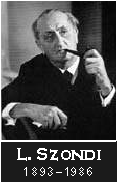
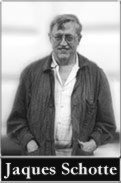
of Leo Berlips, “The Szondi Forum”, he shows on the first page the
photographs of Leopold Szondi on the left and Jacques Schotte on the right,
although Mr. Berlips openly expresses his conviction in favor of the circuit
according to Szondi, and not according to Schotte. As you see there is room
for maneuver. Let us retain that the szondiens in general agree on the
significance of the drive factors, but the discord starts with the methods of
interpretation, which arrange the drive dynamism according to the circuits.
That does not prevent this merry assembly from meeting each other in
international congresses.
Principle of the
significant regrouping: the circuits
All that one has after
the test has been made is the fact that the subject has chosen photographs by
sympathy, by antipathy or did not made initially a choice (for some
photographs). According to the proportion between the positive and negative
choices, we establish a sign (+, -, ±, O) and ø: - in the second turn-
that is used to qualify that the factor has not enough photographs left to
make a significant choice).
The photographs of
the test only really get their meaning when placed in a theoretical grid of
interpretation, which arrange the choices of the subject according to a
pre-established order. From the interpretation view point of Jacques Schotte,
this order is composed of a whole of four circuits, each circuit includes
four levels. The provision of (+) and of (-) in the four circuits
contribute to the understanding of the subject’s choices because these
circuits schematize the field of significances according to the hierarchies
between the different elements (logique). Each level introduces us into a new structural dimension
of the psyche. If the choices of the subject
form a group together, this subject is organized according to a specific life
style (logic), which corresponds to the investments (enjeux) and the
mechanisms of this level. To know well the logic of each level permits to
understand in a much larger way the secrets (arcane) of the Szondi test.
Positions in the
circuits
Thus to get an
insight, the circuits are quite useful. Since there are four levels (stages,
platforms, steps) in each circuit and each one is on the same logical level
in the four circuits (they give us generally the same information, but in
different registers) Jean Melon had the idea to gather all the steps in one
package, the second in another package, the third in a third package and the
fourth in a last package. We call these packages the ·instinctual positions”,
they are numbered from 1 to 4 (the term “position” indicates that it is
according to their position in the circuit that they take their whole
meaning). Each instinctual position gathers reactions of comparable nature,
or to state it differently of the same logical level.
In order to simplify
I use the word “level” (stage); first level of the circuit, second level of
the circuit. The usual abbreviation to speak about the level (stages,
platforms) of the circuits is “PP” i.e. “instinctual position”: PP1,
PP2, PP3, PP4. I will explain as well as I can (all is relative…) of what it
means without going into details in order to “impregnate” the spirit of each
instinctual position. I will then propose to you to retain by heart the
constitution of each instinctual position, and thereafter to scan attentively
the problems of each factor. For the moment, to give an example, the
instinctual positions 1 are connected with the photographs (h+, e -, p - and
m +) according to whether they are positively selected for h and m (h+ and
m+), and negatively for (e) and (p) thus e- and p-. The PP1 resembles thus:
(h+, e -, p - and m +). Another example, the instinctual positions of the
fourth level are constituted contrary to the first level: (h+) becomes (h-),
(e-) becomes (e+), etc, which gives us for the PP4 the following series:
(h-, e+, p+ and m-)
We will take up this later again. Going through the circuit, each new
instinctual position brings with it a new functioning of the psyche. This
aspect is easily misunderstood because the majority of people consider that
there is only one time - “The time” -, only one space – “The space” -, only
one legitimacy – “The Legitimacy” -,… Everybody is convinced of the veracity
of his way of seeing the World. How could one imagine time or space differently? However
all after that we gradually progress in the circuit, something changes in our
apprehension of daily life. It is this aspect, which I am going to illustrate
by indexing four modes of legitimacy, each one by its instinctual position.
Once you have perceived the difference between the four levels, we will
continue to concentrate our following text on another criterion. Afterwards
we will return towards the role of the factors within each position.
The development of
legitimacy in the instinctual positions
Each new instinctual
position brings a new fashion of truth, which annotates the rules of the
preceding drive level. By interpretation the continuation of this text,
perhaps you will be more convinced “to be less convinced”
In PP1,
Legitimacy is
everywhere excepting in oneself. There is only one thing important: to
syntonize. It is necessary to amalgamate one’s membranes with those of the
others, to be together with the others somewhere (in a group, a meeting, a
bar), and not to insulate oneself but to remain together and not to loose
contact: to be in the flow of the world. The fusion of feelings and flows (to
synchronize language, feelings, gestures, pleasures but also the sufferings,)
this takes constantly place in an Ego open for any passageway, one might even
say a perforated Ego like a gruyere=. An immature Ego if this constellation
is constant. To merge with the others and the environment procures the means
of legitimacy: by taking share in everything that occurs, one takes share in
the legitimacy of “everything” that happens. Once alone, the subject “falls
down” from his vital animation and feels stripped. Consequently, is it
necessary to remain in the movement of the World from day to day to remain
with all the legitimate others: to leave in order not to stay at home and
instead to get contact with the others, to telephone, to keep up with the
news, to write letters or emails to say “cuckoo”, making the rounds of the
latest shops, to go to the outside café terraces and bars, to discuss
everything and nothing in order to contribute (“feed”) the conversation and
prolong its ongoing. To go to the movies, to have a meal between friends or a
picnic or barbecue as soon as possible, to go to the bar or a dance room, to
be always there to be seen and to anticipate in many activities.
Not being interested
to capitalize the libido in a personal Ego, one shares one’s resources:
offers one’s cigarettes or drinks, make gifts, keep on moving and “meet
people”. The subject cannot keep something for himself, as soon as he has
energy; it slips away between his fingers because his legitimacy is not to
construct a retentive Ego, but to be in the flows and experiencing the “great
fusion” every day, the ideal being to have fun all the time.
In PP2,
The subject has only
his own manner of perceiving which is finally for him the most legitimate. To
listen to one’s body, wishes, projects, in one word, to be oneself. Only he
who approaches close one’s most personal way of living will has the right
that we look at him and give him our consideration. This will go on as long
as this specularity keeps going on, as soon as the resemblance is erased, the
other “mirror of oneself” will be left out (erased). In PP2, there is also a
kind of fusion between the membranes like in PP1, but the investment is not
any more the same. Here it concerns only a fusion to consolidate an Ego that
in reality is the only one to dictate the rules. No more question of
following the environment, it is the environment which puts itself in the
service of the Ego.
For example, the
subject arrives in a dancing, he does not feel “quite himself” and will start
to select music according to his personal taste acting as Disc jockey and
gradually play music according to his personal preferences and even encourage
behavior which encourages a personal action of the person (Ego) by
appreciating e.g. the very personal style of one of the dancers. He will push
the conversations in the direction of telling stories about personal
exploits, contribute to the narcissism of one or another and in such a way
create a circle around him of docile subjects, fallen for his seduction;
encourage ideas about the necessity of the transgression of norms etc.
Only that is
legitimate on this level what is originated in oneself, the remainder is
“vulgar, banal”, “has been ”, “without interest”, “belonging to the crowd
(herd)”.
Once this is reached,
the subject stick to a narcissistic double, taking the best of what that
evening might offer.
Or either he leaves
to another place, “ feeling "full of affection" or goes to a place
with more “style” but also more closed, more partitioned by elected ideas, or
home in order to enjoy the "consumption of his favorite twin” (dyad
favorite). Whatever it might be, it concerns the devoration of the other – in
the meaning of vampiring. The group has again become just a “background
noise”.
In PP3,
Their norms
correspond to what is most legitimate to apprehend reality. It is the
statistical and objective approach, To correspond to (to be in) the leading
norm.
For example, if you
express doubts in connection with a certain way of behaving, the traditional
answer that you will get on this level is: “it is like that”. The reference
norm is the other due to that he is an expert, a competent person or a
professional: doctor, director, police officer, and plumber, judge…
The PP3 establish an
interpretation (use) of the word “reality” which only has meaning because it
refers to a way of perceiving which does not belong to anybody in particular,
but which some of the interpreters (the figures of competence) can use in
their own way, within the strict framework of their “professional” speech.
Reality is that what is common, it has nothing personal. Being “realistic,”
means ” don’t be yourself anymore but what reality wants…”
This reality is
not anymore real than another because it is finally defined by the norms,
which were shaped by our belonging to a group with a specific language.
All western thought
is, since the canonique law (le droit canonique), based on
the conception that
the Word can enclose our relation with the future and control it and this
leads in this way to the idea of the “contract¨. It is from this
conception of the Word
according to St John that, (in the Western Christian culture) a legal structure is put in place on the
level of men. This started from the idea that the Word has the same value as
the Law, due to its connection with the Lord, by this the idea was generated
of the abstract principle of the word´s contractual value. “One chains
the oxen by the horns and men by words” (see the article of Allain Supiot,
below). For the Japanese, this is a coarse idea that goes against the
flexibility of viewpoints , which precisely count with the fact that we
evolve according to rules which are much less formal and -they are of the
opinion that - it is precisely by remaining flexible that one can adapt
oneself to the changing nature of the human being. There are very few lawyers
in Japan in contrast to the USA.
These
aspects are developed in a conference of Allain Supiot <
http://www.canall-u.education.fr/canallu/affiche_programme.php?programme_id=26&vHtml=0
> (“The contractualisation of the
Soceity”).
The normative aspect of the
PP3 results in that the personal imaginary position (highly appreciated in
the PP2) is finally only an “object” in the service of the group norms. The
made-up image of a person does not have a meaning in itself; it is only the
community, which says (decides) if it is useful or unimportant
(“capricious”,” immature”, “without interest”, “ negative phantasms¨
etc). One sees immediately the “rational disproportion” which can emerge from
the PP3 if it is the only mental horizon (the norm crushes the individual)
and the need for a (new) level which overcomes these castrating aspects while
(at the same time) integrating the idea of discipline, method,
systematization.
On the following
level (PP4), the norm becomes in its turn an “object” in the service of a
global project governed by the ability to transcend the gregariousness with
an inclination to apt for a destiny and as such a higher level of
systematization.
In PP4,
The general
viewpoint of the whole is the
only to merit legitimacy, all the remainder gives only a partial view and is
thus incomplete and non relevant. The concept of a trajectory, a way of life,
of a destiny where the extended experience is chosen to give the answer. Only
a person with this type of experience in his life refers to this kind of
legitimacy. Certain social figures are more suitable to introduce us with the
criteria of this logical level: the historian, priest, professor, etc. It is
the level of the legitimacy of the norm systems, truly legitimate because
they have a connection with the origin of the system itself. Instead of
considering a “norm” as in PP3, at the level of the PP4 the idea of an
extended line is essential. “To be in line with.” (Line of the party, line of
time, the line of ancestry). The mechanism of the legitimacy of the papacy
and royalty has this quality. Another example: when one registers on the
front of a shop “House founded in 1842”, it is a manner of referring to a
legitimacy which proceeds from the line of time, which is a valuable
reference to guarantee in a general sense the right of this trade independent
of actual fashions. Thus, the least legitimate thing at this level is the
present, “that only is passing by”, the “transient.
In contrast to the
“happy go lucky” legitimacy of the PP1, the PP4 proceed its legitimacy by
adhering to systematized values which only are accessible from the moment
where the subject overcomes the Almight of his narcissism and acquires a
feeling for history beyond his own personal interests. In a certain manner an
ascetic attitude is the condition to arrive there. One needs a solid
“secondarily” (in the meaning of the Seine) to profit without bitterness of
the legitimacy of this level. I will return to thus in the following text.
Instinctual
refinement
The development of
the four instinctual positions deeply transforms (qualitatively) the libido
according to an ontogenetic sequence. Which I propose to explain from here.
First of all, I
understand by “ontogenetic” the definition of the dictionary “le Petit
Robert”: “That which is generated when referring to thought, reasoning,
arriving at a concept”. One also speaks of “ontogenetic” in reference to the
biological aspect of ontogenesis (development of the egg until becoming
adult). As we will speak about the generation of insight (understanding)
according to a development, I estimate that the term ontogenetic is not
reserved for science only but can very well be used for our aims. The term
“genesis” is defined as the totality of the forms or elements that have
contributed to produce something or even the manner in which something is
formed.
To speak of the
sequence 1, 2, 3 and 4 of the instinctual positions means in fact that we
speak about the development of the spirit starting from four great stages
This is what the idea of circuit implies: one starts at a point of departure
and arrives at the final point.
This sequence in the
development of human understanding is realized by the establishment of
borders between the 4 logics with different characteristics, the four stages
of the circuit. To describe the passage between the fours circuit positions
means in fact that we explain an ontogenetic sequence. When we evoke the
“logic of the instinctual positions”, we easily can imagine to what we can
refer when using the term “logique”. It is, for example the language of
machines and of calculations, where one sees equations, figures etc. In the
same way we can easily imagine the intimate life of a human being – his instinctual
life, heart beatings, his moods, his desires. etc. But between the two, when
logic shapes the human interior or when the instinct gets dressed up in logic
and keeps all its life dressed up like this, it is not as easy to conceive an
intersection between these two fields. How can one speak of logic referring
to the fluidity of the instinctual life? The development of the
legitimacy which we evoked in the preceding text maintains that the “the
various modalities of conviction of a person depending on which instinctual
level he finds himself”. Behind this concept of conviction the process of
adherence of the subject is worked out: his beliefs, his wishes, his
cravings, his choices, his preferred significant networks.
The Adherence ¨(BELONGING TO) of the human being
is the key of the whole structure, we will often return there because the
category of the adherence is a basic concept in order to understand the
ontogenesis of the human spirit. An unconditional adherence is is GENERATED
by the legitimacy = THE VALUE SYSTEM and/or one’s conviction. The principle
of adherence is to be a flow (libidinal) equipped with a destination. As for
the part of the conviction, the decisive factor has to do more with the
destination of the flow than with flow itself. If the adherence is very
strong, the destination becomes within itself its own destination; it
structures itself as have having arrived “At its Destination”. (Adler). It
establishes itself like the horizon of thought, and a level of thought is set
up like “a whole” which has no other destination than to be in conformity
with its most adhering destination. This is what one notes in the logical
loop of primary narcissism. For example: the subject becomes for himself his
own destination and adheres to its “ipseity” as if it was the horizon of his
understanding. This process might be unbolted from the outside under certain
conditions, but it can also start again according to other adherences.
Thus the users of the
Szonditest recognize four psychic dimensions sufficiently coherent in
themselves but also enough separated from each other to be able to
distinguish them. These four dimensions arrange themselves, following
one after the other in the development of the most advanced mental life.
Each level has been able to be set in place because it succeeded in
dislodging the absolute power of the preceding level by calling in question
its adherence. Indeed, in one way or another, only the absolute power
(Almightiness) is capable to confer an unconditional aspect to the libido
destination. To dislodge this absolute power of its current position is also
the main task of therapy. In the same order of ideas, spiritual initiations
turn around the possibility to shape this absolute power and to finish by
dissolving it, thus leaving the human being without any other destination
than that of the Universe: “Learn how to be released from everything, and you
will see that I am your God”. The libido adherence is a key concept because
it gives to the libido a destination and that allows thus a structuration, in
other words taking qualitatively different logics. The adherences of the
subject are the destinations of his flows according to their unconditional
(±) aspects. The adherence conditions the thought associations and thus the significant
networks for the subject. The passage of one condition of adherence to
another governs the passage of a specific way of thinking and of living to
another.
The modification of
the subject’s existential co-ordinates passes through a transformation of the
destinations of his libidinal flows. If we pose the Almightiness like that
what fixes the (original?lb) destination of a libido flow, we can follow the
evolution of the conditions of the subject’s adherence by following the focus
of the absolute power. And that is exactly what the Szonditest enables us to
do. We decode the subject’s choices according to a grid of interpretation,
which gives us a picture of the subject’s libidinal investments or in other
words shows his adherences.
Why use a test? At
first sight, one can suppose that sentimental connections nourish the
adherences according to the intensity of the emotions, that the lines of
thought weave adherences according to the frequency of association and by
following an idea. (cf. ressasser une
idée). A convenient way to
consider mental force is also to evaluate an individual’s capacity to hold to
a position (an idea) during years. These evaluations are relevant, but the
attraction for a certain type of criterion might occult other approaches and
end by masking the reality of the changes in the process of the vital
adherence. The Szonditest allows keeping an eye on the framework in which the
adherences of the subject are exerted. This framework is often difficult to evaluate because it
passes through many changes without being obvious in general. It is something
fluid which is not easy to reveal. For example, if we take the tenacity (or
secondarity) of thought, this kind of structured adherence weights during the
passing of time with all its weight against the adherence to the present
moment, going even sometimes until denying the legitimacy of the temporary (
l'éphémère). One cannot say that the attraction for the
temporary in any way is a less great faculty of adherence of the subject who
consequently seems “dispersed”, “futile”, “and not very adherent”. In fact,
the attraction for the present moment points out to a strong adherence for
the actual, for such phenomena characterized by their innovation and their
emergence at is source. That is what Rene Le Senne calls for “primarity”.
Primarity and secondarity are two frameworks or
models of adherence. A primary person is in
the same way adhering to his way of living, as the person with a secondary
mentality only the framework is different. The procedure of the test is
well appropriated to highlight the phenomena of the libido adherence since
this reveals itself through the choices of the photographs.
To interpret the test
finally consists in decoding the adherences according to an interpretation
grid. In the Szonditest, a subject who prefers the transitory
temporary, according to the register of primarily will show a strong
adherence for the PP1 i.e. has a stable tendency to express choices of
photographs directed towards the constitutive factors of the group 1 of the
instinctual positions. In contrast a subject in the group PP4 belongs rather
to the secondary type and is more preoccupied to subordinate (conserve) the
actuality in the filiations of a historical viewpoint (his or that of a people,
of a culture, historical values, etc). He cannot allow himself the
satisfaction to be easy going.
The
subject in PP4 is a project in himself, his life is his project, he is
already animated, and he does not need to be animated by actuality. He
himself is a destiny and his destiny is at every moment on the move. On this
level one rises high because it is at this height that the extent of
circumference (l'étendue circonscriptive) of his being takes living
space: Instead of following, as the PP1 individual does along a path of the
countryside gathering flowers, the PP4 follows the line of time somewhere in
the territories of humanity and gathers works. Between the PP1 and the
PP4, there are the intermediate positions. It is also in these positions (PP3)
that the precondition of the access to the long-term level emerges. It is
the: symbolic castration of the subject’s desire for Allmight. One needs the
castration to make a choice final:
To choose,
it is to give up the other possibilities, it is to give up adhering
unceasingly to innovations, to new partners, to values.
(Compare this
with a famous German sentence on my former personal email Site: “In der
Begrenzung zeigt sich der Meister = Only by limiting yourself you can become
outstanding. LB)
There is already a
little of that in the PP2, but that occurs within the framework of a
homogenèse: the structuring of adherences is stabilized on the model
of “the same as me” and by preference in a fulfilled narcissistic setting
out. In the PP2, the subject is locked in by the question of his narcissistic
values which are fixed “once and for
always” (a phenomenon
of unconditional adherence which presents itself as everything, in other
words as a horizon) but for the remaining everything is on the move all the time.
You have only to frequent the homosex clubs to see their thirst for
innovative changes: culture, music, and festive aspects of all kinds. The
investment is in being on top of the fashion and technique. It is not
astonishing; the homogenate subject is the typical subject of the PP2.
He shapes the emergence with his own forms (his Ego) – direct at the source
(the innovation). All the architecture of the present is transferred into the
feudality of the narcissism dedicated to the homogenèse. This is not
the case of the PP1 who does not go as far as this investment in narcissistic
adherence. In fact, the homogenate shaping is a way of imposing one’s
legitimacy in one’s own eyes; there is a kind of neo-originality in the PP2.
It should be known that the places of legitimacy are since centuries taken by
membership networks. One has to pass through all kinds of implicit ritual
tests like examinations, difficult acquired responsibilities, etc. From then
on the innovation has virgin ground where there is a possibility to make for
oneself a place in the sun of legitimacy without too many expenses and
without having to go through all the rituals that history has set up. If
moreover one dissociates oneself too much from the cultural key factors there
is only the innovation to justify one’s place in a group by creating new
norms, which destabilize the old ones. Therefore, to make for oneself a
legitimate place there where historical filiations already has distributed
the cards, there remains nothing any more for them but the innovation to
impose criteria based on your own right (ipséité) and in
rupture with the historical line of development. (filiations).
The subject
matter of “free” (music, drug, fashion, software, etc) is the favorite ground
of the homogeneities to make a place for them. Contrary, the PP3 form the
instinctual configuration where one is put “in line with one’s place”. The
aspect of
“ Making a choice =
to give up all the other possibilities” is much more marked here than in the
PP2. It is even so pronounced that the choices are made in advance. In the
PP3, one “is fixed” by the conditions of one’s membership to a group of
people: the speech, the trade, the relations, etc What is legitimate, is to
reproduce the values of one’s “class”. It is everything but not free, it is historically
determined. One only takes in the actuality
(present) that what conforms to what is well founded and determined before: a
way of living, an education (“this person is well educated”). The
unconditional aspect of adherence on this level is called obedience or
fidelity or even love for one’s family. Each environment has its version “to
take the bitter pill”. Thus to reach the PP4, it is necessary to pass
through the former stages with the need to castrate the Allmight of the
primary mode of access to legitimacy where the affects play the main role to
justify the acts of the subject.
The access to the
PP4 asks for a better
repression of this flood of affectivity. The first usual shock that one experiences when the
destination of adherence changes in discredit of primarity is the loss of
“the good things of live” (des "saveurs" de la vie). From then we
experience the first ground rules of asceticism: the event in itself is not
any more a destination for the way of living of the subject, the “good life
(savor)” does not justify any more in itself the destination of the subject.
It is the castration of primarity, a change of the mode of adherence, which
permits a new degree of freedom in the destination of the subject. From this
very moment the destination can escape from the determinism of the supremacy
of the “good things in life. Being not anymore seduced one has not anymore
the longing to be taken in by the seduction. It is then that one’s proper
destiny really starts. This example of a sequence, which goes from intense
primarity to a strong secondarily, can be interpreted in details (filigrane)
all along the four instinctual positions. The interpretation of
the test according to the interpretation schema of the possible circuits
allows insisting on the framework in which adherences are carried out.
The circuit is a
framework (cadre) for the instinctual stages (levels) while the instinctual
position in its turn is a framework for the instinctual factors. The general
framework, which governs the circuits, follows an evolution, which goes
globally from the sensory towards the spiritual. The evolutionary way of a
person develops according to this sequence, which goes from adherence to the
concrete to the “abstract”. I put the term “abstract” between citations
because there are realities whose manifestation escape from the reign of the
senses and human understanding. In this case, it would rather be necessary to
speak about advanced stages in the ontogenetic sequence. These make it
possible to develop in oneself an empathy for realities usually too vast or
too complex for a rational human approach. But which appear to the human
being in various forms such as empathy, intropathy, clinical sensitivity,
intuition, faith, illumination and many other terms that many cultures have
refined during centuries. For this reason, it is interesting to
remember that the old India gives us a version of the ontogenetic sequence
according to the “chakras“ known especially in the technique of the awakening
of the Kundalini-Yoga where it is considered that the incarnation of
the spirit is realized in a kind of psychic body which the adepts can
perceive at a certain level of evolution. This psychic body is traversed by
channels, of which the most important pass along the spinal cord. Seven
chakras - or psychic centers – follow each other upwards along this vital
axis (...) The first three first chakras refer to the material and sensual
desires of man. The awakening of the spirit starts when the kundalini arrives
at the level of the heart. The complete dissolution of the Ego in the divine
light is realized only when the kundalini arrives at the top of the head when
it enters into the last chackra and can join and dissolve in pure universal energy”.
(“Encyclopedia of the symbols”, Pocket book – La Pochothèque, under
the meaning of Michel Cazenave, p. 117)
If a chakra is
charged (stuck) with Kundalini, not only it does not evolve to a higher level
but also the problem corresponding to this chakra is overheated. If the lower
(inferior) chakras are saturated, one can presume already that the subject
only will have a tendency to think of: concrete joys; sexual appetites will
be the motor of his car. Indeed this is what one can observe on the lower
levels of the instinctual circuit of the Szondi test. If it is the heart
chakra is overload, the subject will be very sensitive, his emotional life
will be disproportionate, somewhat in the manner of an overload in the
intermediate stages of the instinctual circuit. And obviously, the higher
chakras open the spirit for the existential problems, which evoke in the
subjects who became stabilized in the last positions of the instinctual
circuit. This whole of representations coming from old India proposes a coherent version of the ontogenetic sequence.
We certainly are not
the first, long from that, to consider the crowned column of instinctual
refinement. Each people owns one or more conceptions (sensibilités)
different from that of other peoples, but we all find ourselves since the
night of times around this Mundi Axis to syntonize oneself with its esoteric
mysteries. (Arcane)
|